
Synthetic vs Conventional Engine Oil: Does the Difference Actually Matter?
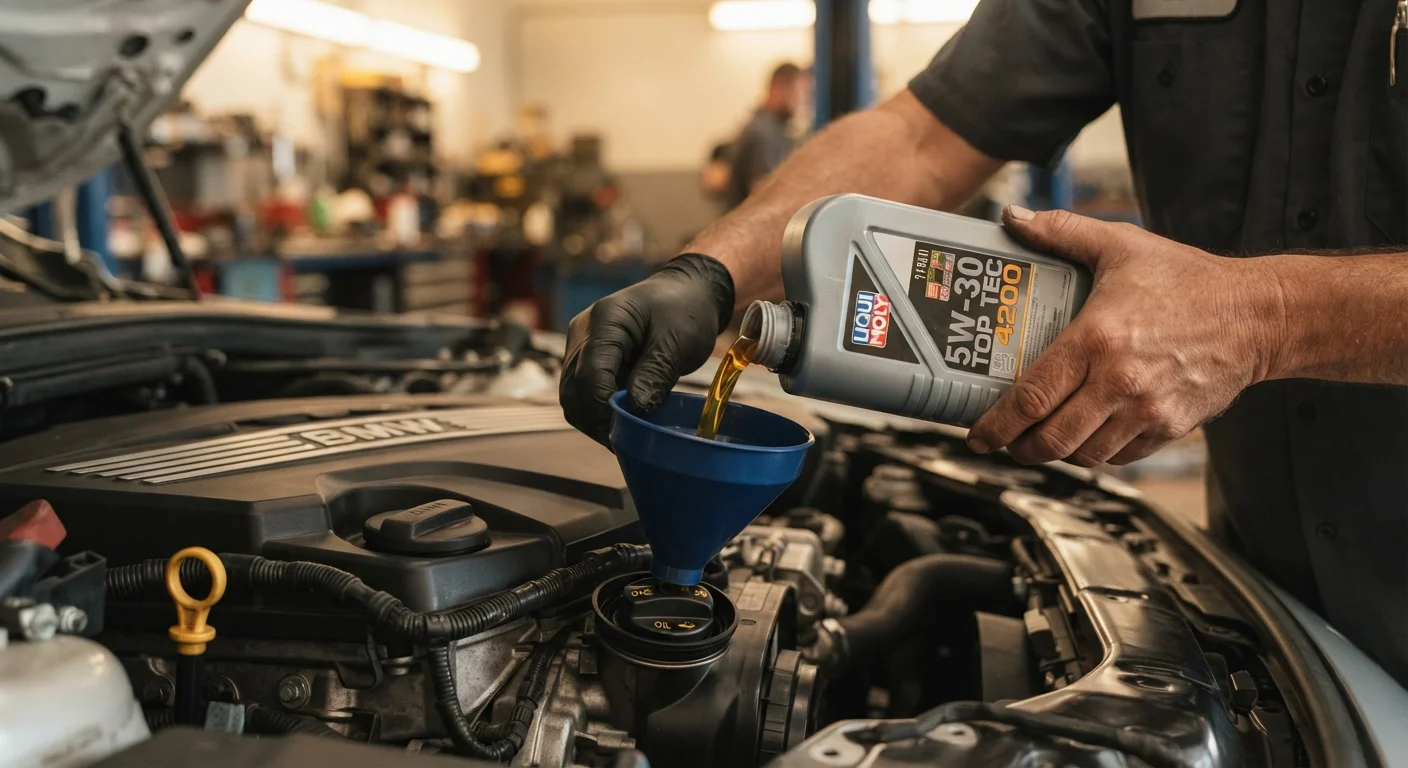
Photo credit: ResultsPivot.com | Discover Insightful Content!
In this article
Both types of engine oil claim to protect your engine, but they behave very differently. Here's what sets them apart and when each is appropriate.
Key Takeaways
- Synthetic oil is chemically engineered for more consistent molecular structure, offering better protection under stress.
- Conventional oil comes from refined crude petroleum and works adequately for many everyday driving situations.
- Your vehicle's owner's manual — not marketing claims — should be the final word on which oil type to use.
- Synthetic oil typically lasts longer between changes, which can offset its higher upfront cost.
- Mixing the two types won't damage your engine, but you lose the full benefits of synthetic.
What Actually Makes Them Different
At a basic level, both synthetic and conventional engine oil do the same job: lubricate your engine's moving parts, reduce friction, and help manage heat. But how they're made — and how they hold up — is where the distinction gets meaningful.
Conventional oil is refined from crude petroleum. That refining process removes many impurities, but some molecular inconsistencies remain. This means conventional oil can break down more quickly under heat and stress, and its viscosity (thickness) can shift more noticeably across temperature ranges.
Synthetic oil is built differently. It's either fully synthesized from chemical compounds or heavily processed from petroleum base stock to create a much more uniform molecular structure. This consistency gives synthetic oil better stability across temperatures, improved resistance to oxidation and sludge, and generally longer service life.
Think of it like this: conventional oil is a natural material that's been cleaned up, while synthetic is an engineered product designed from the ground up for a specific purpose.
| Criterion | Synthetic Oil | Conventional Oil |
|---|---|---|
| Base material | Chemically engineered compounds | Refined crude petroleum |
| Cold-start performance | Flows faster at low temps | Slower to circulate when cold |
| Heat resistance | Higher resistance to breakdown | Can degrade faster under heat |
| Typical change interval | 7,500–10,000+ miles (varies) | 3,000–5,000 miles (typical) |
| Cost per quart | Generally higher | Generally lower |
| Sludge resistance | Superior | Moderate |
| Suited to turbocharged engines | Yes — highly recommended | Not ideal |
When the Difference Actually Matters
For many routine driving situations — short commutes in a mild climate with a well-maintained older engine — the performance gap between the two oils may be minimal in practical terms. But certain conditions make synthetic oil's advantages much more significant.
~40%
Engine wear occurring at cold startup
Industry engineering research has long indicated that a disproportionate share of engine wear happens in the first moments after a cold start, before oil fully circulates.
5,000–10,000 mi
Typical synthetic oil change interval
Many vehicle manufacturers now recommend extended drain intervals for synthetic oil, though the exact figure varies widely by engine and driving conditions.
3x
Temperature range synthetic handles vs. conventional
Synthetic oils are formulated to maintain stable viscosity across a significantly wider temperature range, a key advantage in both very cold and very hot climates.
Engine startups are where synthetic pulls ahead clearly. Most engine wear happens in the first few seconds after a cold start, before oil fully circulates. Synthetic oil flows faster at low temperatures, coating components sooner. In cold climates especially, this matters.
Turbocharged engines generate intense heat around the turbocharger bearings. Conventional oil can break down and form deposits (called coking) in these areas, while synthetic handles the heat much more reliably.
Extended drain intervals are another consideration. Conventional oil generally needs to be changed every 3,000–5,000 miles under typical conditions. Many synthetic formulas are rated for 7,500–10,000 miles or beyond, depending on the vehicle and manufacturer guidance. That doesn't mean you should stretch intervals indefinitely — always follow your owner's manual.
It's worth noting that the engine note you might hear change after an oil switch is a real phenomenon — if you've ever wondered whether mechanical sounds tell you something useful, our piece on what engine sound really means today is worth a read.
High-Mileage Oil: A Third Option Worth Knowing
If your vehicle has over 75,000 miles, you may see 'high-mileage' oil on the shelf — these are typically synthetic-blend or full-synthetic formulas with added seal conditioners and detergents. They're designed to address the specific needs of older engines, including worn seals and increased oil consumption. They aren't necessary for every high-mileage car, but they're worth discussing with a mechanic if you're noticing oil consumption or minor leaks.
How to Make the Right Call for Your Vehicle
The single most reliable guide here isn't oil marketing — it's your vehicle's owner's manual. Manufacturers specify oil type and viscosity grade (like 5W-30 or 0W-20) based on actual engine design and tolerances. If your manual calls for synthetic, don't substitute conventional. If it lists conventional as acceptable, synthetic is generally a safe upgrade — but it's rarely required.
A few practical rules of thumb:
- Check the viscosity grade first. Oil type (synthetic vs. conventional) matters, but using the correct viscosity grade matters just as much.
- Don't rely on the 3,000-mile rule as gospel. That interval was standard decades ago. Most modern engines with modern oils don't need changes that frequently — check your manual or your vehicle's oil-life monitoring system.
- Mixing is fine in a pinch. If you need to top off and only have a different type available, mixing won't harm your engine — but you dilute the benefits of whichever oil was already in there.
- When in doubt, ask a qualified mechanic. If your vehicle is older, high-mileage, or has had engine work done, a professional can give you guidance tailored to its actual condition.
The oil in your engine is one of the cheapest forms of protection you can give it. Getting that choice right — and changing it on schedule — is straightforward maintenance that pays off over the long haul.

Author
Automotive Editorial Team
Automotive Editorial Team is the collective byline for our editorial team and contributor network. Articles published under this byline or an editorial pen name are researched, written, and reviewed according to our editorial standards for clarity, consistency, and independence before publication.
View all articles →