
Buying in Bulk: When It Genuinely Saves Money and When It Does Not
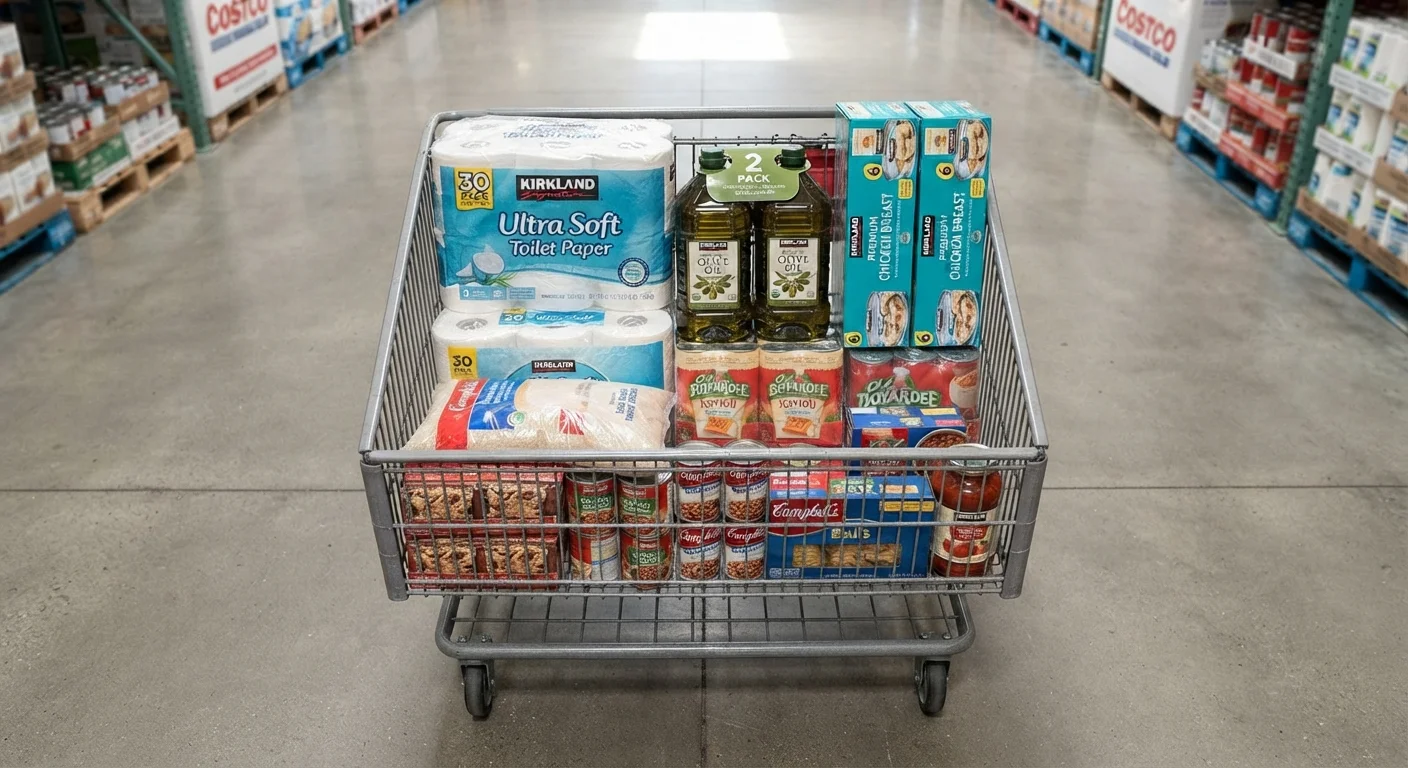
Photo credit: ResultsPivot.com | Discover Insightful Content!
In this article
Bulk buying can cut costs or quietly waste them. Explore the conditions that determine whether a larger quantity is actually a better deal.
Key Takeaways
- Bulk buying only saves money when you will use the entire quantity before it expires or degrades.
- A lower unit price does not automatically mean a better deal if storage or waste costs are factored in.
- Non-perishables and frequently used household items are the strongest candidates for bulk purchases.
- Upfront cash outlay can strain budgets even when the long-term math looks favorable.
- Always compare unit prices — not package prices — before assuming bulk is cheaper.
Lower unit price on high-turnover staples
Manufacturers and retailers pass on packaging and logistics savings when you buy more at once, which typically translates to a lower cost per ounce, sheet, or serving on everyday staples like dish soap or rice.
Fewer shopping trips saves time and incidental spending
Buying less frequently reduces exposure to impulse purchases and fuel or delivery costs — a meaningful secondary saving that rarely shows up in the unit-price calculation.
Reliable supply of essential items
Stocking up on necessities provides a practical buffer against short-term price spikes or supply disruptions, particularly useful for shelf-stable goods used consistently every month.
Reduces per-use packaging waste
Larger containers generally use less packaging material per unit of product, which appeals to households tracking both cost and environmental footprint.
Spoilage and expiry erases the savings
Food, supplements, and even some cleaning products have limited shelf lives. If a bulk quantity isn't used in time, the waste effectively cancels out — or exceeds — the discount gained.
High upfront cost strains cash flow
A large warehouse run can cost hundreds of dollars at once. For households managing tight monthly budgets, that lump sum may create short-term financial pressure even if the long-term math works out.
Storage space requirements are often underestimated
Bulk quantities need somewhere to live. Without adequate dry, climate-controlled storage, products degrade faster, and cramped living spaces can make large stock impractical regardless of price.
Bulk price isn't always the lowest price
Retailers occasionally price smaller packages more competitively during sales, or store-brand regular-size items can undercut the warehouse club unit price. Assuming bulk equals cheapest is a common shopping myth worth questioning.
Locks you into a product you may dislike
Buying 96 servings of a new protein powder or a gallon of an unfamiliar cleaning product before testing a small quantity is a gamble. If the product doesn't work for you, the sunk cost is significantly higher.
The Core Logic of Bulk Buying
The appeal is intuitive: pay less per unit by buying more at once. And in the right circumstances, that logic holds up. Retailers and manufacturers genuinely do reduce per-unit cost when moving larger quantities — it reflects real savings on packaging, labor, and distribution that get partially passed on to the consumer.
The problem is that the unit price is only one part of the actual cost equation. To understand whether bulk buying helps or hurts your wallet, you need to account for what you actually consume, how fast, and under what storage conditions. Our unit price and cost-per-use guide walks through exactly how to run those numbers before committing to a large purchase.
Lower unit price on high-turnover staples
Manufacturers and retailers pass on packaging and logistics savings when you buy more at once, which typically translates to a lower cost per ounce, sheet, or serving on everyday staples like dish soap or rice.
Fewer shopping trips saves time and incidental spending
Buying less frequently reduces exposure to impulse purchases and fuel or delivery costs — a meaningful secondary saving that rarely shows up in the unit-price calculation.
Reliable supply of essential items
Stocking up on necessities provides a practical buffer against short-term price spikes or supply disruptions, particularly useful for shelf-stable goods used consistently every month.
Reduces per-use packaging waste
Larger containers generally use less packaging material per unit of product, which appeals to households tracking both cost and environmental footprint.
Where Bulk Buying Genuinely Earns Its Keep
Certain product categories are reliably well-suited to bulk purchasing. Non-perishables with a long shelf life — toilet paper, laundry detergent, canned goods, dried pasta — don't degrade quickly, are used consistently in most households, and store without special conditions. These are the clearest wins.
Household size matters considerably. A family of five burning through paper towels weekly operates in a completely different consumption reality than a single-person apartment. The faster the turnover, the less risk of waste, and the more the unit-price saving compounds over time.
~$65B
Annual US warehouse club sales (estimated)
Warehouse club retail represents a substantial and growing segment of the US grocery and household goods market, reflecting widespread consumer interest in bulk purchasing.
30–40%
Estimated household food waste rate in the US
The USDA estimates that between 30 and 40 percent of the US food supply is wasted, a statistic that directly undermines bulk food savings when consumption rates are overestimated.
When Bulk Buying Quietly Costs You More
The failure modes are predictable once you know what to look for. Fresh produce, dairy, bakery items, and anything with a meaningful expiry date are high-risk bulk purchases unless you have a large household or a clear plan to use them. Buying three pounds of strawberries because they were cheaper per pound only pays off if all three pounds get eaten.
There's also a behavioral trap worth naming: the abundance effect. Research in consumer psychology suggests that having more of something on hand can lead people to use it more freely, meaning the expected savings get consumed by increased usage rather than reduced spending. A jumbo bottle of shampoo that would normally last four months sometimes mysteriously disappears in two.
Spoilage and expiry erases the savings
Food, supplements, and even some cleaning products have limited shelf lives. If a bulk quantity isn't used in time, the waste effectively cancels out — or exceeds — the discount gained.
High upfront cost strains cash flow
A large warehouse run can cost hundreds of dollars at once. For households managing tight monthly budgets, that lump sum may create short-term financial pressure even if the long-term math works out.
Storage space requirements are often underestimated
Bulk quantities need somewhere to live. Without adequate dry, climate-controlled storage, products degrade faster, and cramped living spaces can make large stock impractical regardless of price.
Bulk price isn't always the lowest price
Retailers occasionally price smaller packages more competitively during sales, or store-brand regular-size items can undercut the warehouse club unit price. Assuming bulk equals cheapest is a common shopping myth worth questioning.
Locks you into a product you may dislike
Buying 96 servings of a new protein powder or a gallon of an unfamiliar cleaning product before testing a small quantity is a gamble. If the product doesn't work for you, the sunk cost is significantly higher.
It's also worth checking that bulk isn't a distraction from a genuinely better deal. Promotional pricing tactics can make a regular-size item on sale cheaper per unit than the warehouse equivalent — the only reliable way to know is to compare the actual unit price on the shelf tag.
A Practical Framework Before You Stock Up
Before adding the economy-size anything to your cart, run through a short mental checklist:
- Will I actually use all of this? Be honest about consumption rate, not aspirational about it.
- Does it have a long enough shelf life? Check the expiry date against a realistic use-by timeline.
- Do I have appropriate storage? Cool, dry, accessible space — not the back of a closet where it'll be forgotten.
- Is the unit price genuinely lower? Shelf tags at most major retailers display unit prices. Use them.
- Can I absorb the upfront cost comfortably? Stretching a budget to buy in bulk can create the kind of financial pressure explored in our piece on frugality becoming its own financial trap.
Membership Fees Change the Math
Warehouse clubs typically charge an annual membership fee ranging from roughly $65 to $130. If your total annual savings on bulk purchases don't exceed that fee, membership isn't financially justified on cost alone. Factor the fee into your real savings calculation, especially if you shop there infrequently.
Bulk buying is a strategy, not a reflex. Applied deliberately, it's one of the more reliable ways to lower household expenses over time. Applied indiscriminately, it generates clutter, waste, and the illusion of savings that aren't really there. The pre-purchase checklist is a useful companion for any significant stock-up decision.

Author
Shopping Editorial Team
Shopping Editorial Team is the collective byline for our editorial team and contributor network. Articles published under this byline or an editorial pen name are researched, written, and reviewed according to our editorial standards for clarity, consistency, and independence before publication.
View all articles →