
Capsule Closet vs. Traditional Wardrobe: Which Approach Actually Works?
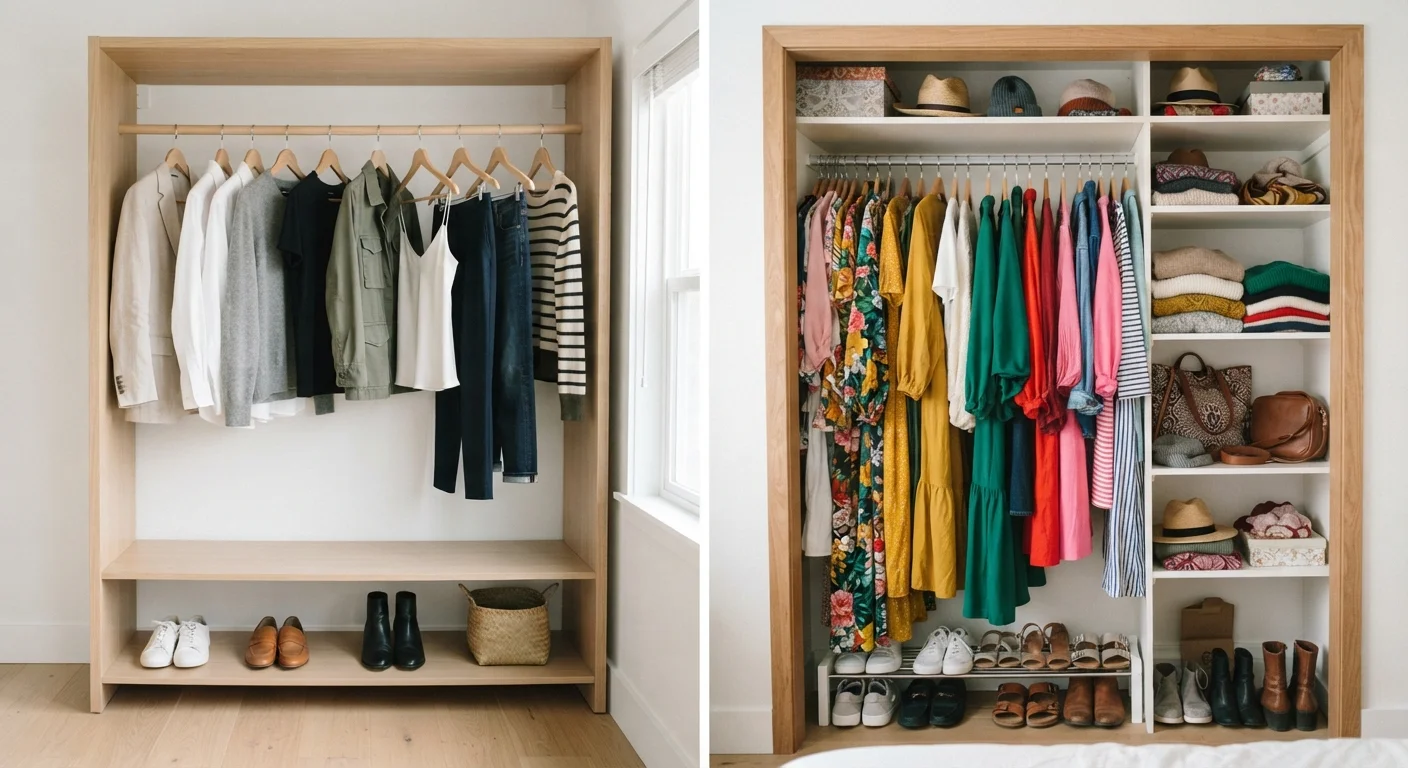
Photo credit: ResultsPivot.com | Discover Insightful Content!
In this article
A clear-eyed look at capsule wardrobes and traditional closet systems — how they differ, who each suits, and what they demand of you.
Key Takeaways
- A capsule wardrobe typically contains 25–50 pieces chosen to mix and match across most occasions.
- Traditional wardrobes offer more variety but can generate clutter, analysis paralysis, and wasted spend.
- Neither system is inherently superior — the right fit depends on your lifestyle, storage space, and habits.
- Hybrid approaches — applying capsule principles selectively — work well for many households.
- Maintenance discipline matters more than the system you choose.
What Each System Actually Involves
The term capsule wardrobe was popularized in the 1970s by London boutique owner Susie Faux, who described it as a small collection of essential, timeless pieces that could be worn interchangeably. The concept gained wider traction through designers like Donna Karan and later via the minimalism movement online. In practice, a capsule wardrobe typically means owning between 25 and 50 garments total — or per season — with each item chosen to work with multiple others. The emphasis is on cohesion: neutral palettes, classic cuts, durable fabrics.
A traditional wardrobe, by contrast, is simply what most people already maintain: a closet that grows organically over time, accommodating trend purchases, gifts, occasion wear, and seasonal items without a strict ceiling on quantity. There's no philosophy attached — it's a responsive system that expands as life demands change.
| Criterion | Capsule Wardrobe | Traditional Wardrobe |
|---|---|---|
| Typical item count | 25–50 pieces | Unlimited, grows over time |
| Decision fatigue | Low — items designed to coordinate | Higher with more choices available |
| Upfront cost to build | Potentially high (quality over quantity) | Accumulated gradually, varies widely |
| Storage space required | Minimal | Significant — grows with collection |
| Flexibility for occasions | Limited by design | High — suits varied dress codes |
| Maintenance discipline needed | High — requires regular editing | Moderate — benefits from seasonal reviews |
| Suitability for fashion lovers | Can feel restrictive | Accommodates expression and variety |
The Real Costs and Trade-Offs
Capsule wardrobes often get sold as a cost-saving measure, but that's only partially true. Building one from scratch typically involves replacing low-quality items with higher-quality staples, which carries an upfront cost. The long-term case for savings rests on buying less frequently — but only if you actually stop impulse shopping, which requires genuine habit change.
Traditional wardrobes, meanwhile, tend to accumulate quietly. Many households contain items worn fewer than a handful of times. Research from various consumer behavior studies consistently finds that people regularly wear only a fraction of what they own — estimates often cluster around 20% of a wardrobe being worn 80% of the time, though actual figures vary by individual. That unused majority costs storage space, mental load, and occasional guilt.
~20%
Of wardrobe worn regularly by most people
Consumer behavior research consistently suggests most people wear a small fraction of what they own on a regular basis.
25–50
Items in a typical capsule wardrobe
Most capsule wardrobe frameworks, from Faux's original concept onward, suggest this range as a functional target per season or year.
3x
More clothing bought globally since 2000
According to the Ellen MacArthur Foundation, global clothing production roughly doubled in the 2000s, with items kept for shorter periods.
The hidden cost of a traditional wardrobe isn't just money — it's cognitive. Studies on decision fatigue suggest that having too many options can make choosing harder, not easier. A capsule system removes that friction by design.
Who Each System Suits — and Where They Fall Short
Capsule wardrobes work best for people whose lives have some regularity: a consistent work environment, a defined personal aesthetic, and a genuine willingness to edit ruthlessly. They're well-suited to small living spaces and frequent travelers — the discipline of packing light, as explored in minimalist packing habits, often translates directly to how people think about their home closets.
Where capsule wardrobes struggle: life stages with rapidly changing bodies or needs (pregnancy, growing children, significant weight change), professions requiring a wide range of dress codes, and people for whom fashion is a genuine creative outlet rather than a utility. Forcing a minimalist framework onto someone who loves clothes can make getting dressed feel restrictive rather than freeing.
Capsule Wardrobes and Body Changes
A capsule wardrobe built around a stable body and lifestyle can feel constraining during periods of significant change — pregnancy, postpartum recovery, major weight shifts, or changing work environments. During those phases, maintaining a more flexible, traditional approach and revisiting capsule principles afterward tends to be more realistic. Don't invest heavily in a curated collection if your needs are likely to shift in the next 12 months.
Traditional wardrobes, for all their sprawl, offer something real: flexibility and self-expression without rules. The problem isn't the system — it's the absence of any maintenance habit. A traditional closet that gets reviewed seasonally, with items donated or stored as needed, can function just as efficiently as a capsule setup for many people.
A Practical Path Forward
The most workable approach for many households isn't a full conversion to either extreme — it's applying capsule thinking selectively. Start with one category: workwear, or basics, or shoes. Audit what you actually wear, remove what you haven't touched in 12 months, and resist replacing items unless something specific is missing. That process alone — done once or twice a year — captures most of the organizational benefit without requiring a wholesale lifestyle shift.
For those ready to go further, the standard capsule-building advice holds: prioritize fit over trend, choose pieces in a cohesive color range, and build around your actual life rather than an aspirational one. A capsule wardrobe built around the life you want, rather than the life you have, ends up being neither useful nor satisfying.
Either way, the goal isn't the system — it's a closet that makes getting dressed easier, not harder. What that looks like is genuinely different for different people, and that's worth acknowledging before committing to any framework wholesale.

Author
Home & Living Editorial Team
Home & Living Editorial Team is the collective byline for our editorial team and contributor network. Articles published under this byline or an editorial pen name are researched, written, and reviewed according to our editorial standards for clarity, consistency, and independence before publication.
View all articles →