
The Two-Second Rule Isn't Always Enough
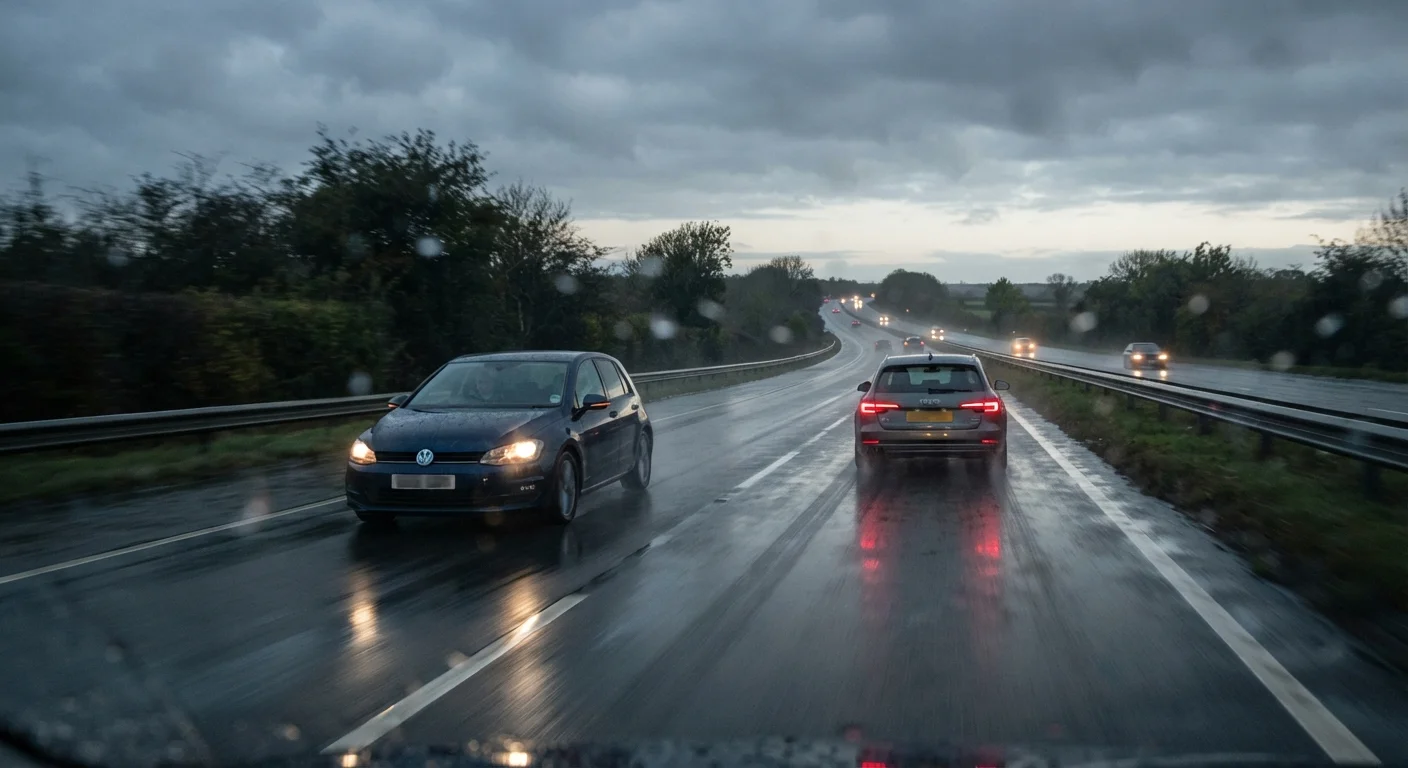
Photo credit: ResultsPivot.com | Discover Insightful Content!
In this article
The two-second following distance rule is widely taught, but speed, load, and road conditions change the math considerably.
Key Takeaways
- Two seconds is a minimum baseline, not a universal safe distance for all conditions.
- Wet, icy, or gravel roads can more than double your vehicle's stopping distance.
- Heavier vehicles like trucks or SUVs loaded with cargo need considerably more following distance.
- Fatigue and distraction slow your reaction time, effectively shrinking your safety margin.
- Highway speeds, poor visibility, and tailgating traffic all call for expanding your gap.
Where the Two-Second Rule Comes From
The two-second rule has been part of driver education curricula for decades. It replaced older "one car length per 10 mph" guidelines because it's speed-adaptive — as you go faster, two seconds of travel represents a longer physical gap. That's a smart design. The problem is that drivers often treat it as a fixed, always-sufficient answer rather than a minimum starting point.
At 30 mph in dry conditions on flat pavement with alert reflexes and well-maintained brakes, two seconds may genuinely be enough. Change any one of those variables and the math shifts — sometimes dramatically.
Two Seconds Is a Taught Minimum
Driver education programs in most U.S. states teach the two-second rule as a baseline for normal conditions. Many road safety organizations, including AAA, suggest increasing this to three or four seconds in higher-risk situations. The rule is a starting point, not an endpoint.
The Variables That Change the Equation
Stopping a vehicle involves two phases: reaction time (from when you perceive danger to when your foot hits the brake) and braking distance (from the moment brakes engage to full stop). The two-second rule accounts for average reaction time under ideal conditions — roughly 1.5 seconds for an alert driver. But real driving rarely looks like ideal conditions.
- Speed: Braking distance increases with the square of speed. Going from 40 to 60 mph doesn't add 50% more stopping distance — it roughly doubles it.
- Road surface: Wet asphalt, packed gravel, or ice significantly reduces tire grip. On ice, stopping distances can be four times longer than on dry pavement.
- Vehicle weight and load: A fully loaded pickup truck or SUV with a trailer does not stop like an empty compact car, even with identical brakes.
- Driver fatigue or distraction: Reaction time can stretch from 1.5 seconds to 3 or more when a driver is tired or looking elsewhere.
3–4×
Stopping distance increase on ice vs. dry road
According to general physics of friction and vehicle dynamics, stopping distances on ice can be three to four times longer than on dry pavement at equivalent speeds.
~40%
Rear-end crashes involving following distance
The NHTSA has identified following-too-closely as a contributing factor in a significant share of rear-end collisions, one of the most common crash types on U.S. roads.
When to Add More Buffer
Think of two seconds as the floor, not the ceiling. Here are situations where you should consciously extend your following distance:
- Wet or compromised roads: Add at least one additional second — more in heavy rain or on gravel.
- Highway or freeway driving: Three to four seconds is a more realistic margin when speeds are high and lane changes are frequent.
- Towing or carrying heavy loads: Your stopping distance has increased whether it feels like it or not.
- Low visibility: Fog, heavy rain, night driving — if you can't see far ahead, a larger gap gives you more time to react to what appears.
- Following large trucks or buses: They block your forward sightlines. More distance means more visibility.
Use a Road Marker to Check Yourself
Pick any fixed point on the road — a bridge pillar, a painted line, or a road sign. When the car ahead passes it, say 'one-one-thousand, two-one-thousand.' If you've already passed the marker before finishing, you're too close. This takes under three seconds and works at any speed.
Putting It Into Practice
The simplest habit change is to stop thinking of following distance as a rule to satisfy and start treating it as a cushion to protect. Every extra second of gap is a half-second more reaction time and a meaningful reduction in crash severity if things do go wrong.
Next time you drive, try actively checking your gap at regular intervals rather than only when it feels tight. You may find your default distance is shorter than you assumed — most drivers do. Adjust, ease back, and give yourself room. The two seconds you were taught are a useful baseline, but the road almost always calls for more.
This article provides general driver education and is not a substitute for formal driver training or official road safety guidance in your state or jurisdiction.
Frequently Asked Questions

Author
Automotive Editorial Team
Automotive Editorial Team is the collective byline for our editorial team and contributor network. Articles published under this byline or an editorial pen name are researched, written, and reviewed according to our editorial standards for clarity, consistency, and independence before publication.
View all articles →