
Decor Myths That Keep Rooms Looking Smaller Than They Are
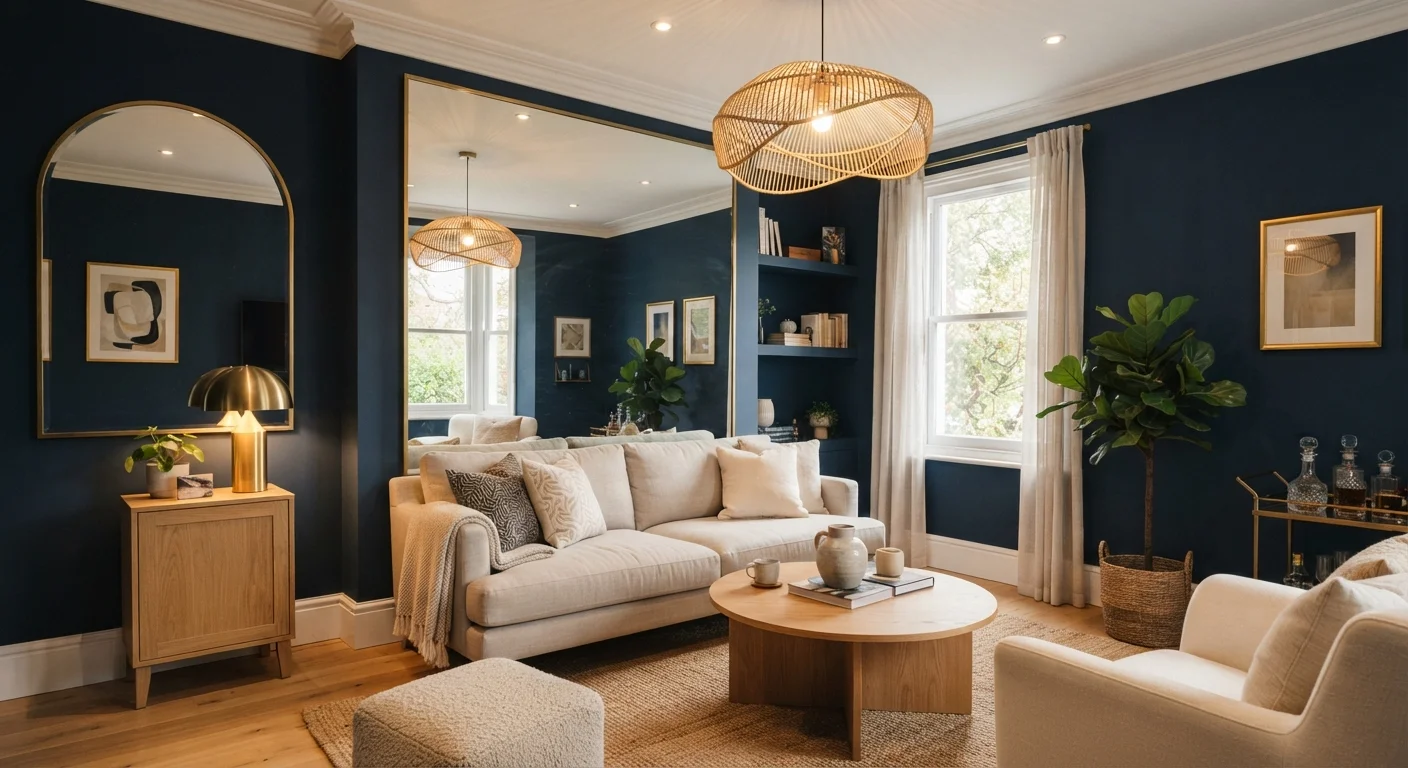
Photo credit: ResultsPivot.com | Discover Insightful Content!
In this article
Dark paint always shrinks a room. Small spaces need small furniture. These rules get repeated — but the evidence often says otherwise.
Key Takeaways
- Dark paint doesn't automatically shrink a room — contrast, lighting, and scale matter more.
- Oversized furniture in small spaces can actually make rooms feel larger and more intentional.
- Low ceilings benefit more from vertical visual tricks than from light-colored paint alone.
- Pushing furniture against walls typically makes a room feel more cramped, not more open.
- Rugs that are too small are one of the most common and easiest-to-fix design mistakes.
Why These Myths Persist
Design advice spreads fast — through shelter magazines, home improvement shows, and social media feeds. The trouble is that rules which once had a practical basis get repeated long after the context has changed, or get applied universally when they were only ever meant for specific situations. Most "make a room look bigger" tips fall into exactly this trap.
Understanding why a principle works lets you decide when to follow it and when to break it. The myths below are among the most widely repeated — and the most consistently misapplied.
Myth
Dark paint colors make a room feel smaller and more closed-in.
Fact
Dark colors can actually create depth and atmosphere that makes a room feel more intentional and, in many cases, more expansive.
The fear of dark paint is rooted in an oversimplification: light reflects more off pale walls, therefore pale walls feel bigger. That logic holds in isolation — but rooms aren't isolated. When dark paint is paired with good artificial and natural lighting, light-colored furnishings, and reflective surfaces like mirrors or gloss finishes, the result is often a sense of depth rather than compression. Interior designers frequently use deep tones in small spaces precisely to create a cocooning effect that reads as deliberate and considered rather than cramped.
The real factor is contrast and clutter, not the paint chip.
Myth
Small rooms should only have small furniture.
Fact
One or two appropriately scaled larger pieces typically make a small room feel more cohesive and spacious than many small pieces scattered around.
Filling a small room with small furniture creates visual noise — lots of individual pieces competing for attention, with gaps and sightlines broken up in unpredictable ways. A single well-proportioned sofa, for instance, reads as intentional and anchors the room. Multiple undersized chairs and side tables create a sense of disorder that actually emphasizes the room's limitations.
The guideline most designers follow is to prioritize one or two hero pieces sized appropriately for the room's function, then edit everything else ruthlessly rather than defaulting to miniature versions of everything.
Myth
You should push furniture against the walls to free up floor space.
Fact
Floating furniture slightly away from walls creates defined zones that make a room feel larger and more purposefully arranged.
The instinct to hug the walls comes from wanting to preserve walkable floor area — but the visual effect is usually the opposite of spacious. When furniture lines the perimeter, the center of the room becomes an awkward empty void and the seating arrangement feels disconnected. Pulling pieces inward even a few inches creates a conversation zone, implies intentional grouping, and paradoxically makes the room feel like it has more usable space rather than less.
This is one of the most consistent recommendations from professional space planners working with compact floor plans.
Myth
A small rug is the safe choice for a small room.
Fact
An undersized rug is one of the most common mistakes in small spaces — a larger rug anchors furniture and unifies the room.
When a rug is too small, it floats in the middle of the room without connecting to anything, which fragments the space visually and makes the room feel disjointed. The standard guidance is that a rug should be large enough for at least the front legs of all major seating pieces to rest on it. In a small living room, that often means a rug that feels surprisingly large when rolled out in the store — but looks proportionate and grounding once the furniture is in place.
Choosing a rug that's too small is an easy and inexpensive mistake to reverse, and the difference in perceived room size is often immediate.
Myth
Mirrors always make a small room look bigger.
Fact
Mirrors increase perceived space only when positioned thoughtfully — reflecting clutter or a blank wall adds nothing.
Mirrors work by reflecting light and creating the illusion of depth — but what they reflect matters as much as whether they're there at all. A mirror that faces a cluttered bookshelf doubles the visual clutter. A mirror placed to reflect a window or a well-lit area of the room can meaningfully extend sightlines and brighten the space. Size and placement (not just presence) determine whether a mirror earns its spot.
Putting It All Together
The throughline across all these corrections is that visual perception is about contrast, proportion, and flow — not a fixed checklist. A dark room with good lighting and thoughtful scale can feel far more expansive than a white room cluttered with undersized furniture pushed against the walls.
~10%
Perceived size increase from correct rug sizing
Interior design practitioners widely observe that proper rug sizing is among the highest-impact low-cost changes in small room perception.
18–24 inches
Recommended furniture float from walls
Space planning guidelines consistently suggest pulling seating at least 18 inches from the wall to create defined, livable zones.
Before accepting any decorating rule as gospel, it's worth asking: what problem was this rule actually solving? Often the answer reveals a much more flexible set of options than the rule implies. The same critical thinking applies to plenty of other received wisdom — shopping myths that quietly cost people money follow the same pattern of rules repeated past their usefulness.
Don't Renovate Based on Trends Alone
Paint colors and furniture layouts are low-commitment changes — but structural decisions like removing walls or adding built-ins are not. Before any work that affects structure, electrical, or plumbing, consult a licensed professional and verify local permit requirements. Design trends shift; building codes and safety standards don't.

Author
Home & Living Editorial Team
Home & Living Editorial Team is the collective byline for our editorial team and contributor network. Articles published under this byline or an editorial pen name are researched, written, and reviewed according to our editorial standards for clarity, consistency, and independence before publication.
View all articles →