
Unit Price, Yield, and Cost-Per-Use: The Maths Behind a Smart Purchase
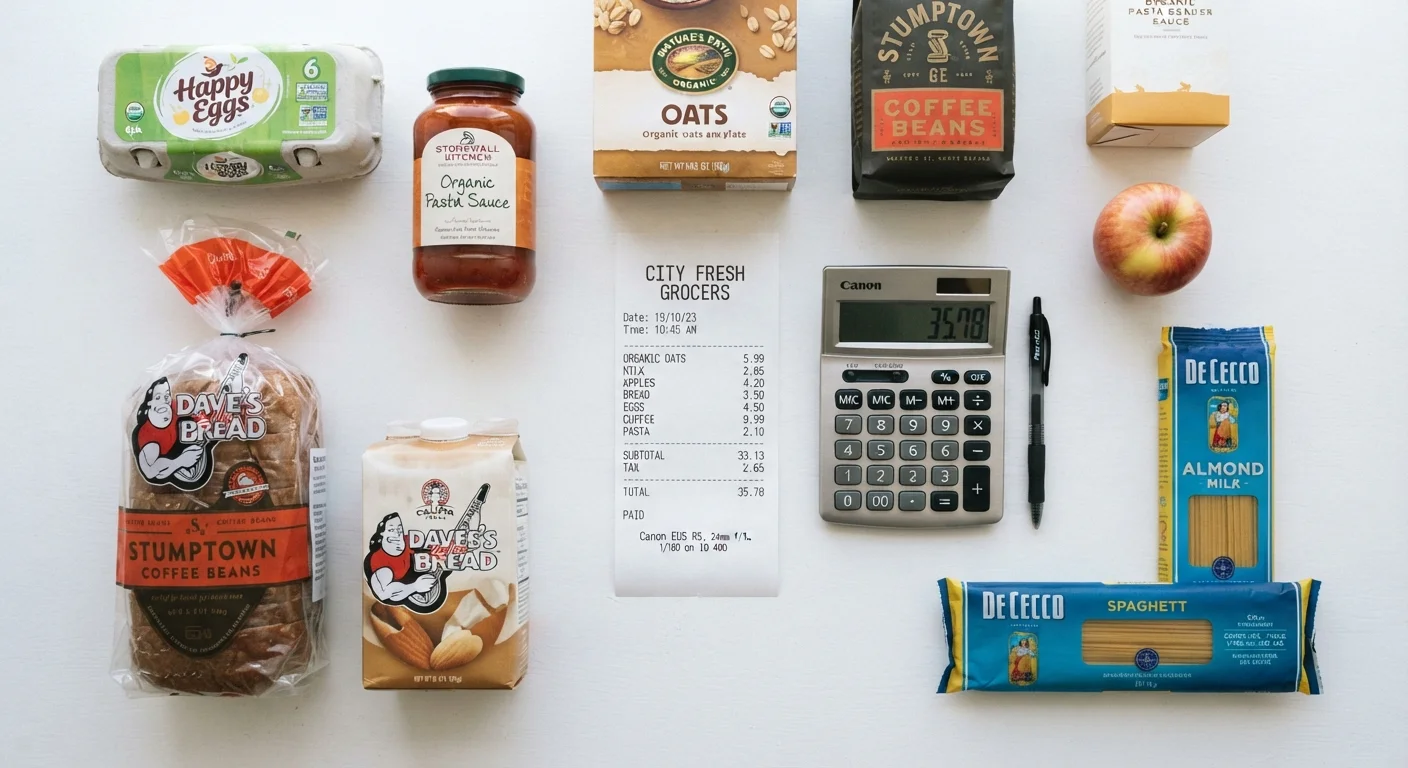
Photo credit: ResultsPivot.com | Discover Insightful Content!
In this article
Learn how to calculate unit price, yield, and cost-per-use so you can compare products on real value rather than sticker price.
Key Takeaways
- Sticker price alone is a poor basis for comparing two products — unit price reveals what you actually pay per measure.
- Yield matters because some products lose volume through waste, dilution, or preparation before they're usable.
- Cost-per-use is the most complete measure for durable goods like razors, cleaning supplies, or personal care items.
- A higher upfront price can deliver a lower cost-per-use, making it the more economical choice.
- These calculations take under a minute and can meaningfully shift which option looks like the better deal.
Why Sticker Price Is the Wrong Starting Point
Walk down any grocery aisle and you'll see prices ranging from suspiciously cheap to eyebrow-raising. The instinct to grab whichever number looks smaller is understandable — but it's also how people consistently overpay. Two products at different price points can deliver radically different value once you look past the tag.
The problem is that sticker price bundles together quantity, concentration, quality, and packaging cost in a single number that tells you almost nothing useful on its own. A $6 bottle of dish soap is not automatically a better deal than a $9 bottle. A $1.99 razor is not automatically cheaper than one priced at $5.00. The maths underneath those numbers is what actually matters — and it's straightforward once you know which calculations to run.
Understanding how common shopping myths cost money is a useful complement to these calculations. Many of those myths exploit the exact same tendency to anchor on face value.
~30%
Average grocery overspend from ignoring unit price
Consumer research consistently estimates that shoppers who don't compare unit prices spend meaningfully more per category over a year, though exact figures vary by study and category.
1 in 3
Shoppers who regularly check unit price labels
Surveys on retail shopping behavior suggest only a minority of shoppers habitually use shelf unit-price labels as a primary comparison tool.
10x
Potential yield multiplier for concentrated cleaners
A typical 1:9 dilution ratio means one fluid ounce of concentrate produces ten fluid ounces of ready-to-use solution, dramatically changing the effective cost per use.
Unit Price: The Foundation
Unit price strips a product down to a cost-per-standard-measure: per ounce, per sheet, per serving, per tablet. The formula is simple:
Unit Price = Total Price ÷ Quantity
A 20 oz jar of peanut butter priced at $3.40 has a unit price of $0.17 per ounce. A 48 oz jar at $7.44 comes to $0.155 per ounce. The larger jar wins on unit price — but only if you'll actually use all of it.
Most US grocery stores are legally required to display unit price on shelf labels, though the unit used (per oz vs. per 100g, per count vs. per serving) can differ between products on the same shelf. Always verify that you're comparing the same unit before concluding one option is cheaper.
Use Your Phone's Calculator in the Aisle
Don't rely on shelf labels alone — they sometimes use different base units across competing products, making direct comparison misleading. Pull up your calculator, divide price by quantity in the same unit, and you'll have a reliable unit price in seconds. It takes less time than reading the nutrition label.
Yield: What You Actually Get to Use
Yield adjusts unit price for the reality that not all of a purchased product ends up being usable. It's most relevant in three situations: concentrated products that require dilution, foods with inedible or discarded portions, and items that degrade before they're fully consumed.
The formula:
Adjusted Cost = Unit Price ÷ Yield Percentage
If a concentrated all-purpose cleaner costs $0.40 per fluid ounce but is diluted at a 1:9 ratio (one part concentrate to nine parts water), the yield is effectively 10x. Your adjusted cost per ounce of ready-to-use solution drops to $0.04. A ready-to-use spray at $0.12 per ounce looks cheaper on the label but costs three times more per ounce of actual cleaning solution.
Yield thinking also applies to food shopping. A bone-in cut of meat may have a lower unit price per pound than a boneless equivalent, but once you account for the weight you're not eating, the boneless option sometimes works out more economical — or very close to it.
Cost-Per-Use: The Full Picture for Durable Products
For products used multiple times — razors, sponges, skincare, cleaning tools — cost-per-use is the most complete measure of value. It accounts for both the purchase price and the number of uses you realistically get.
Cost-Per-Use = Total Price ÷ Number of Uses
A pack of 5 razors at $10 that each last 8 shaves delivers 40 shaves total — a cost-per-use of $0.25 per shave. A single-cartridge razor at $15 that lasts 30 shaves costs $0.50 per shave. The cheaper pack is actually twice as expensive per use. The same logic applies across categories: a $25 sponge mop that lasts 200 cleanings versus a $8 disposable option used 20 times — run the numbers and the result might surprise you.
The challenge with cost-per-use is that "number of uses" requires an honest estimate. Manufacturers' claims are often optimistic. When in doubt, be conservative — it's better to underestimate lifespan than to assume best-case performance.
“The true cost of a product is not what you pay at the register — it's what you pay per unit of value delivered. Everything else is packaging.”
— Edgar K. Browning, Economist and co-author of 'Microeconomics: Private and Public Choice'
Before a significant purchase, running a quick cost-per-use estimate is one of the most useful steps in a broader pre-purchase review. Our pre-purchase checklist walks through how to structure that thinking.
Putting It All Together
These three calculations work as a hierarchy. Start with unit price to normalize across package sizes. Apply a yield adjustment if the product is concentrated, prepared, or partially discarded. Then, for multi-use products, calculate cost-per-use to capture the full span of value.
None of this requires a spreadsheet. A phone calculator and 60 seconds is all it takes. Over time, running these numbers becomes automatic — and the cumulative effect on a household budget is meaningful. Understanding where your spending actually lands, across categories and over time, starts with exactly this kind of per-unit thinking. Our article on understanding spending categories explores the broader picture of where money flows.
Cost-Per-Use Has Limits
These calculations assume consistent quality and honest lifespan estimates. A product that fails early, degrades in storage, or performs inconsistently will skew your cost-per-use higher than the maths predict. Use real-world experience and credible reviews to sanity-check manufacturer claims before committing to a high-volume purchase.
Frequently Asked Questions

Author
Shopping Editorial Team
Shopping Editorial Team is the collective byline for our editorial team and contributor network. Articles published under this byline or an editorial pen name are researched, written, and reviewed according to our editorial standards for clarity, consistency, and independence before publication.
View all articles →