
Spaced Repetition: A Practical Framework for Long-Term Memory
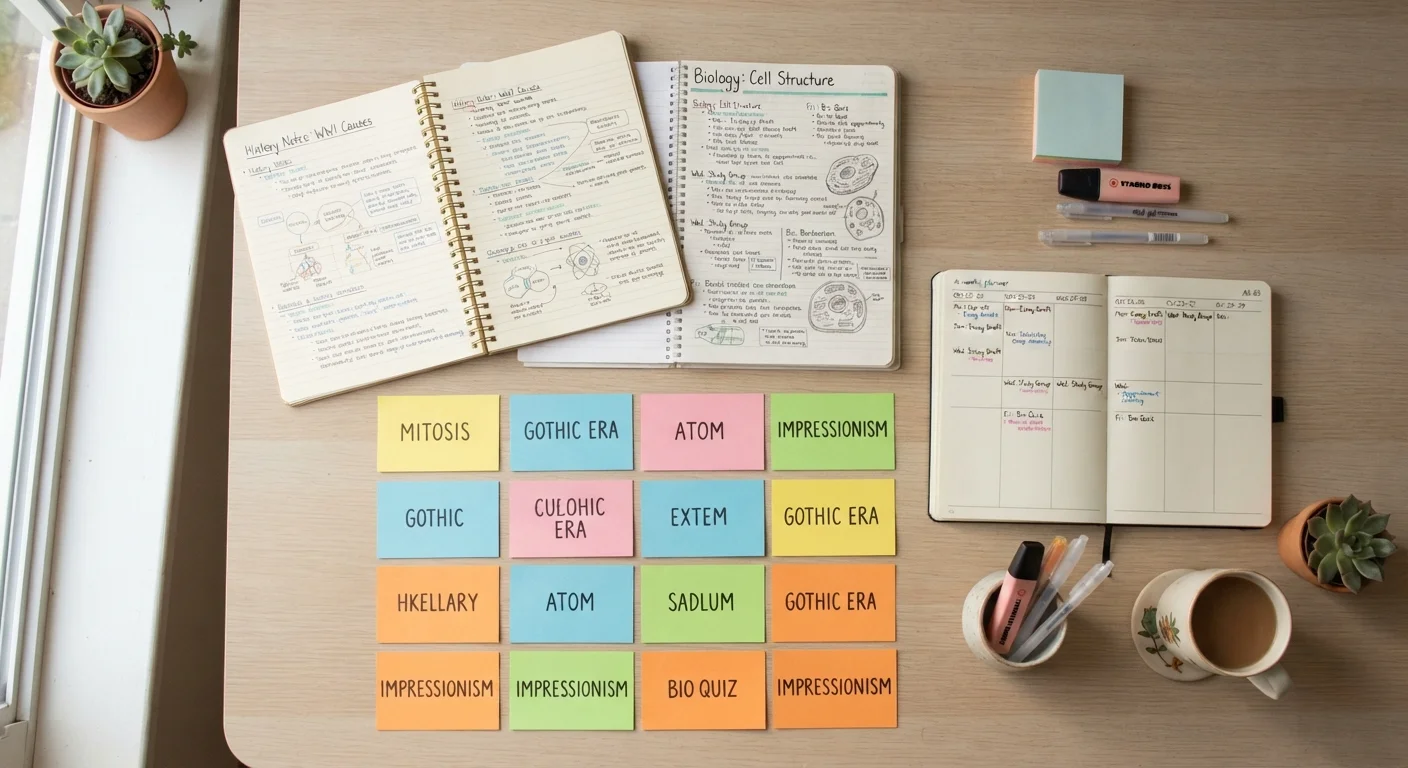
Photo credit: ResultsPivot.com | Discover Insightful Content!
In this article
Spaced repetition schedules reviews at precisely the right moments to prevent forgetting. Here's how to build the habit into any learning routine.
Key Takeaways
- Spaced repetition works by reviewing material just before you're likely to forget it, strengthening long-term retention.
- The method is grounded in the "forgetting curve" — a well-established model of how memory decays over time without reinforcement.
- You can implement spaced repetition with nothing more than index cards and a simple box system — no app required.
- Active recall during each review session dramatically multiplies the memory benefit.
- Consistency in short daily sessions outperforms long, infrequent cramming sessions.
Why Spaced Repetition Works: The Forgetting Curve
Memory doesn't fade at a random rate. Hermann Ebbinghaus's foundational research on memory decay showed that forgetting follows a predictable exponential curve — you lose the sharpest drop in retention within the first day after learning something new, and the curve flattens as time passes. Spaced repetition exploits this pattern deliberately: by scheduling a review just before the memory would naturally degrade, you interrupt the forgetting curve and push the next decay point further into the future with each repetition.
Over enough successful review cycles, the interval before forgetting stretches from days to weeks to months. That's the compounding effect at the core of the method. The science behind memory retention explains why passive re-reading struggles to produce this effect — without the retrieval effort, there's no strong signal prompting your brain to consolidate the information.
Crucially, spaced repetition isn't a memorization hack for trivia. It's the same mechanism that underlies how experts build large, reliable knowledge bases over time. Research into how adults acquire new skills consistently shows that spacing and retrieval practice together are among the most evidence-supported strategies available to learners of any age.
Spaced Repetition Requires Active Recall
Simply re-reading your notes on a schedule is not spaced repetition — it's just spaced reading, which provides far weaker memory benefits. Each review session must involve actively trying to retrieve the information before checking the answer. This retrieval effort is what signals your brain to consolidate the memory. Without it, you're doing the scheduling but missing the mechanism.
What You'll Need to Get Started
One of the underrated advantages of spaced repetition is how low the setup barrier can be. You do not need a specific app or expensive software to begin — though digital tools do automate the scheduling math. Here are the essentials:
Index cards or flashcard app
The core medium for creating review items — one concept per card, question on one side, answer on the other.
A divided card box or five labeled folders
Used in the Leitner box method to physically organize cards by review interval.
A simple calendar or planner
Helps you track which deck or folder is due for review on which day.
A spaced repetition software (SRS) app
Automates interval scheduling and tracks performance per card, removing manual sorting.
What you will need
Once you have a medium and a plan for tracking intervals, you're ready to build your first deck.
Start Smaller Than You Think You Should
New learners often try to add 50 or more cards per day, which quickly becomes unmanageable. Aim for 10–15 new items daily and let the system build gradually. A sustainable pace over weeks will always outperform an ambitious start that collapses after five days.
Step-by-Step: Building Your Spaced Repetition System
Follow these steps to move from a blank page to a functioning review system within a single afternoon.
Choose a Focused Topic and Break It Into Small Units
Before writing a single card, identify exactly what you want to retain. Narrow topics work better than broad ones — "irregular French verbs" beats "French." Then decompose the material into the smallest meaningful units you can. Each unit should represent one fact, one definition, one formula, or one concept relationship. Trying to put too much on a single card makes retrieval ambiguous and undermines the whole system.
Write Cards Using Question-and-Answer Format
The front of every card should pose a direct question that forces retrieval. The back should hold the precise answer. Avoid vague prompts like "Tell me about photosynthesis" — instead write "What molecule is produced on the light-dependent side of photosynthesis?" The specificity is what makes retrieval practice effective. Active recall consistently outperforms passive review, and a well-formed question is the trigger for that recall.
Set Up Your Review Intervals
The classic analog approach is the Leitner box: five compartments labeled with progressively longer intervals (e.g., every 1 day, 3 days, 7 days, 14 days, 30 days). Every new card starts in Box 1. When you answer correctly, the card advances to the next box. When you answer incorrectly, it drops back to Box 1. If you're using a digital app, interval scheduling happens automatically based on how you rate each answer.
Run Daily Review Sessions
Each session has two parts: reviewing cards that are due today, then adding a small batch of new cards. Always do reviews first — new cards are optional if you're short on time, but skipping due reviews defeats the system. When you pull a card, cover the answer, attempt to recall it fully, then check. Rate yourself honestly: either you got it or you didn't. Partial credit muddies the interval signal.
Audit and Retire Cards Regularly
Every few weeks, review your full deck for cards that are now irrelevant, poorly worded, or redundant. Remove or rewrite them. Cards that have reached your longest interval and feel rock-solid can be retired to a "mastered" pile — they no longer need scheduled review. This keeps the active deck manageable and motivating. A bloated deck with hundreds of stale cards is one of the most common reasons people abandon the system.
Don't Skip Reviews When It Feels Easy
When material starts feeling familiar, skipping a scheduled review is tempting — but that familiarity is exactly what makes the review so valuable. The moment just before forgetting is the optimal time to reinforce a memory. Skipping resets the interval and forces you to relearn rather than retain.
Pair this system with complementary strategies for even stronger results. Interleaving — mixing topics across sessions — is one technique that works naturally alongside spaced repetition without disrupting your review schedule. And if you want a broader framework for keeping the habit alive over weeks and months, building a self-directed learning habit walks through the structure that makes consistency possible.

Author
Education Editorial Team
Education Editorial Team is the collective byline for our editorial team and contributor network. Articles published under this byline or an editorial pen name are researched, written, and reviewed according to our editorial standards for clarity, consistency, and independence before publication.
View all articles →