
Zero-Based Budgeting vs. the 50/30/20 Rule: Two Approaches to Managing Your Money
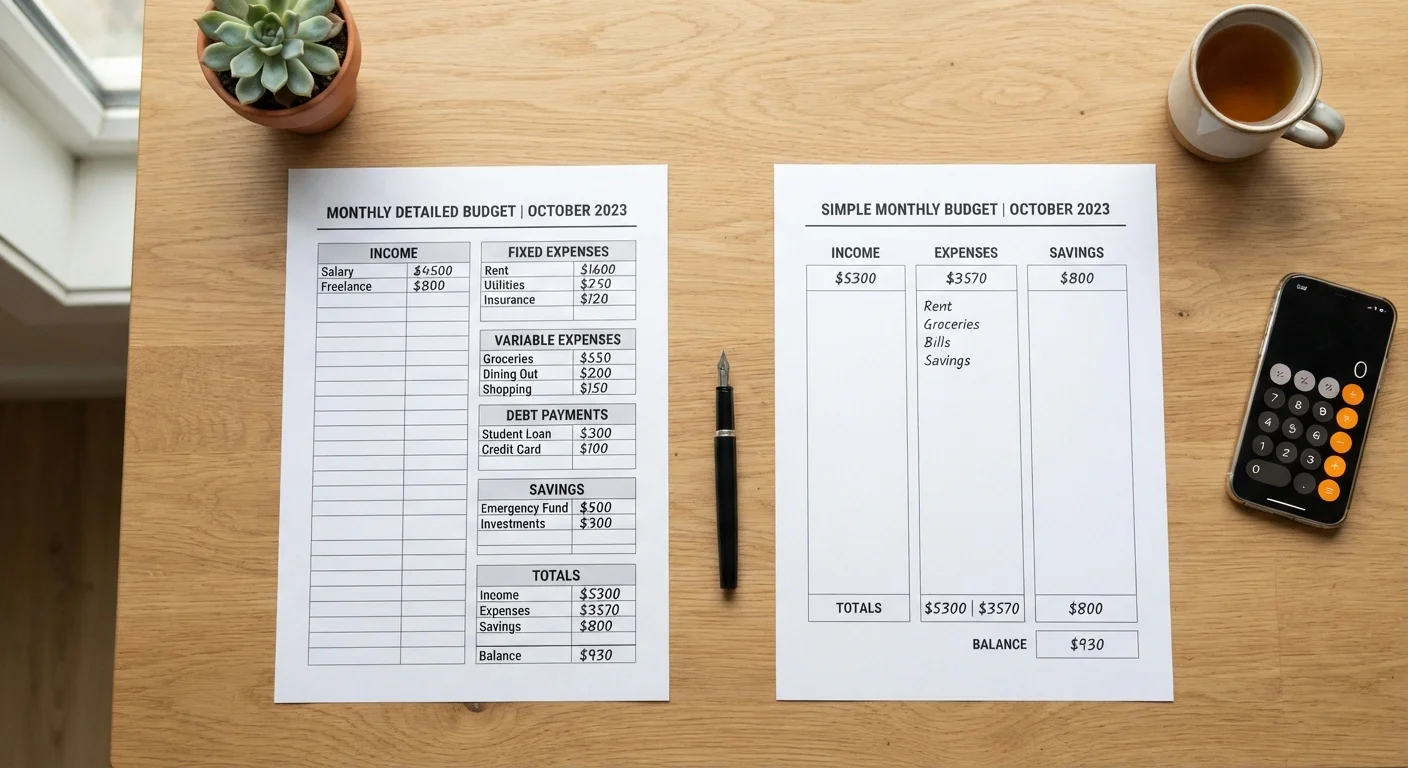
Photo credit: ResultsPivot.com | Discover Insightful Content!
In this article
A clear side-by-side look at two popular budgeting frameworks—how each works, who they suit, and what to consider before choosing one.
Key Takeaways
- Zero-based budgeting assigns every dollar of income a specific purpose, leaving a zero balance at month's end.
- The 50/30/20 rule divides income into three broad buckets: needs, wants, and savings or debt repayment.
- Zero-based budgeting demands more time and detail; the 50/30/20 rule trades precision for simplicity.
- Neither method guarantees financial success — consistent follow-through matters more than which system you pick.
- Many people adapt elements of both frameworks to fit their real-life income and spending patterns.
How Each Method Actually Works
Before comparing the two approaches side by side, it helps to understand what each one actually asks you to do.
Zero-based budgeting starts with your total monthly income and requires you to allocate every single dollar to a specific category — housing, groceries, savings, debt payments, entertainment — until the math reaches zero. The idea is that income minus all assigned expenses equals zero, not because you spend everything, but because savings and investments are treated as deliberate line items rather than leftovers. You build a fresh plan each month, which means adjusting for irregular expenses like a car registration or a birthday trip.
The 50/30/20 rule takes a different approach. Popularized in personal finance discussions over the past two decades, it divides your after-tax income into three broad buckets: roughly 50% toward needs (rent, groceries, utilities, minimum debt payments), 30% toward wants (dining out, subscriptions, hobbies), and 20% toward savings and additional debt repayment. You're not tracking individual expenses in granular detail — you're simply checking whether your spending lands within those three percentage zones.
See our guide to spending categories for a clearer picture of how everyday expenses typically break down before you assign them to either framework.
| Criterion | Zero-Based Budgeting | 50/30/20 Rule |
|---|---|---|
| Setup complexity | High — requires detailed line items | Low — three broad categories |
| Time commitment | Ongoing monthly planning required | Minimal once percentages are set |
| Best income type | Irregular or variable income | Steady, predictable income |
| Spending visibility | Very granular — every dollar tracked | Broad — category-level awareness only |
| Flexibility mid-month | Lower — adjustments require replanning | Higher — categories absorb variation |
| Debt payoff focus | Strong — allocate exactly what you want | Moderate — falls within the 20% bucket |
| Ideal for beginners | Not typically — learning curve is steep | Yes — fast to understand and apply |
The Real Trade-Offs: Control vs. Simplicity
Zero-based budgeting's biggest strength is also its biggest ask: detail. Every month you're rebuilding the plan, which takes time but leaves little room for money to quietly vanish into vague spending. If you've ever reached the end of the month confused about where your paycheck went, that level of accountability can be genuinely clarifying. The downside is that it can feel tedious, and if you miss a few entries mid-month, the whole system loses integrity.
When the 50/30/20 Percentages Don't Fit Your Life
In many U.S. cities, housing alone can consume 40–50% of take-home pay, making the 50% "needs" target unrealistic before other necessities are counted. The 50/30/20 rule was designed as a general guideline, not a universal prescription. If the percentages don't match your cost of living, that's a signal to adjust the ratios — not to abandon budgeting altogether. Think of them as a starting reference point rather than a fixed rule.
The 50/30/20 rule is easier to start and maintain, but its broad categories can mask problems. If your "needs" genuinely consume 65% of your income — which is common in high cost-of-living areas — the framework doesn't offer a clear fix. It describes a healthy ratio more than it prescribes a path to get there. For people whose finances are already roughly in order, that's fine. For those trying to dig out of a tight spot, it may feel too vague.
The most common reasons budgets break down often come down to this tension between ambition and usability — and choosing the right framework for your habits matters more than which one looks better on paper.
~33%
Americans who use a formal household budget
Gallup polling has consistently found that fewer than half of U.S. adults maintain a detailed household budget, underscoring how common it is to manage money without a structured plan.
3 categories
Spending buckets in the 50/30/20 rule
Research on habit formation suggests that simpler systems are more likely to be maintained consistently, which is a key reason percentage-based frameworks remain popular.
Choosing the Right Fit — or Combining Both
There's no objectively superior budgeting method. The right choice depends on your income stability, your tolerance for tracking, and what financial behavior you're trying to change.
If you're starting from scratch, the 50/30/20 rule gives you a workable structure quickly. Once you have a clearer sense of where your money goes, layering in zero-based budgeting's line-item detail can sharpen your results. Many people end up using a hybrid: broad percentage targets to set the overall shape of their budget, and detailed categories within each bucket to actually control spending.
Whatever approach you choose, the monthly budget reset practice — reviewing what happened and adjusting for next month — is what actually makes either system work over time. A budget that goes unreviewed is just a wishlist.
If you're ready to put either method into practice, building your first monthly budget from scratch walks through the setup step by step. And if you're figuring out how to track your actual spending, tracking by hand vs. using an app can help you pick the method that fits your habits.
This article is for general informational purposes only and does not constitute personalized financial advice. Consider consulting a qualified financial professional for guidance specific to your situation.

Author
Finance & Money Editorial Team
Finance & Money Editorial Team is the collective byline for our editorial team and contributor network. Articles published under this byline or an editorial pen name are researched, written, and reviewed according to our editorial standards for clarity, consistency, and independence before publication.
View all articles →