
Debt Consolidation: A Plain-Language Introduction
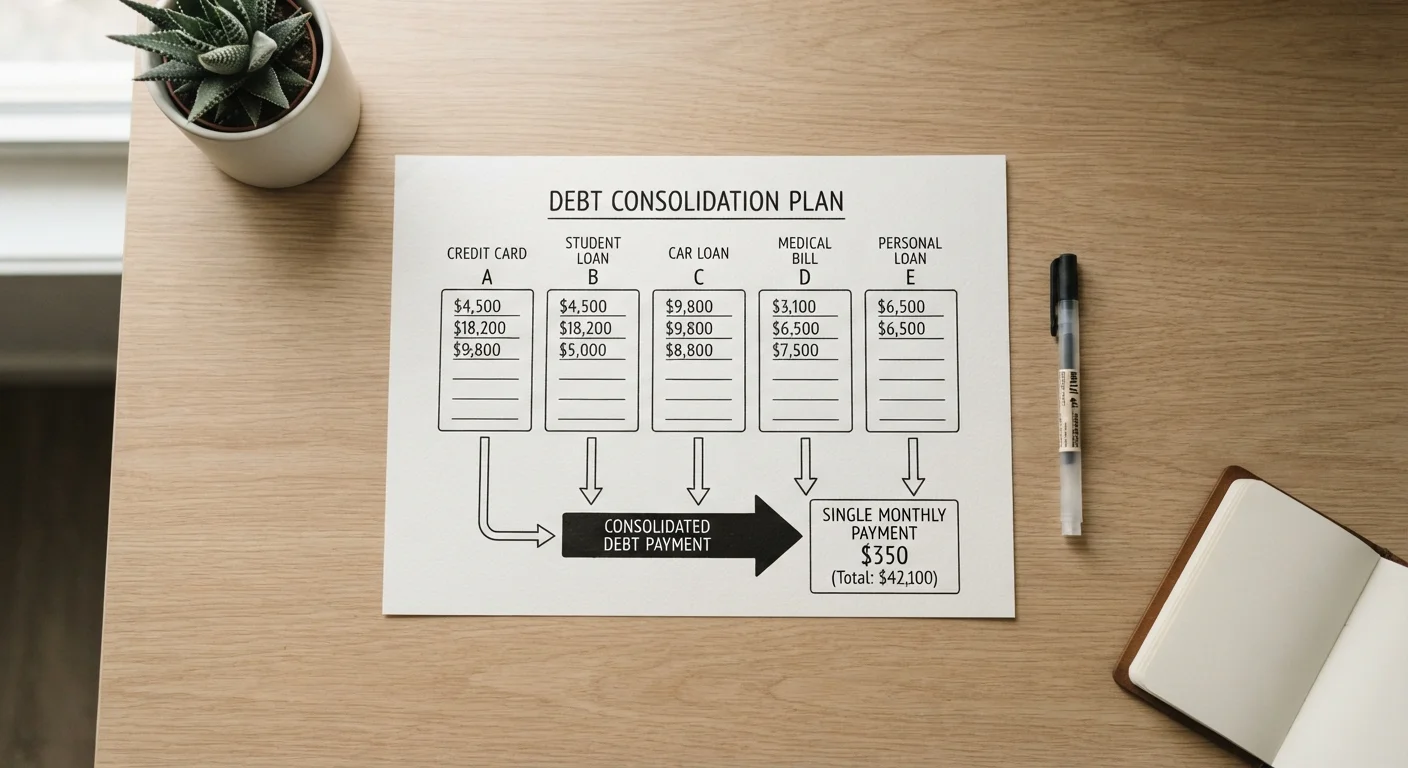
Photo credit: ResultsPivot.com | Discover Insightful Content!
In this article
New to debt consolidation? This guide covers what it means, how it differs from refinancing, and the key factors to weigh before pursuing it.
Key Takeaways
- Debt consolidation combines multiple debts into a single loan or payment, ideally at a lower interest rate.
- It differs from refinancing, which replaces one loan with another on better terms without necessarily combining debts.
- The main tools include personal loans, balance transfer cards, and home equity products — each with different risks.
- Consolidation can simplify repayment but does not erase what you owe; the total debt remains.
- Your credit score, income stability, and spending habits all affect whether consolidation helps or hurts long-term.
- Always consult a licensed financial professional before making decisions specific to your situation.
What Debt Consolidation Actually Means
If you're juggling multiple debt payments — a credit card here, a medical bill there, maybe a personal loan — debt consolidation is the process of rolling some or all of those balances into a single new debt. The goal is usually to simplify repayment, secure a lower interest rate, or both.
Instead of tracking four different due dates and minimum payments, you make one monthly payment to one creditor. That alone can reduce the mental load of managing debt, even before you consider potential interest savings.
It's important to understand upfront: consolidation doesn't reduce what you owe. It restructures how you owe it. The debt is still there — it's just organized differently. That distinction matters, because consolidation works best when paired with a realistic budget and a commitment to not adding new debt on top.
Debt consolidation
The process of combining multiple debts into a single new loan or repayment plan, typically to simplify payments or reduce the interest rate.
Annual percentage rate (APR)
The yearly cost of borrowing money, expressed as a percentage. It includes the interest rate plus most fees, making it a useful number for comparing loan offers.
Collateral
An asset (like a home or car) pledged to a lender as security for a loan. If you don't repay, the lender can seize the collateral.
Unsecured loan
A loan that is not backed by any collateral. Approval and interest rates are based primarily on your creditworthiness rather than an asset you own.
Debt management plan (DMP)
A structured repayment arrangement, typically set up through a nonprofit credit counseling agency, that may negotiate lower rates with creditors on your behalf.
Credit utilization ratio
The percentage of your available revolving credit (like credit card limits) that you're currently using. A lower ratio generally helps your credit score.
For a refresher on foundational money terms, see our plain-language budget reference.
How It Differs from Refinancing
Consolidation and refinancing get used interchangeably, but they're not the same thing.
Refinancing replaces a single existing loan with a new loan — usually to lock in a better interest rate or adjust the repayment term. You still have one loan before and one loan after. A classic example is refinancing a mortgage when rates drop.
Consolidation, by contrast, combines multiple debts into one. You might refinance a consolidation loan later, but the initial act is about merging, not just replacing.
Both strategies aim to improve the terms of your debt, but they operate at different scales. Understanding which applies to your situation helps you ask the right questions when speaking with a lender or financial adviser.
Refinancing vs. Consolidation: Quick Distinction
Think of refinancing as replacing one loan with a better version of itself. Consolidation is about combining — taking several obligations and folding them into one. In practice, a consolidation loan is often also refinanced later if rates improve, so the concepts can overlap over time.
Common Ways to Consolidate Debt
There's no single consolidation product — several tools can do the job, each with trade-offs:
- Personal loans: An unsecured loan used to pay off existing debts. You repay the loan in fixed monthly installments. Interest rates vary based on creditworthiness, and approval isn't guaranteed.
- Balance transfer credit cards: Some cards offer a low or 0% introductory annual percentage rate (APR) on transferred balances for a set period (often 12–21 months). A balance transfer fee typically applies, and the rate rises sharply after the promotional period ends.
- Home equity loans or HELOCs: Borrowing against your home's equity can unlock lower rates, but your home becomes collateral. Missing payments puts your property at risk — this is a significant downside that deserves serious thought.
- Debt management plans (DMPs): Offered through nonprofit credit counseling agencies, DMPs negotiate lower rates with creditors and set up a structured repayment plan. These are not loans; you're still paying the original creditors through the agency.
Check Your Rate Before You Apply
Many lenders now offer a soft-credit-check prequalification that lets you see estimated loan terms without affecting your credit score. Use this to compare options before submitting a formal application. Shopping around — even briefly — can surface meaningful differences in offered rates.
Key Factors to Weigh Before You Decide
Consolidation can be a smart move — or an expensive detour — depending on your circumstances. Before pursuing it, think through these questions:
- Will the new interest rate actually be lower? If the consolidated loan carries a rate similar to or higher than your existing debts, you may not save money and could extend your repayment timeline.
- What are the fees? Origination fees, balance transfer fees, and prepayment penalties can erode any savings. Read the fine print.
- Is your income stable enough to service a new loan? A consolidation loan with a fixed monthly payment requires reliable cash flow. Review your budget before committing.
- What's driving the debt? If spending habits haven't changed, a consolidated loan can free up credit card limits that get maxed out again — leaving you worse off. Our article on what to review before redirecting spare cash covers this dynamic well.
This article is for general informational purposes only and is not personalized financial advice. Consult a licensed financial professional before making decisions about your specific situation.
Secured Debt Puts Assets at Risk
Using home equity to consolidate unsecured debt (like credit cards) converts debt that couldn't cost you your home into debt that can. This is a meaningful shift in risk profile. Only consider this path after thorough review with a qualified professional, and only if you're confident in your ability to make payments consistently.
When Consolidation May Not Be the Right Move
Consolidation isn't always the answer. If your total debt is relatively small and payable within a year or two, the fees and complexity of a consolidation loan may not be worth it. Straightforward repayment strategies — like the avalanche or snowball methods — might get you to zero faster and cheaper. See our comparison of the avalanche vs. snowball repayment methods for a detailed look at how each works.
Similarly, if your credit score has taken a hit recently, the interest rate you'd qualify for might not be low enough to make consolidation worthwhile. In that case, working on credit health first — and then revisiting consolidation — could produce better results.
The bottom line: debt consolidation is a tool, not a solution. Used in the right situation with a clear plan, it can genuinely simplify your financial life and reduce what you pay in interest. Used as a workaround for an unresolved spending problem, it can make things worse. Take the time to understand your numbers, and don't hesitate to get guidance from a nonprofit credit counselor or a certified financial planner.
Consumer Financial Protection Bureau (CFPB) — Debt Collection & Consolidation Resources
The CFPB publishes plain-language guides on managing debt, understanding your rights with collectors, and evaluating consolidation options. A reliable, government-backed starting point.
National Foundation for Credit Counseling (NFCC)
A network of nonprofit credit counseling agencies that can help you understand debt management plans and review your overall financial picture — often at low or no cost.
Frequently Asked Questions

Author
Finance & Money Editorial Team
Finance & Money Editorial Team is the collective byline for our editorial team and contributor network. Articles published under this byline or an editorial pen name are researched, written, and reviewed according to our editorial standards for clarity, consistency, and independence before publication.
View all articles →