
The Avalanche vs. Snowball Method: Two Debt Repayment Strategies Explained
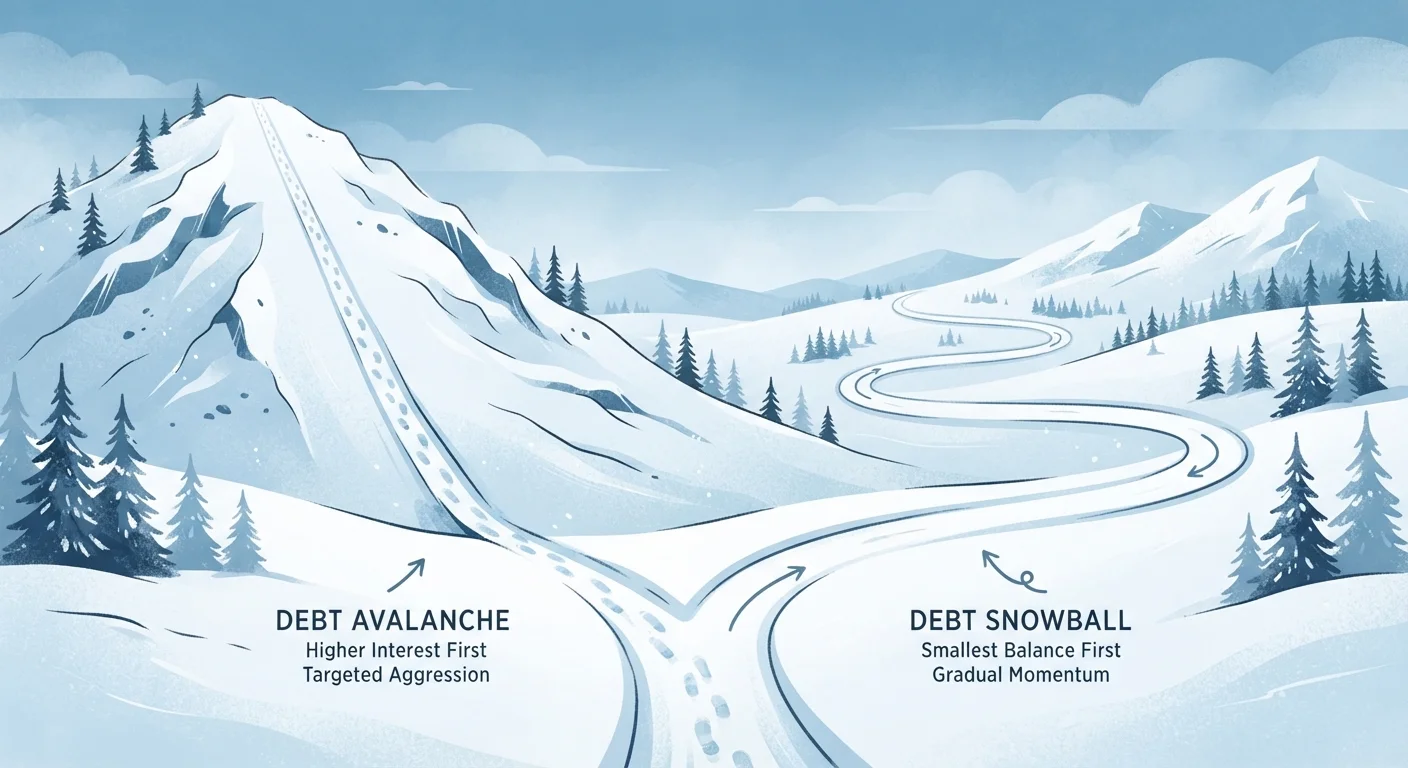
Photo credit: ResultsPivot.com | Discover Insightful Content!
In this article
Learn how the debt avalanche and debt snowball methods work, who each suits best, and what the numbers actually look like over time.
Key Takeaways
- The avalanche method targets the highest-interest debt first, saving more money over time.
- The snowball method targets the smallest balance first, delivering faster psychological wins.
- Neither method is universally superior — the best one is the one you'll actually follow through on.
- Both methods require paying at least the minimum on all debts while directing extra money to one target debt.
- Consulting a financial professional can help you choose the right strategy for your specific situation.
How Each Method Works
Both the avalanche and snowball methods share the same basic structure: pay the minimum required on every debt each month, then direct any extra money you can spare toward one specific target account. The difference lies in which debt you target first.
With the debt avalanche, you rank your debts by interest rate — highest to lowest — and throw every extra dollar at the highest-rate balance. Once that's gone, you roll its payment into the next highest-rate debt, and so on. Because interest is the real cost of carrying debt, this approach limits the total amount you pay back.
With the debt snowball, you rank your debts by balance — smallest to largest — and attack the smallest balance first regardless of its interest rate. When that account hits zero, you roll that payment amount onto the next smallest. The idea, popularized by personal finance educators, is that each paid-off account delivers a concrete win that fuels continued effort.
| Criterion | Debt Avalanche | Debt Snowball |
|---|---|---|
| Repayment order | Highest interest rate first | Smallest balance first |
| Total interest paid | Lower (mathematically optimal) | Slightly higher |
| Time to first paid-off account | Varies — may take longer | Faster for most people |
| Motivational structure | Rewards patience and discipline | Delivers quick wins early |
| Best suited for | Disciplined, numbers-focused individuals | Those who need momentum to stay on track |
| Complexity | Simple — just rank by APR | Simple — just rank by balance |
If you're also exploring whether combining your debts makes sense before choosing a repayment strategy, the plain-language guide to debt consolidation is worth a read first.
What the Numbers Actually Look Like
Consider a simplified example: three debts totaling $15,000.
- Credit card A: $3,000 balance at 22% APR
- Personal loan: $8,000 balance at 11% APR
- Credit card B: $4,000 balance at 17% APR
Assume you can put $500/month total toward debt repayment after minimums.
Under the avalanche, you'd attack Card A first (22%), then Card B (17%), then the personal loan (11%). Result: you'd pay less total interest and likely finish repayment a few months earlier.
Under the snowball, you'd pay off Card A first ($3,000 — the smallest balance), then Card B ($4,000), then the loan ($8,000). You'd clear your first account faster, but because the loan's lower rate isn't immediately targeted, total interest paid tends to run slightly higher.
~$1,000+
Potential interest savings with the avalanche method
The actual savings vary widely by balance size and rates, but financial educators generally estimate the avalanche method saves hundreds to over a thousand dollars compared to minimum payments alone.
80%
Of debt payoff success tied to behavior, not math
Personal finance researchers and educators broadly agree that consistent behavior and motivation — not optimal calculation — is the primary driver of successful debt elimination.
The gap between methods in total interest paid varies widely depending on your specific balances, rates, and extra payment amount. In some scenarios the difference is minor; in others — especially when high-rate debt carries a large balance — the avalanche saves meaningfully more.
The Psychology Factor — and Why It Matters
Here's the honest truth: the mathematically superior plan fails if you abandon it after three months.
Research in behavioral economics consistently finds that people are motivated by visible progress. Paying off a full account — even a small one — activates a sense of completion that can strengthen commitment to the overall goal. This is exactly why the snowball method has helped many people succeed even though it costs a bit more on paper.
Both Methods Require Extra Payment Room
Neither strategy works without money left over after covering minimums and essential expenses. If your budget is very tight, your first step may be finding ways to free up even a small extra amount each month — whether by reducing discretionary spending or increasing income. Even $25 extra per month can meaningfully accelerate repayment over time.
Neither method is the "right" one in the abstract. The right method is whichever you'll consistently follow. If you know yourself to be highly disciplined and numbers-focused, the avalanche may suit you well. If past attempts at debt payoff have stalled out, the snowball's early wins might be the structure you need.
Some people even combine elements — knocking out one tiny balance for a quick win, then switching to avalanche order. There's no rule that says you can't adapt your approach as your situation and confidence evolve.
This article is for general informational and educational purposes only and does not constitute personalized financial advice. For guidance specific to your financial situation, consider consulting a licensed financial professional.

Author
Finance & Money Editorial Team
Finance & Money Editorial Team is the collective byline for our editorial team and contributor network. Articles published under this byline or an editorial pen name are researched, written, and reviewed according to our editorial standards for clarity, consistency, and independence before publication.
View all articles →