
Global Flavors Finding a Permanent Home in American Kitchens
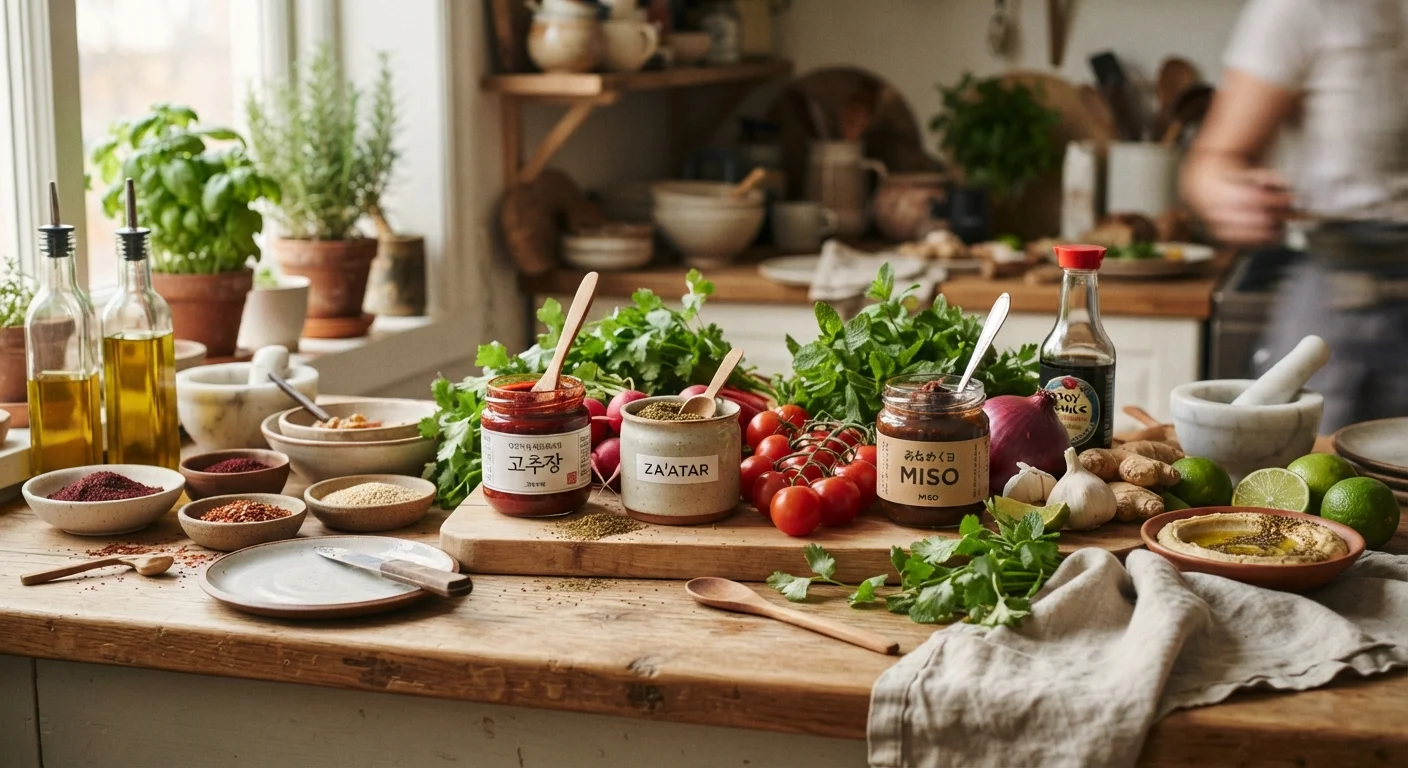
Photo credit: ResultsPivot.com | Discover Insightful Content!
In this article
From gochujang to za'atar, international ingredients are moving off specialty shelves and into everyday US cooking. Here's what's sticking.
Key Takeaways
- International ingredients like gochujang and za'atar are moving from specialty stores into mainstream US supermarkets.
- Home cooks are adopting global flavors not as novelty but as reliable pantry staples.
- Social media and immigrant food communities are the primary drivers behind this culinary shift.
- Fermented, umami-rich, and herb-forward ingredients are seeing the most consistent crossover adoption.
- The trend reflects a broader evolution in American food identity, not just passing dining fashion.
The Pantry Is Changing — For Good
Something quietly seismic has been happening in American grocery aisles. Ingredients that once required a trip to a specialty market — Korean fermented chile paste, Middle Eastern herb blends, Japanese miso — are now stocked between the ketchup and the hot sauce. And once they land in a pantry, they tend to stay.
This isn't a fleeting restaurant trend. Home cooks across the US are building new flavor vocabularies, driven by social media discovery, a more globally connected food culture, and the influence of immigrant communities that have long centered these ingredients in everyday meals. The result is a genuine reordering of what "cooking at home" looks like for millions of Americans.
Understanding which ingredients are making the leap — and why they stick — tells us a lot about how American food identity is evolving. For a deeper look at what drives these crossover moments, see the anatomy of a food trend.
Start With One New Ingredient at a Time
The most sustainable way to expand your flavor repertoire is to work with a single new ingredient across several meals before moving to the next. This builds intuition quickly — you'll learn how bold or subtle it is, what it pairs with, and where it shines. Trying to incorporate five new pantry additions at once tends to result in barely-used jars pushed to the back of the shelf.
The Global Ingredients Earning a Permanent Spot
Gochujang
This Korean fermented red chile paste has arguably had the most dramatic mainstream ascent of any global condiment in recent years. Its appeal is obvious once you taste it: gochujang delivers heat, sweetness, and deep fermented funk all at once — essentially three flavor dimensions in a single spoonful. Home cooks have discovered it works as a marinade base, a glaze for roasted vegetables, a stir into mayo, and a back-of-the-fridge flavor boost for soups and braises. Major US grocery chains now carry it in multiple formats, from tubs to squeeze bottles. Its durability in the pantry and versatility across cuisines make it one of the stickiest imports in recent memory.
Gochujang delivers heat, sweetness, and fermented depth — three flavor dimensions in one spoonful.
Za'atar
The Levantine herb-and-spice blend built on dried thyme, sumac, sesame seeds, and salt has found a surprisingly broad American audience. Za'atar's earthy, tangy profile pairs well with olive oil as a dip, works as a rub for chicken or fish, and adds character to flatbreads and roasted potatoes. Part of its appeal is that it bridges the familiar — herbs most Americans already enjoy — with a flavor combination they haven't encountered before. It also fits neatly into the growing interest in Mediterranean eating patterns, which have gained significant cultural traction in US food media and home kitchens over the past decade.
Za'atar bridges familiar herb flavors with a tangy complexity most American palates haven't encountered before.
Miso
Miso has quietly graduated from soup ingredient to all-purpose umami accelerant in American kitchens. Cooks who once bought a small tub for a single recipe now keep it on hand to enrich salad dressings, compound butters, cookie batters, and braises. White (shiro) miso, with its milder, sweeter profile, tends to be the entry point, while bolder red (aka) miso earns devotees over time. The ingredient's long shelf life and high reward-to-effort ratio make it exceptionally pantry-friendly. Its surge also reflects the broader American obsession with umami and savory depth that's been reshaping taste preferences.
Miso has evolved from a soup ingredient into a go-to umami accelerant across sweet and savory American cooking.
Calabrian Chiles
Imported from Calabria in southern Italy, these small, moderately hot red chiles — typically found packed in oil — have become a restaurant chef's secret weapon that home cooks are finally claiming for themselves. They bring a fruity, oily heat that differs from the vinegar-forward punch of American hot sauces, and they integrate beautifully into pasta, pizza, grain bowls, and sandwiches without overwhelming other flavors. Their availability in jars at everyday grocery retailers has made them significantly more accessible, and food content creators have played a major role in demonstrating their versatility to home audiences.
Calabrian chiles bring a fruity, oily heat that integrates into everyday dishes in ways American hot sauces simply don't.
Tamarind
Tamarind has been a staple across South Asian, Southeast Asian, Latin American, and West African cuisines for centuries — but its crossover into broader American home cooking has accelerated noticeably. The tart, fruity concentrate adds a distinctive sourness that cooks describe as more rounded and complex than citrus. It functions as a souring agent in curries and chutneys, a base for marinades, a flavor component in cocktails and agua frescas, and — increasingly — a finishing drizzle over street corn and grilled proteins. Its presence across so many distinct global food traditions gives it an unusual legitimacy that resonates with curious home cooks.
Tamarind's rounded sourness works across cuisines in ways citrus simply can't replicate.
Sumac
Dried and ground from tart red berries native to the Middle East and Mediterranean, sumac has become a finishing spice that American cooks reach for whenever a dish needs brightness without acidity. Sprinkled over hummus, fattoush, grilled meats, or roasted cauliflower, it adds a jewel-red color and a citrusy, slightly astringent pop that feels both new and immediately intuitive. Sumac frequently travels alongside za'atar (it's a key component of many blends), which means consumers discovering one often discover both — a virtuous adoption cycle that has helped both ingredients build shelf presence in mainstream stores.
Sumac adds brightness and color to dishes in a way that feels immediately intuitive even to first-time users.
Representation Matters in This Conversation
Many of the ingredients gaining mainstream attention in the US have deep cultural roots in immigrant communities that have used them for generations. Celebrating their broader adoption is worthwhile, but so is recognizing where they come from — and supporting the restaurants, markets, and producers who have long championed them. For more on the nuances of how cuisines travel across cultures, see what Americans often misunderstand about "authentic" cuisine.
Why These Flavors Are Here to Stay
What separates a lasting pantry adoption from a viral flash-in-the-pan is utility. Each ingredient on this list works across multiple meal types, complements familiar American cooking techniques, and delivers outsized flavor payoff with a modest learning curve. That combination is hard to give up once you've experienced it.
There's also a cultural infrastructure behind the shift. Immigrant communities have long been the quiet engine of American food evolution — and as their culinary traditions gain more visibility, the ingredients central to those traditions earn wider recognition. This is meaningfully different from appropriation or trend-chasing; it's integration at the pantry level. If you're curious how that plays out in practice, what Americans get wrong about "authentic" cuisine is worth exploring.
The deeper throughline? Americans have developed a genuine appetite for complexity — particularly the savory depth that food scientists call umami. Why Americans are obsessed with depth of flavor explains how that craving is reshaping what ends up on the table. And it's worth noting that many of these global staples overlap with the fermented foods category — for more on that crossover, see which fermented foods are genuinely trending.

Author
Food & Drink Editorial Team
Food & Drink Editorial Team is the collective byline for our editorial team and contributor network. Articles published under this byline or an editorial pen name are researched, written, and reviewed according to our editorial standards for clarity, consistency, and independence before publication.
View all articles →