
Smash Burgers, Birria Tacos, Dirty Sodas: Inside the Anatomy of a Food Trend
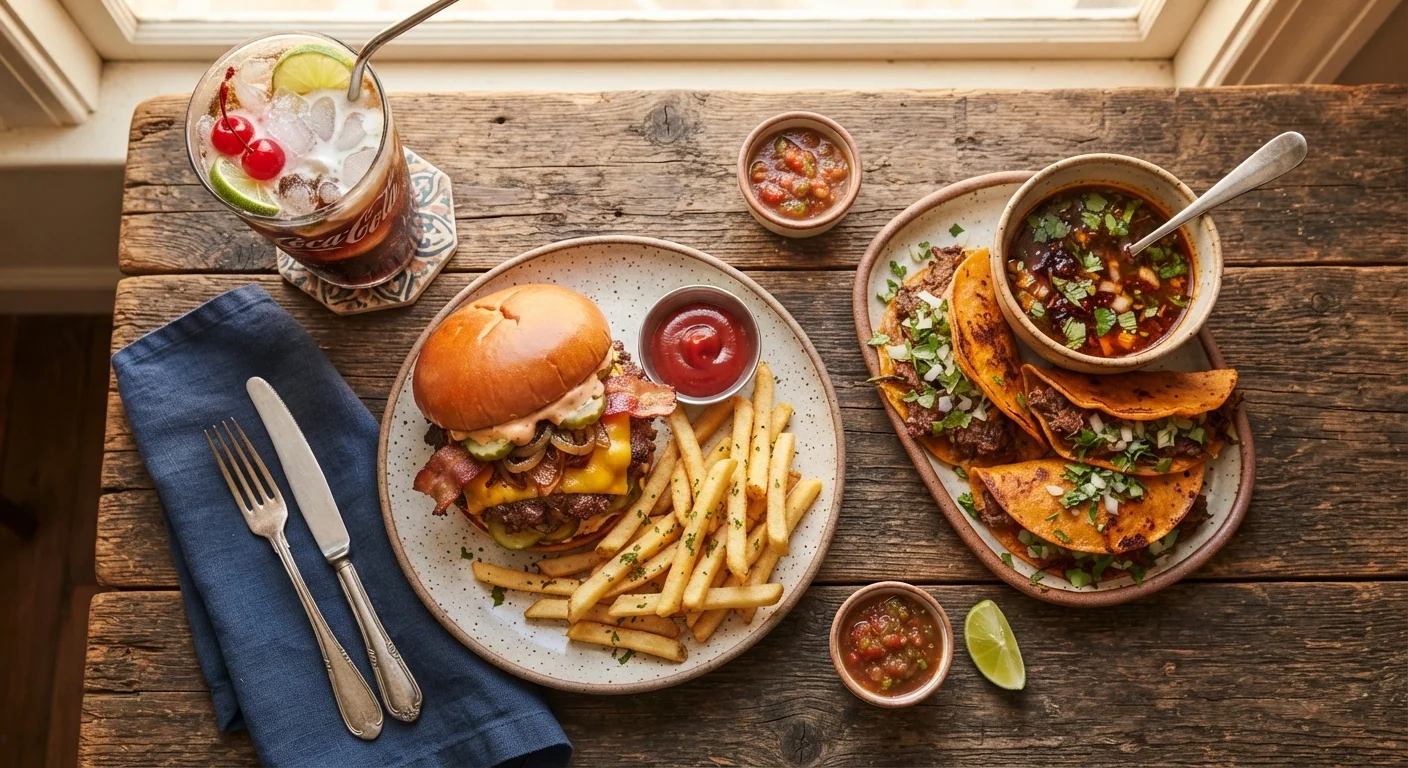
Photo credit: ResultsPivot.com | Discover Insightful Content!
In this article
Why do some foods explode into mainstream culture while others fade fast? A breakdown of how US food trends actually form and spread.
Key Takeaways
- Food trends typically require visual appeal, cultural authenticity, and platform amplification to break through.
- Social media shortens trend cycles — what once took years to spread now moves in months.
- Smash burgers, birria tacos, and dirty sodas each followed a distinct but recognizable growth pattern.
- Ghost kitchens have accelerated trend adoption by letting operators pivot menus rapidly.
- Trends that survive peak hype usually offer genuine flavor depth or ritual — not just novelty.
What Makes a Food Trend Actually Trend?
Not every delicious dish becomes a cultural moment. Plenty of extraordinary foods stay regional, seasonal, or quietly beloved without ever blowing up. So what separates a passing plate from a full-blown trend? According to food researchers and culinary anthropologists, a few specific conditions need to align: the food has to be visually distinctive, emotionally resonant, and easy to talk about in a single sentence.
Accessibility matters too. The most explosive US food trends tend to land in a price range and format that feels attainable — something you can order at a food truck, a fast-casual counter, or recreate at home with minimal fuss. The moment a dish crosses into "I could actually try that this weekend" territory, it has real momentum.
Cultural timing plays a quiet but powerful role. Trends rarely emerge in a vacuum — they tend to surface when the broader food conversation is ready for them. The sustained American appetite for savory complexity created a receptive audience for bold, layered dishes that might have felt niche a decade earlier.
36%
Americans who discover new foods via social video
A 2023 report by the International Food Information Council noted that over a third of US adults reported finding new foods and recipes through short-form video platforms.
2–3 years
Typical mainstream food trend lifespan
Food industry analysts generally estimate that major consumer food trends peak and begin to normalize within two to three years of hitting mainstream visibility.
$1.2B+
Estimated US ghost kitchen market size
Market research firms have estimated the US ghost kitchen industry at over one billion dollars, with growth driven by delivery demand and lower operating costs.
The Visual Test: If It Doesn't Film Well, It Won't Travel Far
In the current food landscape, virality is almost inseparable from aesthetics. Short-form video platforms have fundamentally changed which foods get amplified and which stay invisible. A cheese pull, a sizzling griddle smash, a cup overflowing with flavored syrups — these aren't accidents. They're the visual hooks that make someone stop scrolling.
Food stylists and restaurant consultants have noted that menu development increasingly considers "the video moment" — a single, undeniable visual beat that makes the dish shareable before it's even tasted. This doesn't mean substance is irrelevant; in fact, dishes that look great but taste forgettable tend to generate one wave of posts and then disappear. The ones with staying power deliver on the visual promise.
When evaluating whether a food trend has legs, look past the social media volume and ask: does the dish have a repeatable ritual — a step or moment people want to experience again? That's the difference between a one-post wonder and something that sticks.
Ritual and repeatability are consistent features of durable food trends, from taco Tuesdays to the consommé-dipping moment that made birria tacos so shareable.
Pay attention to where a trend is being adopted last — when it hits airport food courts and chain menus simultaneously, you're likely at or past peak saturation, not the start.
Chain adoption typically signals a trend has crossed from cutting-edge to mainstream, which is both the moment of widest reach and the beginning of cultural fatigue.
It's worth noting that the platform driving a trend shapes who discovers it and how fast. A dish that takes off on TikTok reaches a younger, more geographically diverse audience than one that finds its footing on Instagram or through food media coverage. Platform matters as much as the food itself.
Case Studies: Smash Burgers, Birria Tacos, Dirty Sodas
These three foods didn't trend by accident — each one hit the key pressure points in its own way.
Smash Burgers
The smash burger's genius is theatrical simplicity. A ball of ground beef pressed hard against a screaming-hot griddle creates lacy, caramelized edges through the Maillard reaction — a real, chemistry-backed flavor upgrade, not just a gimmick. The sizzle is audible on video. The crust is unmistakable in a photo. And the technique is replicable at home with a cast-iron pan, which fueled a massive wave of amateur cooks posting their own results.
Birria Tacos
Birria — a slow-braised meat stew originating from the Mexican state of Jalisco — had been a staple in Mexican-American communities for generations before it went mainstream. The trend accelerated when the consommé-dipping format became a social media sensation: a taco dunked in rich, crimson broth is one of the most visually compelling food moments of the last several years. Importantly, its popularity has introduced many Americans to a genuinely deep culinary tradition, sparking wider curiosity about regional Mexican cuisine.
Dirty Sodas
A dirty soda — typically a soft drink doctored with cream, flavored syrups, and mix-ins — emerged from Utah's soda shop culture and found a national audience almost entirely through social video. Its appeal is customization: the combinations are near-infinite, the colors are vivid, and every cup looks like a different creation. It also offered a non-alcoholic "treat" that resonated with a growing segment of Americans moderating their drinking habits.
“The foods that endure a trend cycle are almost always the ones that were genuinely good before anyone was watching. Virality can introduce a dish to millions, but flavor and tradition are what keep people coming back.”
— Khushbu Shah, Food journalist and author of 'Amrikan: 125 Recipes from the Indian American Diaspora'
The Role of Restaurants, Ghost Kitchens, and Street Culture
Brick-and-mortar restaurants are no longer the sole incubators of food trends. Street food, pop-ups, food trucks, and — increasingly — ghost kitchens have become faster and more flexible laboratories for new ideas. Because ghost kitchens operate without a physical dining room, they can test a trend-driven menu concept with far lower overhead, then scale or pivot within weeks based on delivery data.
This has meaningfully compressed the timeline from "emerging" to "everywhere." Ghost kitchens and the delivery-only restaurant economy have made it possible for a trend to reach suburban neighborhoods without a single storefront opening there. A customer in a mid-sized city can order birria tacos from a ghost kitchen operating out of a shared commissary, experiencing a trend that might otherwise have taken years to arrive.
The result is a more democratized — but also more crowded — trend environment. Diners in the broader American dining culture now encounter trend foods faster than ever, but so does every operator looking to capitalize on the moment.
Trend Adoption Can Erase Cultural Context
When dishes rooted in a specific cultural tradition — like birria or certain fermented foods — get rapidly commercialized, the origin story can get lost or flattened. Diners and operators who take time to understand a dish's background tend to treat it with more fidelity, and the food is usually better for it.
How Trends Die (And What Survives)
Oversaturation is the most common killer. When every fast-food chain, grocery store, and meal-kit service releases a version of the same dish within the same quarter, the sense of discovery evaporates — and with it, much of the emotional appeal. The food doesn't get worse; the cultural excitement just drains away.
What survives peak hype tends to have one of two things going for it: genuine flavor depth, or ritual. Fermented foods are a good example — while certain formats have trended loudly, the category as a whole has maintained momentum because the genuine health and flavor interest in fermentation runs deeper than any single product cycle.
Birria is likely to follow a similar path — transitioning from trend to staple in cities with strong Mexican-American food cultures, while fading from trend-chasing menus that treated it as a novelty. Smash burgers have arguably already made that transition, becoming a legitimate menu standard rather than a moment.
Reading a Trend's Staying Power
Watch how a dish is being discussed, not just how often. If the conversation stays focused on novelty and spectacle, the trend may peak fast. If people start talking about variations, regional versions, and home-cooking attempts, the dish has likely earned a longer run.
What's Likely Next on the Trend Cycle
Predicting the next breakout food is genuinely difficult — trends resist easy forecasting, and the ones that feel certain often stall while surprises emerge from unexpected corners. That said, a few patterns offer clues about where momentum is building.
Regional American cuisines that haven't yet had their mainstream moment — Appalachian, Gullah Geechee, Indigenous — are generating serious interest in food media and chef conversations. Dishes with a clear origin story and cultural depth tend to have more staying power than pure novelty items. Meanwhile, the American appetite for customizable, non-alcoholic beverage experiences (of which dirty sodas are one expression) shows no signs of slowing.
The mechanics of trend formation are also shifting. As platforms evolve and algorithm behavior changes, the next food moment might arrive through a channel that doesn't exist yet in its current form. What stays constant is the underlying human pull: we want food that surprises us, connects us to something real, and gives us something worth sharing.
The Dining Culture Hub
Explore how and where Americans love to eat out and gather — from dining rituals to emerging restaurant formats. A useful companion for understanding the broader context of food trends.
Fermented Foods Trend Breakdown
A deep dive into which fermented foods are genuinely trending in the US and what's driving the broader cultural shift toward fermentation beyond kombucha.
Ghost Kitchens and the Invisible Restaurant Economy
Understand how delivery-only ghost kitchens operate and why they've become a major force in how food trends spread across American cities.

Author
Food & Drink Editorial Team
Food & Drink Editorial Team is the collective byline for our editorial team and contributor network. Articles published under this byline or an editorial pen name are researched, written, and reviewed according to our editorial standards for clarity, consistency, and independence before publication.
View all articles →