
Ghost Kitchens and the Invisible Restaurant Economy
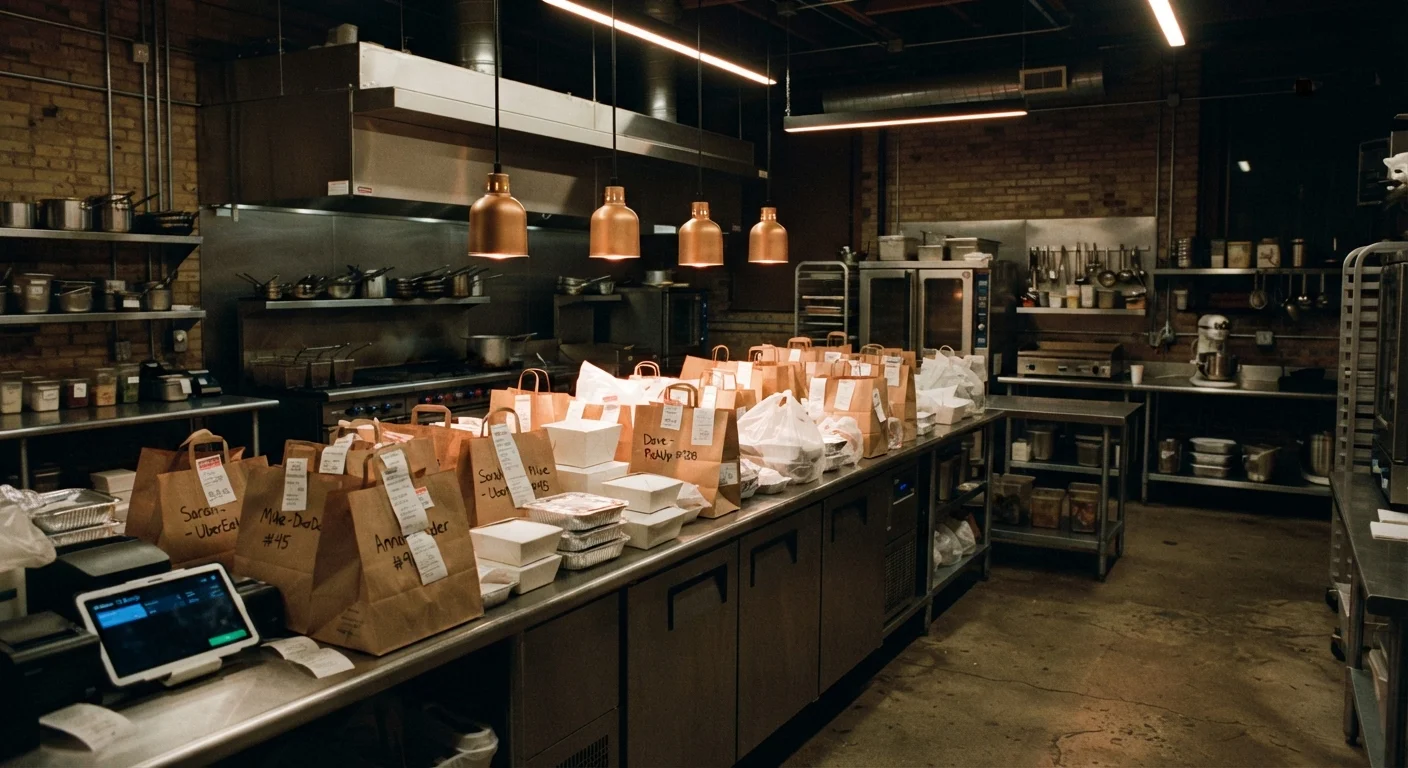
Photo credit: ResultsPivot.com | Discover Insightful Content!
In this article
Delivery-only ghost kitchens are quietly reshaping where Americans eat. Understand what they are, how they operate, and why they're spreading across US cities.
Key Takeaways
- Ghost kitchens are delivery-only food operations with no dine-in space or customer-facing storefront.
- They significantly lower startup costs compared to opening a traditional restaurant.
- A single ghost kitchen facility can house multiple virtual restaurant brands simultaneously.
- The model exploded during the pandemic and continues growing as delivery demand stays strong.
- Ghost kitchens raise real questions about transparency, food quality, and the future of dining culture.
The Restaurant You'll Never Walk Into
Scroll through a delivery app on any given night and you'll find dozens of restaurants you've never heard of — vivid names, polished logos, and cuisines that seem almost too convenient. Many of them don't exist in any traditional sense. No dining room, no neon sign, no host at the door. Just a kitchen, somewhere, cooking food that arrives at your address in 30 minutes.
These are ghost kitchens, and they've quietly become one of the most significant forces reshaping how Americans eat. Understanding what they are — and what they mean for dining culture — is increasingly necessary just to make sense of your own delivery order.
Ghost Kitchens Go By Many Names
You may encounter the terms dark kitchen, virtual kitchen, cloud kitchen, or shadow kitchen used interchangeably in industry coverage. While there are subtle operational differences between some of these setups — particularly around ownership structure and whether space is shared — they all describe the same core idea: food production without a customer-facing dining space.
How the Model Actually Works
Strip away the branding and a ghost kitchen is simply a commercial cooking space optimized entirely for takeout and delivery. Operators lease kitchen square footage — sometimes a single station in a shared commissary, sometimes an entire facility — and run one or more virtual restaurant brands from it. Orders flow in through delivery platforms, food gets packaged, and a driver picks it up. That's the full loop.
The economics are what make the model compelling. Opening a traditional restaurant involves enormous upfront costs: a prime location, a dining room build-out, front-of-house staff, and the risk that foot traffic may never materialize. A ghost kitchen sidesteps most of that. Operators can launch a new cuisine concept, test a menu, and reach customers across a wide delivery radius without a lease on a visible storefront.
$1 trillion
Projected global ghost kitchen market value by 2030
Industry analysts at Euromonitor and others have cited projections suggesting the ghost kitchen sector could reach this scale, reflecting rapid global adoption of the delivery-only model.
~30%
Commission rate charged by major delivery platforms
Third-party platforms typically take a significant cut of each order, which squeezes ghost kitchen margins and remains a central tension in the business model.
60%+
Of US adults who ordered food delivery in a given month
Surveys from the National Restaurant Association have consistently shown that a majority of American adults regularly use food delivery services, sustaining the consumer base ghost kitchens depend on.
This flexibility also means one physical kitchen can generate revenue under several different brand names simultaneously — a pizza concept at lunch, a wings brand at dinner — maximizing kitchen time and reducing idle overhead.
Why They Spread So Fast
Ghost kitchens were growing before 2020, but the COVID-19 pandemic acted as a massive accelerant. When dining rooms shut down across the country, the delivery-only kitchen suddenly looked prescient rather than peripheral. Established restaurant groups launched virtual brands to keep kitchens active. Entrepreneurs saw low barriers to entry. Third-party delivery platforms, already expanding their market share, benefited enormously.
The cultural backdrop mattered too. American appetite for delivery had been building for years, driven by app convenience and a broader shift toward eating at home. Ghost kitchens met that demand where it lived — on the phone screen — rather than on a street corner. As food trends spread rapidly through social media, ghost kitchens proved nimble enough to pivot quickly toward whatever was capturing attention.
How to Spot a Virtual Brand on Delivery Apps
If you're curious whether a restaurant listing is a ghost kitchen or virtual brand, try searching for the name independently outside the delivery app. If there's no website, no physical address you can visit, and the listed location matches multiple other brands, you're likely looking at a virtual concept. That's not necessarily a red flag — but it's useful context when deciding where to order.
The Bigger Questions Ghost Kitchens Raise
The ghost kitchen model isn't without friction. Consumer advocates have raised concerns about transparency — when a brand's origins are invisible, it's harder to evaluate quality, sourcing, or even basic hygiene reputation. Some delivery platforms have faced criticism for listing what appear to be independent restaurants that are actually subsidiary brands of larger ghost kitchen operators, making the marketplace feel deceptive to consumers who think they're supporting a small local business.
There's also the question of what this shift means for dining as a social experience. Ghost kitchens represent the logical endpoint of eating as pure transaction — food delivered to wherever you are, consumed without atmosphere or ritual. That contrasts sharply with the direction other parts of the industry are heading, where formats like open kitchens and chef's counters are deepening the sensory and communal dimensions of dining out. And compared to the ongoing conversation about how Americans choose between fast casual and fine dining, ghost kitchens occupy a category that barely registers in cultural terms — they exist almost entirely as logistics.
“The restaurant industry has always been about adapting to how and where people want to eat. Ghost kitchens are just the latest expression of that — they follow the consumer rather than asking the consumer to come to them.”
— David Henkes, Senior Principal, Technomic food industry research firm
None of this makes ghost kitchens inherently bad. But it does make them worth understanding as a genuine reshaping of the food system, not just a delivery quirk. The invisible restaurant economy is already enormous — and it's still growing.
Frequently Asked Questions

Author
Food & Drink Editorial Team
Food & Drink Editorial Team is the collective byline for our editorial team and contributor network. Articles published under this byline or an editorial pen name are researched, written, and reviewed according to our editorial standards for clarity, consistency, and independence before publication.
View all articles →