
Nutrition Labels Explained: What the Numbers on the Back of a Pack Mean
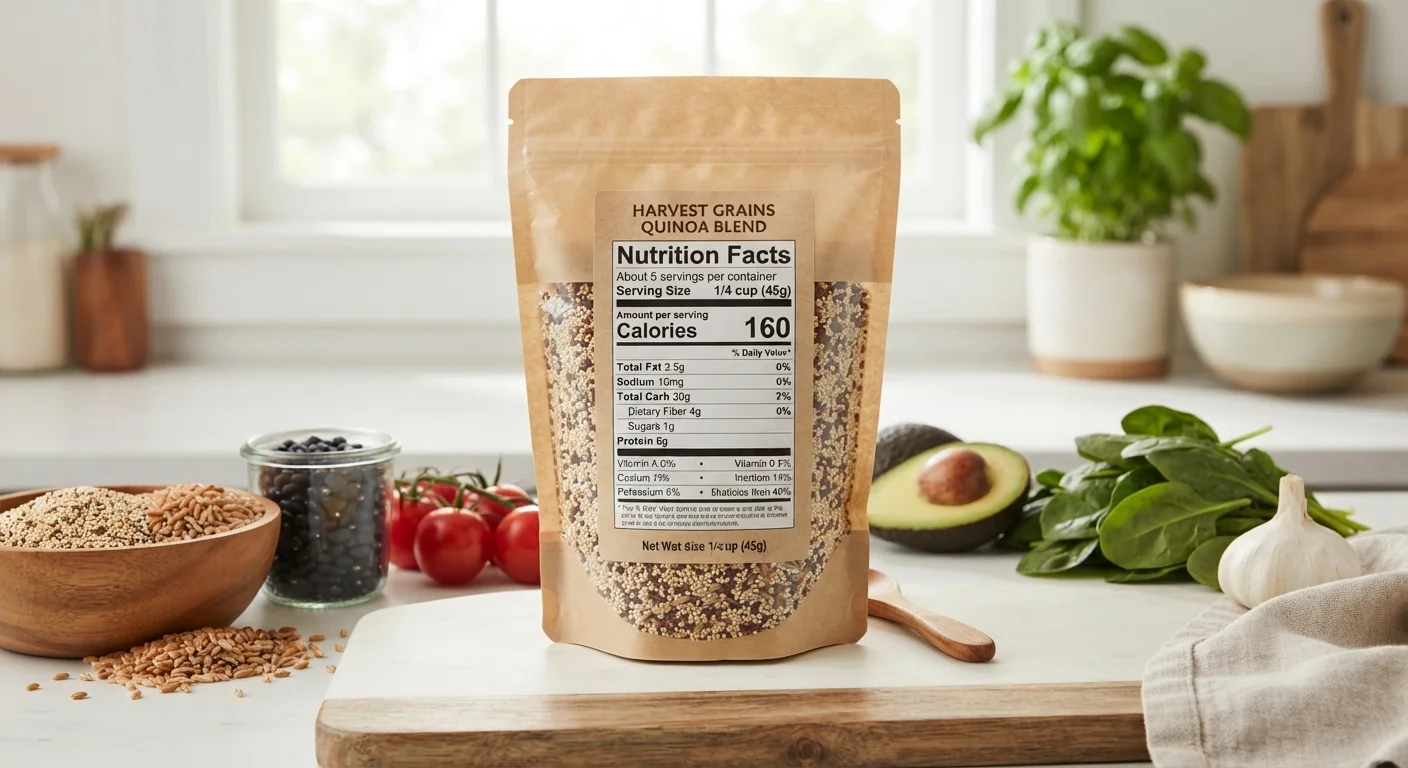
Photo credit: ResultsPivot.com | Discover Insightful Content!
In this article
Serving sizes, daily values, added sugars — learn how to read a nutrition label without needing a degree in dietetics.
Why the Nutrition Facts Panel Matters
The Nutrition Facts label found on packaged foods in the U.S. is a federally regulated tool — updated by the FDA in 2016 — designed to give you standardized, comparable information about what you're eating. Yet for most people, it still feels like a puzzle. Once you know the structure, it becomes one of the fastest ways to compare two products without relying on the often misleading claims printed on the front of the pack.
For a deeper look at how front-of-pack marketing can distort your perception, see how to use the back-of-pack panel to judge a product clearly.
| Label Regulation Body | U.S. Food and Drug Administration (FDA) |
| Most Recent Major Update | 2016 (mandatory compliance by 2020 for most manufacturers) (FDA) |
| Reference Daily Calorie Baseline | 2,000 calories per day (Used for %DV calculations; individual needs vary) |
| Low %DV Threshold | 5% DV or less per serving (FDA general guidance) |
| High %DV Threshold | 20% DV or more per serving (FDA general guidance) |
| Required Vitamins & Minerals | Vitamin D, Calcium, Iron, Potassium (Updated from 2016 rule; Vitamins A & C no longer required) |
Breaking Down Each Section of the Label
Serving Size — Everything on the label is calculated per serving, not per package. If a bag of chips lists a serving as 1 oz (about 28g) and contains 3.5 servings, you need to multiply every number by 3.5 if you eat the whole bag. Serving sizes are now based on amounts people typically eat, not aspirational portions — a practical change from the 2016 update.
Calories — The calorie count is displayed prominently. This figure reflects total energy from fat, carbohydrates, and protein combined. Context matters: a 300-calorie snack means something different alongside the rest of your day's intake.
% Daily Value (%DV) — Possibly the most useful column on the label. It tells you how much one serving contributes to a standard 2,000-calorie daily diet. As a general guide: 5% DV or less is considered low for a nutrient; 20% DV or more is considered high. Use this to quickly gauge whether a food is a meaningful source of fiber or is heavy on sodium.
% Daily Value (%DV)
A percentage shown on nutrition labels indicating how much of a nutrient one serving contributes to a standard 2,000-calorie daily diet. It is a quick benchmark — not a personal prescription — for comparing foods.
Added Sugars
Sugars and syrups added to foods during processing or preparation, distinct from sugars naturally occurring in whole foods like fruit or milk. The 2016 FDA label update requires these to be listed separately.
Serving Size
The standardized amount of food that all label data is based on. It reflects typical consumption amounts set by the FDA, not a recommended portion, and is expressed in common household units and grams.
Saturated Fat
A type of dietary fat found primarily in animal products and some tropical oils. Most major health guidelines suggest consuming it in limited amounts, as high intake has been associated with elevated LDL cholesterol levels in some individuals.
Dietary Fiber
The indigestible portion of plant-based foods that supports digestive health, satiety, and blood sugar regulation. Most Americans consume well below the recommended daily amount.
Trans Fat
An artificially produced fat created through partial hydrogenation of oils, largely phased out of U.S. food production. Labels may show 0g trans fat even if small amounts remain, due to rounding rules.
Fats — The label breaks fat into total fat, saturated fat, and trans fat. Saturated fat and trans fat are the ones most health guidelines suggest limiting, though research on dietary fat is nuanced. Unsaturated fats — found in nuts, olive oil, and fish — are not separated out but are implied by the difference.
Sodium — Listed in milligrams. Many packaged foods deliver a significant share of the daily sodium target in a single serving, which is worth noting if you are monitoring your intake. Dietary guidelines generally suggest adults aim for less than 2,300 mg of sodium per day.
Carbohydrates — Total carbs are broken into dietary fiber, total sugars, and added sugars — a newer, important distinction. Added sugars are those introduced during processing (syrups, sweeteners), separate from sugars naturally present in fruit or dairy. Current guidelines recommend keeping added sugars below 10% of total daily calories.
Protein — Listed in grams but without a %DV for most adults, since protein needs vary significantly by age, body weight, and activity level.
Vitamins and Minerals — The label now requires Vitamin D, calcium, iron, and potassium — nutrients many Americans fall short on — replacing Vitamins A and C, which are less commonly deficient in the U.S. population.
Putting It All Together for Smarter Choices
Reading a label effectively is less about memorizing numbers and more about developing a quick mental scan. Look at serving size first — always. Then check calories in context. Use %DV as your shortcut: aim for high %DV on fiber, vitamins, and minerals; look for low %DV on saturated fat, sodium, and added sugars.
70%+
Americans who want to eat healthier but find label reading confusing
Multiple consumer surveys have consistently found that a majority of U.S. adults report difficulty interpreting nutrition label information.
3,400 mg
Average daily sodium intake for U.S. adults
According to the CDC, average sodium consumption among American adults significantly exceeds the 2,300 mg daily guideline.
17 tsp
Average daily added sugar consumption per U.S. adult
The CDC estimates Americans consume roughly 17 teaspoons of added sugar daily — well above recommended limits.
Comparing two similar products? Line up their sodium and added sugar %DVs — that single comparison often reveals meaningful differences. For a broader perspective on which eating patterns the science actually backs, explore eating habits research actually supports.
This article is for general informational and educational purposes only and is not a substitute for advice from a qualified healthcare professional or registered dietitian. Individual nutritional needs vary — consult a professional for guidance tailored to your health situation.
The 2,000-Calorie Baseline Is a Reference, Not a Rule
The %DV figures on every nutrition label are calculated using a 2,000-calorie daily intake — a standardized reference chosen for consistency, not because it applies to everyone. Children, older adults, very active individuals, and those with specific health conditions may have substantially different calorie and nutrient needs. Use %DV as a comparative tool between products rather than a personal daily target.

Author
Health & Wellness Editorial Team
Health & Wellness Editorial Team is the collective byline for our editorial team and contributor network. Articles published under this byline or an editorial pen name are researched, written, and reviewed according to our editorial standards for clarity, consistency, and independence before publication.
View all articles →