
The Psychology Behind Why We Hold On to Clutter
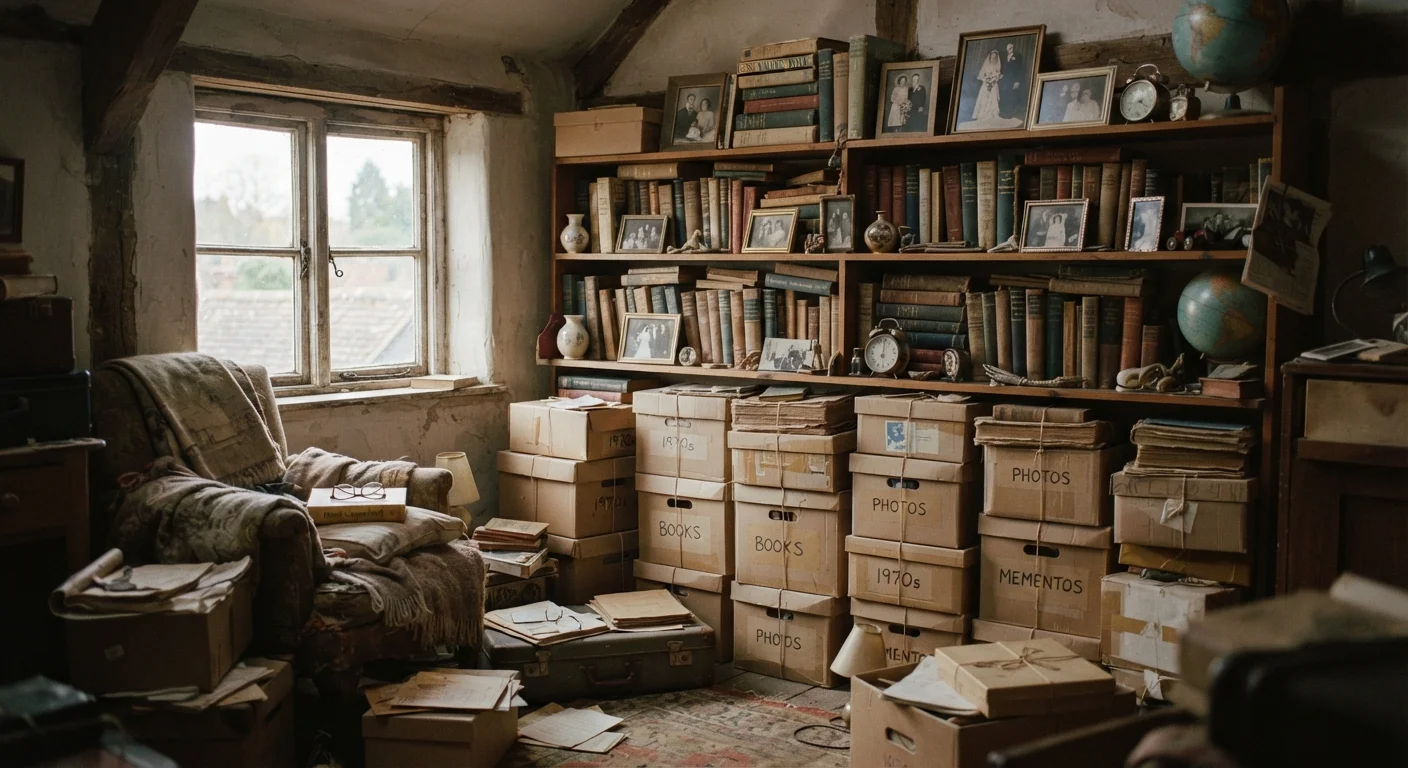
Photo credit: ResultsPivot.com | Discover Insightful Content!
In this article
Explore why letting go of possessions feels so hard — and what behavioural science reveals about our attachment to stuff.
Key Takeaways
- Loss aversion makes discarding items feel riskier than keeping them, even when they're unused.
- The endowment effect causes us to overvalue things simply because we own them.
- Clutter can function as emotional insulation — a buffer against grief, uncertainty, or change.
- Identity attachment to objects makes letting go feel like losing part of ourselves.
- Small, structured decluttering sessions tend to be more sustainable than single big purges.
Why Letting Go Feels Like Loss
When you hold a possession in your hands and consider getting rid of it, something in your brain treats that potential loss as a genuine threat. This is loss aversion — a well-documented cognitive bias showing that the pain of losing something tends to outweigh the pleasure of gaining something of equivalent value. In the context of clutter, it means keeping a broken lamp you haven't used in three years feels safer than discarding it.
Closely related is the endowment effect: the simple act of owning an object inflates how much we value it. Studies in behavioural economics have repeatedly shown that people demand significantly more to give up an item they own than they'd be willing to pay to acquire the same item. Applied to the junk drawer or the overflowing closet, this means your possessions feel more valuable to you than they actually are — and that bias quietly stacks up across every item in your home.
Clutter and Hoarding Are Not the Same
Most people who struggle to declutter are not experiencing hoarding disorder, which is a clinically recognized condition involving significant distress and functional impairment. Everyday difficulty letting go is normal and rooted in the same cognitive biases that affect most people. If clutter is causing serious distress or safety concerns in your home, speaking with a mental health professional is a worthwhile step.
These same cognitive forces show up in financial decision-making. If you're curious how loss aversion plays out in spending habits, see why stress drives emotional spending for a deeper look.
The Emotional Role of Objects
Objects aren't just objects. They carry memory, identity, and emotional weight that has nothing to do with their physical function. A box of birthday cards from a parent who has passed, a jersey from a team you played on in college, a gift from a friend you've lost touch with — these items are stand-ins for relationships, periods of life, and versions of ourselves we're not ready to release.
Psychologists refer to this as object attachment, and it operates on a spectrum. For many people, possessions act as an emotional safety net — a way to keep the past accessible and to maintain a sense of continuity with who they've been. Letting go of an item associated with a significant memory or relationship can feel, neurologically, like a small form of grief.
“Clutter is not just physical stuff. It's old ideas, toxic relationships and bad habits. Clutter is anything that does not support your better self.”
— Eleanor Brown, Author and speaker on mindfulness and personal growth
Clutter also accumulates during periods of stress or transition. Moving house, ending a relationship, or losing a job can all trigger a kind of collecting instinct — holding on to more, as a response to feeling like other things are slipping away. This emotional function of stuff is one reason that willpower-only approaches to decluttering rarely stick. Until you address why you're holding on, simply forcing yourself to discard things tends to feel wrong and unsustainable.
Identity, Potential, and the 'Just in Case' Mindset
Two more patterns explain a significant share of everyday clutter. The first is identity attachment — keeping items that represent who you think you should be, rather than who you actually are. The exercise bike, the art supplies, the cookbooks for elaborate weekend meals: these objects are proxies for aspirational selves. Discarding them can feel like abandoning an ambition, which makes it psychologically uncomfortable even when the reality is that the item hasn't been touched in years.
The second pattern is 'just in case' thinking — holding on to items against a future scenario that almost never arrives. This is partly driven by an overestimation of how useful an item will be, and partly by an underestimation of how available a replacement would be if genuinely needed. The result is storage spaces full of things kept for emergencies that never happen.
80%
Items in homes never or rarely used
A widely cited figure in home organisation research suggests roughly 80% of the items people keep are seldom or never used, yet continue to occupy physical and mental space.
54%
Adults overwhelmed by their clutter
A survey by the National Association of Productivity and Organizing Professionals (NAPO) found that more than half of respondents felt overwhelmed by the amount of clutter in their homes.
40%
Reduction in housework with less clutter
Research from the National Soap and Detergent Association has suggested that eliminating clutter could reduce the time spent on household cleaning and maintenance by roughly 40%.
Understanding these patterns is more than an intellectual exercise — it's the foundation for making decluttering actually work. Once you can name the specific reason you're holding on to something (loss aversion, identity, sunk cost), the decision-making process becomes less emotionally charged and more deliberate. For practical frameworks that channel this awareness into lasting change, comparing popular decluttering methods is a useful next step.
Start With Low-Stakes Items First
If decluttering feels overwhelming, begin with categories that carry little emotional weight — duplicate kitchen gadgets, expired coupons, or worn-out socks. Building the habit of decision-making on easy items first makes tackling more meaningful possessions feel less daunting over time.
If you want to go further and design a home that actually stays tidy, the principles behind rooms that stay organised explains the structural logic that makes a difference long-term.
Frequently Asked Questions

Author
Home & Living Editorial Team
Home & Living Editorial Team is the collective byline for our editorial team and contributor network. Articles published under this byline or an editorial pen name are researched, written, and reviewed according to our editorial standards for clarity, consistency, and independence before publication.
View all articles →