
Why Your "Organised" Kitchen Keeps Falling Apart
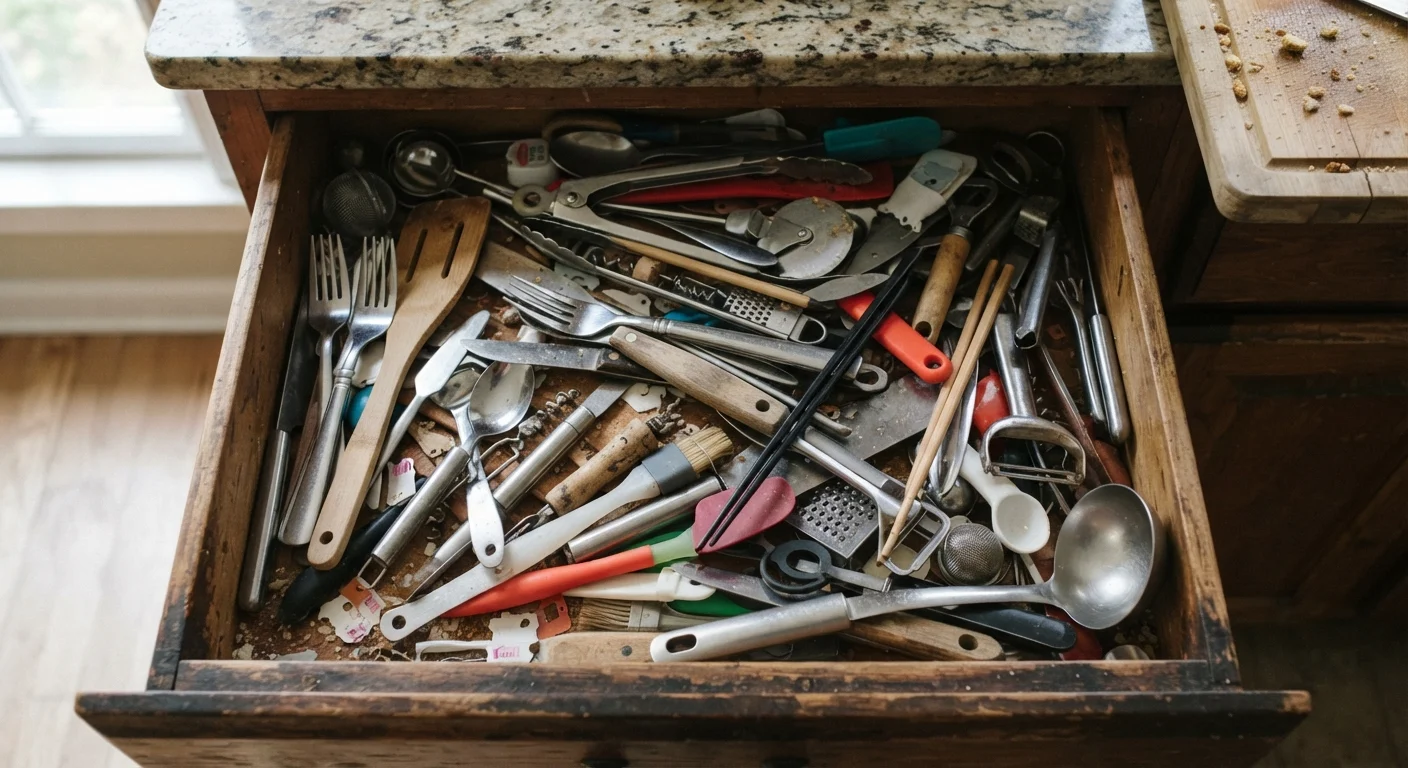
Photo credit: ResultsPivot.com | Discover Insightful Content!
In this article
If your kitchen drawers slide back into chaos within weeks, the system — not your habits — is likely the problem. Here's what to rethink.
Key Takeaways
- Most kitchen organisation fails because the system ignores how the space is actually used day-to-day.
- Aesthetic-driven setups often prioritise looks over accessibility, making them hard to maintain.
- Sustainable kitchen order depends on friction reduction, not willpower or discipline.
- Zones, realistic storage limits, and consistent reset routines are the cornerstones of lasting organisation.
The Real Reason Your Kitchen Keeps Reverting to Chaos
You spent a Saturday reorganising. Everything had a spot, the drawer dividers were in, the labels were on. Two weeks later? It looked like it never happened. If this cycle sounds familiar, you're not failing at organisation — your system is failing you.
A kitchen is one of the most heavily used rooms in any home. It absorbs groceries, cooking tools, takeout bags, charging cables, kids' craft supplies, and whatever else gravitates toward a flat surface. When organisation breaks down here, it's almost always a design problem, not a discipline problem. The system wasn't built to handle real life.
Below are the most common mistakes that cause kitchen organisation to collapse — and what to do differently. For a broader audit of your home, the room-by-room decluttering checklist is a practical place to start.
Organising for appearance rather than function.
Why it happens: Social media and home décor content heavily feature picture-perfect kitchens where uniformity and aesthetics dominate. Readers replicate the look without considering whether it matches their actual workflow.
Storing more than the space can honestly hold.
Why it happens: Decluttering is hard, so people skip it and jump straight to organising — essentially rearranging everything they already own rather than reducing what stays.
Creating a system with too many steps to put things away.
Why it happens: Detailed organisation feels thorough in the moment, but when returning a spatula requires opening a container, lifting a divider, and finding the right slot, people simply stop doing it.
Ignoring the 'landing zones' where clutter naturally accumulates.
Why it happens: Organisers focus on dedicated storage spaces — drawers, cabinets, shelves — without accounting for countertops and entry points where items pile up before being put away.
Not building in a regular reset point.
Why it happens: People expect a good initial organisation to be self-sustaining indefinitely. In practice, kitchens drift — new items arrive, habits shift, and small misplacements compound.
Building a System That Actually Holds
Getting a kitchen to stay organised long-term comes down to one principle: the system has to require less effort to maintain than it does to ignore. That means every item needs a home that's genuinely logical — not aspirational.
~30%
Of kitchen items used daily
Professional organisers commonly observe that roughly a third of items in a typical kitchen are used regularly — the rest occupy prime real estate unnecessarily.
2 steps
Maximum actions to return an item
Organisation researchers and practitioners widely agree that systems requiring more than two steps to put something away tend to fail in daily household use.
Start by mapping how your kitchen actually flows. Where do you naturally set things down? Where do you reach first when cooking? Organisation that fights those patterns will always lose. The core framework of zones, logical placement, and honest labelling is covered in depth in our guide to zones, labels, and flow.
Design Around Your Actual Habits
There is no universally correct kitchen layout — only one that fits how your household cooks, shops, and moves. A system built around an idealised version of your habits will fail as soon as real life resumes. Observe your kitchen for a week before reorganising it, and design around what you see, not what you wish you did.
Once your system is designed around real use, pair it with a brief daily reset habit. Even five minutes of returning things to their designated spots prevents the slow drift that leads to full collapse. For practical daily habits that quietly compound over time, see small daily habits that keep a home calm.
Avoid Reorganising Without Decluttering First
Buying storage solutions before reducing the volume of items is one of the most common — and costly — organisation mistakes. New bins and baskets won't solve an overcrowding problem; they'll just give clutter a more expensive home. Always edit what you own before deciding how to store what remains.
If you're starting from scratch or feel overwhelmed by where to begin, Starting From Zero walks through the mindset and order of operations without assuming you already have a system in place.

Author
Home & Living Editorial Team
Home & Living Editorial Team is the collective byline for our editorial team and contributor network. Articles published under this byline or an editorial pen name are researched, written, and reviewed according to our editorial standards for clarity, consistency, and independence before publication.
View all articles →