
Dark Patterns: The Design Tricks That Make You Spend More Than You Planned
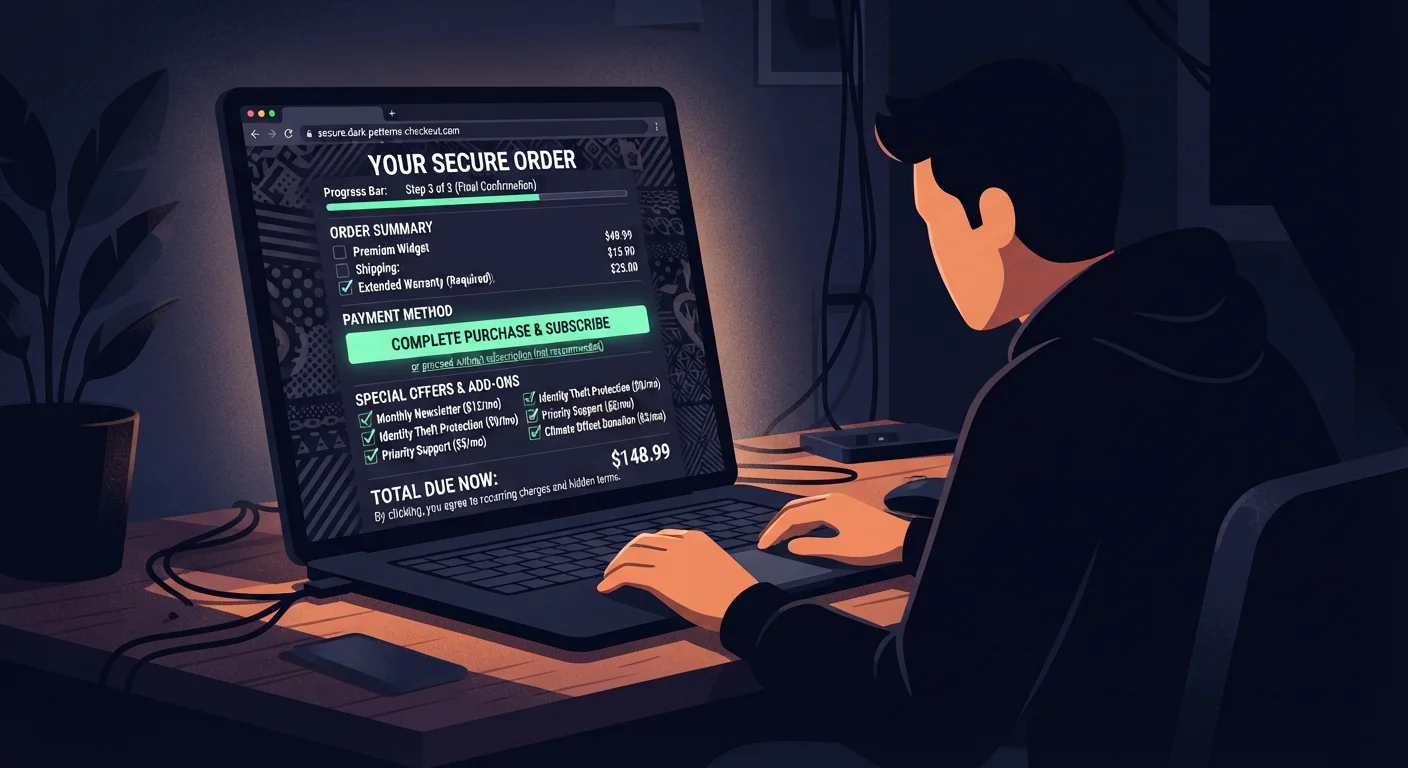
Photo credit: ResultsPivot.com | Discover Insightful Content!
In this article
From hidden pre-ticked boxes to confusing cancellation flows, dark patterns are everywhere. Learn to spot and sidestep them.
Key Takeaways
- Dark patterns are intentional UI design choices that steer users toward actions they didn't consciously choose.
- Pre-ticked boxes, hidden fees, and confusing cancellation flows are among the most common tactics.
- Regulators in the US and EU are increasingly scrutinizing and penalizing dark pattern practices.
- Slowing down and reading carefully before clicking is the single most effective defense.
- Impulse-friendly app interfaces often amplify dark pattern effects on mobile shoppers.
What Dark Patterns Actually Are
Dark patterns are user interface design choices — button placements, default settings, wording — that are deliberately engineered to benefit a company at the expense of the user. The term was coined by UX designer Harry Brignull in 2010, and the practice has only grown more sophisticated since. They're not bugs or oversights; they're features, shaped by conversion data and behavioral research.
They show up everywhere: checkout flows that hide the total price until the last step, newsletter opt-outs written in grey text on a white background, or "confirm shaming" buttons that label the opt-out something like "No thanks, I don't want to save money." The goal is always the same — to reduce friction toward a company's preferred outcome while adding friction to yours. Understanding their mechanics is the first step toward not being caught by them. Smart shopping starts with knowing how the environment around you is designed.
The Myths vs. The Reality
Plenty of assumptions make dark patterns more effective than they'd otherwise be. Readers tend to extend goodwill to familiar brands, trust that checkout defaults are neutral, and interpret urgency cues as factual. None of those assumptions hold up under scrutiny.
Myth
If a website is legitimate and well-known, it wouldn't use manipulative design tactics.
Fact
Dark patterns have been documented on some of the most visited retail, travel, and subscription platforms in the world.
Brand size is no guarantee of ethical design. Research published by Princeton University's Center for Information Technology Policy identified dark patterns across hundreds of popular shopping websites, including major household names. The commercial incentive to increase conversion rates applies regardless of company size — and in some cases, larger platforms have more resources to A/B test and optimize manipulative flows. Familiarity with a brand can actually lower your guard, making you less likely to read the fine print.
Myth
Pre-ticked boxes and add-ons are just industry shortcuts — they don't really cost you anything.
Fact
Pre-checked opt-ins routinely result in unwanted charges for insurance, subscriptions, and services consumers never intended to purchase.
Travel booking sites are a well-documented example: seat insurance, car hire excess coverage, and priority boarding have all appeared as pre-selected extras that users must actively uncheck. A 2022 report by the Norwegian Consumer Council found that these defaults generated significant unintended revenue from users who didn't notice them. Across millions of transactions, even small per-order additions compound into substantial consumer losses. Always scroll through the full checkout flow before confirming.
Myth
Countdown timers and "only 2 left" notices are accurate, real-time inventory signals.
Fact
Many urgency indicators are artificially generated or reset automatically, and do not reflect actual stock or time limits.
The FTC has issued guidance specifically calling out fake countdown timers and fabricated scarcity claims as deceptive practices. In some documented cases, timers reset when the page was refreshed, and "limited stock" labels appeared on items with no actual supply constraints. These tactics exploit a well-understood cognitive bias — loss aversion — to push faster decisions with less consideration. Understanding the psychology behind them is a useful defense; see what behavioural economics says about spending decisions for more on why these pressure triggers are so effective.
Myth
Cancelling a subscription is just as easy as signing up — companies have to make it fair.
Fact
"Roach motel" cancellation flows — easy to enter, difficult to exit — are a named dark pattern, and many companies still use them despite regulatory pressure.
The FTC's "Click to Cancel" rule, finalized in 2024, requires that cancellation be as simple as sign-up for most subscription services. However, enforcement is ongoing and not all providers comply immediately. Common tactics include burying cancellation in nested menus, requiring a phone call when signup was online, offering confusing "pause" options before revealing the cancel button, or presenting emotionally loaded language ("Are you sure you want to lose all your benefits?"). Before subscribing to anything, search for "[service name] cancel" to understand what the exit process looks like.
Myth
Dark patterns are only a problem on sketchy or lesser-known sites.
Fact
Major app stores, social platforms, and retail giants have all faced regulatory findings or academic documentation of dark pattern use.
The scope extends well beyond fly-by-night operators. The Norwegian Data Protection Authority fined a major social platform for dark patterns related to privacy settings. The UK's Competition and Markets Authority has examined subscription traps used by mainstream streaming and retail services. For shoppers using apps specifically, the trade-offs of app-based shopping go beyond convenience fees — design itself becomes a variable working against informed choices.
The impulse-buying mechanics layered on top of dark patterns make the combination especially potent. Algorithmically curated product feeds combined with artificial scarcity and one-click checkout create an environment where spending happens faster than thinking. How impulse buying works in the age of personalisation is worth understanding alongside the design tactics that accelerate it.
Mobile Apps Make Dark Patterns Harder to Spot
Smaller screens, faster scroll speeds, and one-tap purchasing mean dark patterns land with greater effect on mobile. Research consistently shows that users review fewer details before completing purchases on apps versus desktop. If you're about to buy through an app, consider opening the same site in a desktop browser to compare what's being presented — and what might be hidden.
How to Protect Yourself at Checkout
Awareness goes a long way, but a few specific habits make the biggest difference:
- Read every checkbox at checkout. Assume nothing is pre-ticked in your favor.
- Search for cancellation instructions before subscribing. If it's opaque going in, it will be harder on the way out.
- Ignore countdown timers as decision inputs. Treat them as decorative until verified otherwise.
- Review your bank and card statements monthly. Recurring charges for things you don't remember signing up for are a clear signal something slipped through.
- Use virtual card numbers for free trials where your bank offers them — this limits exposure if a free trial auto-converts to a paid plan without a clear reminder.
These Practices Are Increasingly Illegal
The FTC has taken enforcement action against companies using deceptive design, and the EU's Digital Services Act explicitly addresses dark patterns. Being manipulated online isn't just frustrating — in many cases, it violates consumer protection law. If you believe a company has used deceptive design to charge you without clear consent, you may have grounds to dispute the charge with your card issuer or file a complaint with the FTC at reportfraud.ftc.gov.
The deeper issue is that dark patterns exploit the cognitive shortcuts described in behavioral economics — the same mental tendencies that make forming good financial habits genuinely difficult. Building better money habits requires understanding the environment you're operating in, not just your own intentions.
1,818
Dark pattern instances found across 11,000 shopping sites
A 2019 Princeton/University of Chicago study analyzed over 11,000 shopping websites and identified 1,818 instances of dark patterns across 183 distinct sites.
~$10B
Estimated annual consumer cost of unwanted subscriptions (US)
West Monroe Partners estimated that US consumers spend roughly $10 billion annually on subscription services they've forgotten about or didn't knowingly sign up for.
53%
Shoppers who missed a pre-checked add-on at least once
A Which? consumer survey in the UK found that more than half of respondents had been charged for an add-on they didn't intentionally select during an online checkout.

Author
Shopping Editorial Team
Shopping Editorial Team is the collective byline for our editorial team and contributor network. Articles published under this byline or an editorial pen name are researched, written, and reviewed according to our editorial standards for clarity, consistency, and independence before publication.
View all articles →