
What 'Made In' Labels Actually Tell You — And What They Don't
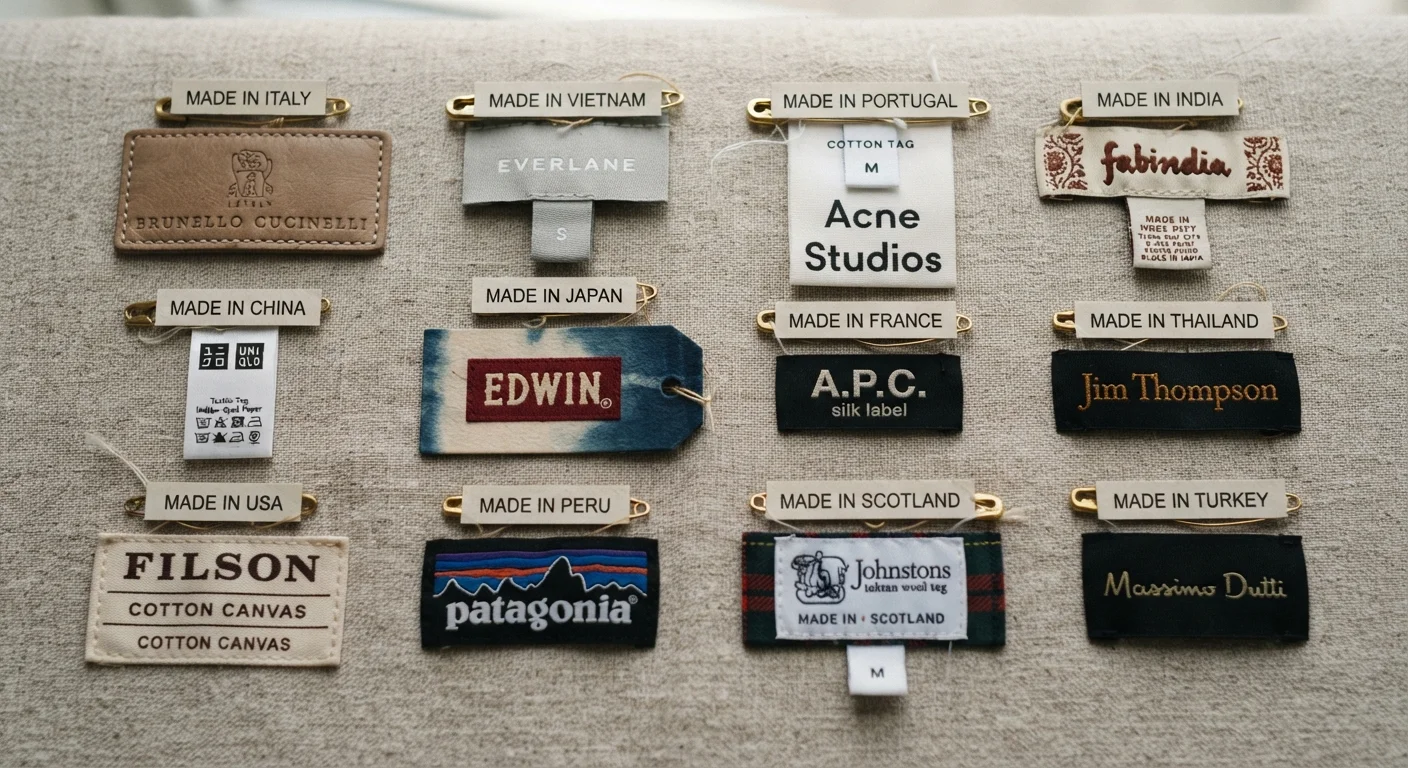
Photo credit: ResultsPivot.com | Discover Insightful Content!
In this article
Country-of-origin labels are more nuanced than they appear. Here's what they legally mean and where the gaps in transparency lie.
Key Takeaways
- 'Made In' labels reflect where a product was last substantially transformed, not where every part came from.
- Federal rules for 'Made in USA' are stricter than country-of-origin rules for imports.
- Food, textiles, automobiles, and electronics each follow different labeling rules and standards.
- A label can be legally accurate while still leaving out meaningful supply chain information.
- Third-party certifications and transparency reports can fill gaps that labels alone don't cover.
The Legal Foundation Behind the Label
When you flip over a product and read "Made in Vietnam" or "Product of Mexico," you're reading the result of a specific legal determination — not a simple geographic fact. In the U.S., the country listed on an origin label is generally where a product underwent its most recent substantial transformation: the point at which raw materials or components became a meaningfully different article of commerce.
For imported goods, U.S. Customs and Border Protection applies this test. A shirt sewn in Bangladesh from fabric woven in China is labeled "Made in Bangladesh" because the cutting and sewing constitutes the substantial transformation. The fabric's Chinese origin doesn't appear anywhere on the tag.
This matters because consumers often assume a label captures a product's full geographic story — when legally, it only has to capture the final chapter. That gap between consumer expectation and legal reality is where a lot of confusion lives. For a related look at how origin claims create perception gaps in other contexts, see what Americans often misunderstand about authenticity and origin.
52%
U.S. consumers who prefer American-made products
According to a Consumer Reports survey, roughly half of U.S. consumers say they actively seek out American-made products when shopping.
70%+
Share of clothing sold in U.S. that is imported
The American Apparel & Footwear Association has reported that the vast majority of clothing sold in the United States is manufactured abroad.
Multiple tiers
Regulatory frameworks governing U.S. origin labeling
At least four distinct federal frameworks — covering textiles, food commodities, automobiles, and general goods — apply to country-of-origin disclosures in the U.S.
'Made in USA' Has Its Own Stricter Standard
The FTC holds domestic origin claims to a higher bar than import labels. An unqualified "Made in USA" claim requires that a product be "all or virtually all" made domestically — meaning all significant parts, processing, and labor should originate in the United States. This is a tougher standard than what's required for most imported goods.
Manufacturers who can't meet that threshold but still want to highlight domestic content must use qualified claims: phrases like "Made in USA of imported and domestic components" or "Assembled in USA." These qualified statements are legal and common — but they require the consumer to parse the fine print.
Check for Qualified Claims Before Assuming
Before taking a domestic-sounding label at face value, look for qualifying language elsewhere on the packaging — phrases like "with imported components" change the picture considerably. Smaller text on the back or bottom of packaging often carries the most precise origin language.
The FTC does investigate and act on misleading Made in USA claims. Companies have faced enforcement actions for labeling products as American-made when the supply chain told a different story. Even so, enforcement is complaint-driven and not exhaustive, so some misleading labels do persist in the market.
How Rules Differ Across Product Categories
There is no single, uniform country-of-origin labeling system in the U.S. Rules vary considerably by product type:
- Textiles and apparel: The Textile Fiber Products Identification Act and Wool Act require country-of-origin disclosure on most clothing and fabric products.
- Food: Mandatory COOL rules apply to certain commodities — including wild-caught fish, fresh produce, and muscle cuts of meat — though coverage has shifted over the years following trade dispute rulings.
- Automobiles: The American Automobile Labeling Act requires new passenger vehicles to display the percentage of U.S. and Canadian parts content, as well as final assembly location.
- Electronics and appliances: No federal law mandates origin labeling for most consumer electronics. Any label you see is typically voluntary.
These inconsistencies mean that a single shopping trip could take you across several different regulatory regimes without your knowing it. Understanding which rules apply — or don't — is the first step toward reading labels more critically. That same skepticism is worth applying to other marketing language, as explored in this look at what ethical and sustainable labels actually mean.
Food Labeling Rules Have Changed Over Time
Mandatory country-of-origin labeling for some meat products — particularly beef and pork — was rolled back after a World Trade Organization dispute ruling found certain U.S. rules discriminatory toward Canadian and Mexican imports. The current rules for meat are narrower than they once were. Checking with the USDA's Agricultural Marketing Service can clarify what currently applies to specific commodities.
What Labels Still Can't Tell You
Even a fully accurate, legally compliant origin label leaves significant questions unanswered. It doesn't tell you about labor conditions, environmental standards, or wages at any point in the supply chain. It doesn't reveal whether sub-components passed through countries with weaker regulatory oversight before final assembly. And it doesn't reflect whether a company's practices align with the values a consumer might associate with a particular country.
For shoppers who care about those factors, labels are a starting point — not a finish line. Supply chain transparency reports, third-party audits (such as Fair Trade certification or B Corp status), and publicly available sourcing policies can all provide context that labels simply aren't designed to carry.
“Country-of-origin labeling gives consumers some information, but it was never designed as a comprehensive supply chain disclosure tool. Shoppers who want the full picture need to look beyond the label.”
— Urvashi Rangan, Consumer safety and sustainability researcher, former Director at Consumer Reports
The bottom line: a "Made In" label answers a narrow legal question. Whether that answer aligns with your values as a consumer depends on the questions you bring to it.
Frequently Asked Questions

Author
Shopping Editorial Team
Shopping Editorial Team is the collective byline for our editorial team and contributor network. Articles published under this byline or an editorial pen name are researched, written, and reviewed according to our editorial standards for clarity, consistency, and independence before publication.
View all articles →