
What Shoppers Get Wrong About 'Ethical' and 'Sustainable' Labels
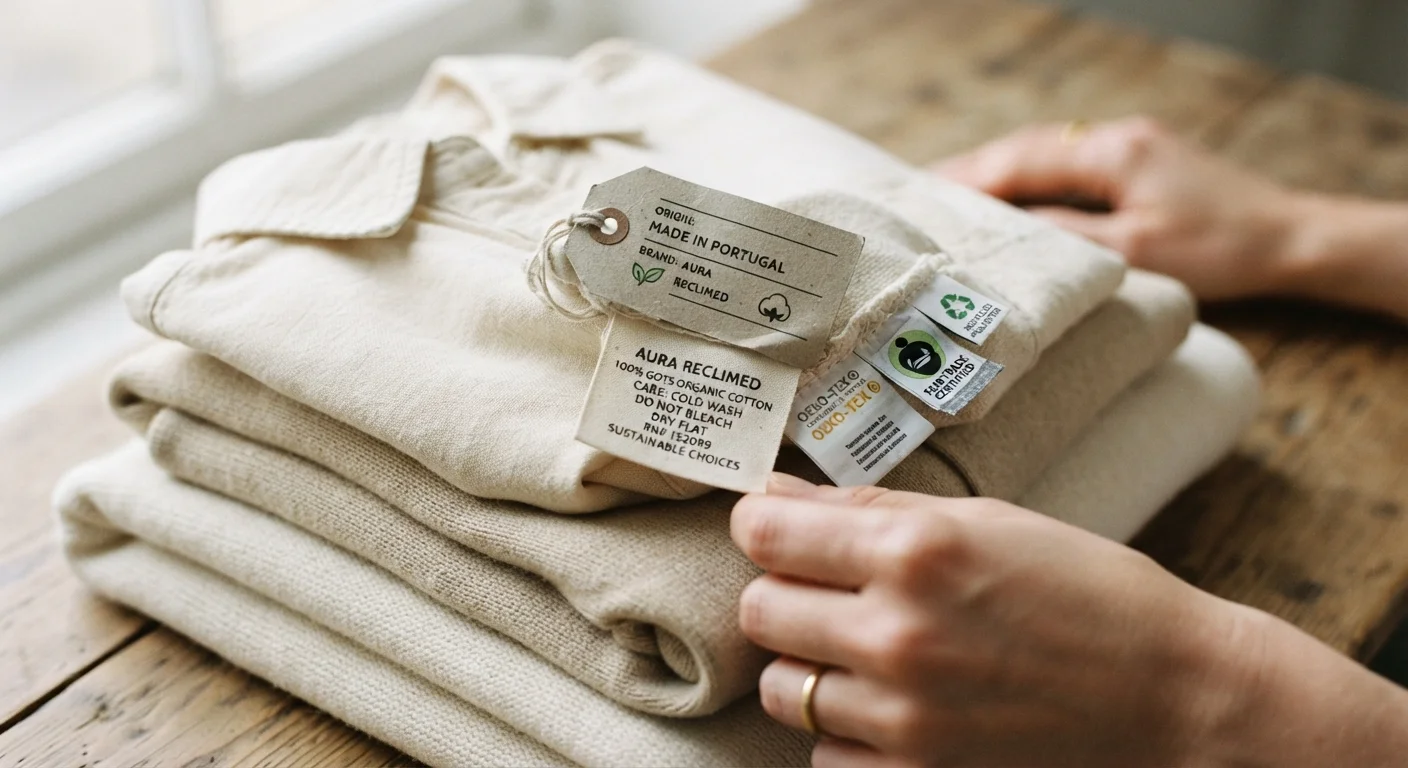
Photo credit: ResultsPivot.com | Discover Insightful Content!
In this article
Greenwashing is real, but so is consumer confusion. Separating fact from fiction on what sustainable shopping labels actually mean—and don't mean.
Key Takeaways
- The terms 'sustainable' and 'ethical' have no universal legal definition in US retail.
- Many certifications are self-reported or paid-for, not independently verified by regulators.
- A single green claim doesn't mean an entire product or supply chain is environmentally sound.
- Consumers can look for specific third-party certifications to gauge credibility more reliably.
Why These Labels Create So Much Confusion
Walk through any retailer — physical or online — and you'll see a flood of words like eco-friendly, sustainably sourced, ethically made, and conscious collection. They sound reassuring. They're designed to. But without a shared legal definition or consistent regulatory oversight, these terms can mean almost anything a brand wants them to mean.
This isn't just a consumer annoyance — it's a documented pattern that the Federal Trade Commission (FTC) has flagged repeatedly through its Green Guides, a framework advising marketers on what environmental claims are considered deceptive. The core problem: shoppers assume these labels carry legal weight, when in most cases, they don't.
For a deeper look at how eco-friendly marketing holds up under scrutiny, see our piece on greenwashing vs. genuine sustainability. And if label language broadly interests you, it's worth reading what 'Made In' labels actually tell you — that transparency gap is strikingly similar.
Myth
If a product says 'sustainable,' it meets an official environmental standard.
Fact
In the US, the word 'sustainable' has no regulated legal definition in retail, so brands can apply it without meeting any specific criteria.
Unlike terms such as "USDA Organic" — which carries a formal certification process — the word "sustainable" is largely unregulated in consumer marketing. The FTC's Green Guides recommend that environmental claims be specific and substantiated, but companies face limited enforcement unless claims are demonstrably false or deceptive. Shoppers who see the word and assume a product has passed a third-party audit are, in most cases, mistaken.
Myth
'Ethical' on a label means workers were paid fairly and treated well throughout the supply chain.
Fact
'Ethical' is a self-defined marketing term; without an independent audit or recognized certification, it reflects a brand's own characterization, not a verified standard.
Supply chains for consumer goods are often multi-tiered and span multiple countries, making full oversight genuinely difficult. Some brands use "ethical" to describe their direct factory relationships while having limited visibility into suppliers further down the chain. Certifications like Fair Trade USA or SA8000 involve actual auditing of labor conditions — these are meaningfully different from unverified brand language, even if both use similar wording on packaging.
Myth
Certifications on packaging are always issued by independent, neutral organizations.
Fact
Some certifications are industry-funded, self-administered, or involve minimal external verification — the rigor varies enormously between programs.
Not all certification logos are created equal. Some are issued by well-established nonprofits with transparent audit processes; others are created by industry groups or even individual companies. The presence of a seal doesn't confirm its credibility. Consumers can research any certification by looking up its governance structure, who funds it, and whether audit reports are publicly accessible. Organizations like the Standard Map project catalog certifications across sectors to help with this.
Myth
Buying 'recycled' materials means the product has a significantly smaller environmental footprint.
Fact
Recycled content can reduce certain impacts, but the overall footprint depends on processing, transportation, durability, and end-of-life disposal — none of which 'recycled' alone addresses.
A product made with recycled polyester, for instance, may use less virgin petroleum than a conventional alternative — but it can still shed microplastics in the wash, require energy-intensive processing, and end up in a landfill after a short use life. Life cycle assessments (LCAs) measure full environmental impact, but most products don't publish these. "Recycled" describes one input characteristic, not a holistic environmental outcome. It's a useful data point, not a complete picture.
Myth
Higher-priced 'sustainable' products are automatically more ethical or environmentally sound.
Fact
Price and ethical credibility have no direct relationship; premium pricing may reflect branding, materials cost, or market positioning rather than verified labor or environmental practices.
The assumption that you pay more for genuinely sustainable goods can make consumers vulnerable to premium greenwashing — where elevated pricing signals virtue without substantiating it. Conversely, some certified fair-trade or ethically audited products are priced comparably to conventional alternatives. Cost tells you something about positioning; certification tells you something about practices. They're separate signals worth evaluating independently.
What Shoppers Can Actually Do With This Information
Understanding label limitations isn't an invitation to cynicism — it's an invitation to be a more effective reader of marketing claims. A few practical principles hold up well across categories:
42%
Of green claims found potentially misleading
A 2021 European Commission study screened green claims across EU product websites and found 42% were exaggerated, false, or deceptive — a pattern researchers note is not unique to Europe.
~100
Eco-label programs active in the US market
The Ecolabel Index, a global directory, tracks over 450 ecolabels worldwide; the US market alone hosts roughly 100 active programs with widely varying standards and oversight.
- Look for named third-party certifications with publicly available audit criteria — not just badge-like graphics that resemble them.
- Check whether a certification covers the full product or only a single ingredient or process. Partial claims are common.
- Search the certifying body directly. Legitimate programs like Fair Trade USA, B Corp, GOTS (Global Organic Textile Standard), and the Rainforest Alliance maintain searchable public databases of certified companies.
- Be skeptical of vague aspirational language. Phrases like "committed to sustainability" or "working toward a greener future" describe intentions, not verified outcomes.
The goal isn't to demand perfection from every purchase — it's to recognize when a label is informative versus when it's decorative. Those are very different things, and the gap between them is where most consumer confusion lives.
Self-Reported Claims Aren't the Same as Verified Ones
When a brand describes its own practices as ethical or sustainable without referencing a named third-party standard, that claim is self-reported. It may be accurate — but it cannot be independently verified by a shopper from the label alone. If a certification is genuine, the certifying body will have a public record of it. If that record doesn't exist, treat the claim as aspirational marketing rather than established fact.
Staying sharp about labels connects to broader shopping habits worth examining. Our shopping myths that cost people money piece covers other cases where widespread assumptions don't survive contact with reality. And for context on how "authentic" branding works in a different category entirely, what Americans get wrong about 'authentic' cuisine makes for an illuminating comparison.
More resources on consumer rights and informed purchasing are available through our Consumer Awareness hub and Smart Shopping hub.

Author
Shopping Editorial Team
Shopping Editorial Team is the collective byline for our editorial team and contributor network. Articles published under this byline or an editorial pen name are researched, written, and reviewed according to our editorial standards for clarity, consistency, and independence before publication.
View all articles →