
Coastal Villages vs. Mountain Retreats: Finding the Right Escape for Your Travel Style
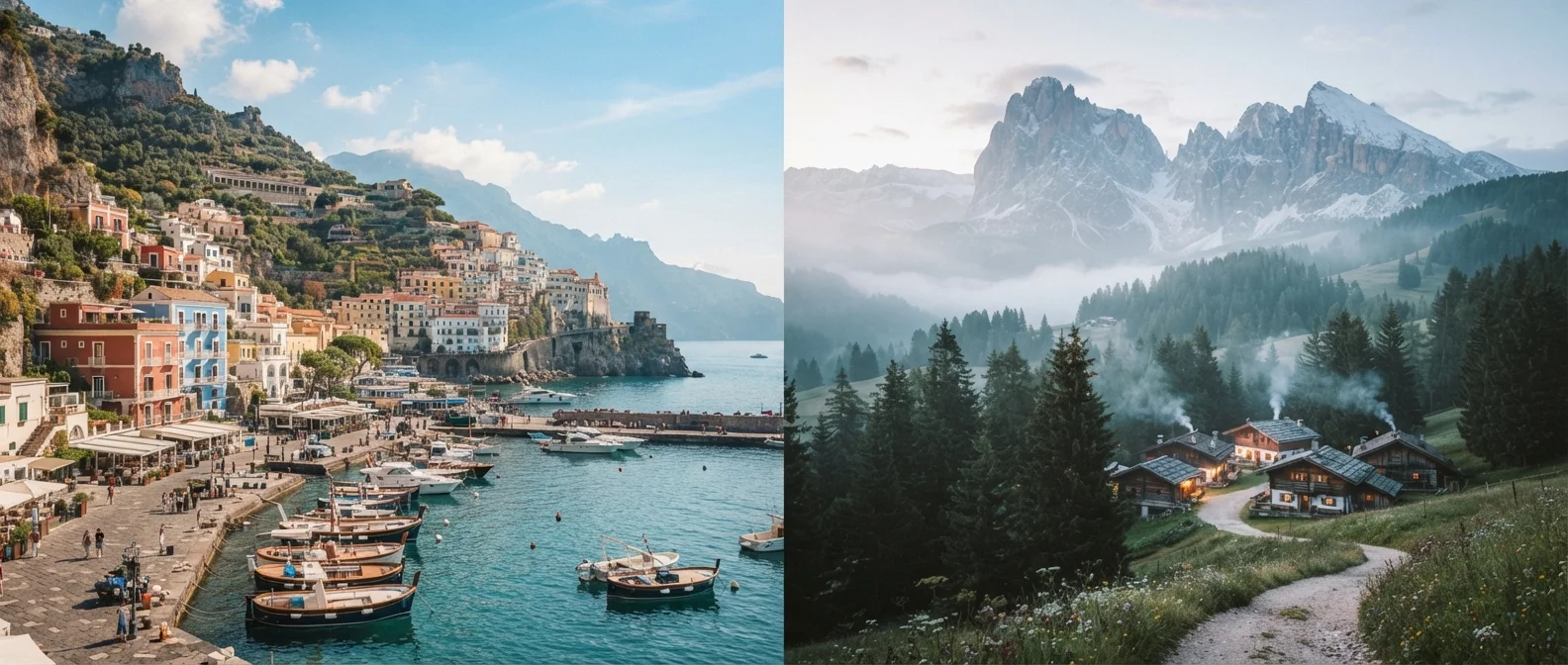
Photo credit: ResultsPivot.com | Discover Insightful Content!
In this article
Sea air and fishing harbours or pine forests and high altitude silence? Weigh up what each landscape truly offers before you decide where to go.
Key Takeaways
- Coastal villages offer social warmth, seafood culture, and accessible terrain ideal for relaxed explorers.
- Mountain retreats deliver solitude, physical challenge, and cooler temperatures that suit active or reflective travelers.
- Season matters enormously — coastal summers can be crowded; mountain winters demand serious preparation.
- Your ideal escape depends on what kind of rest or stimulation you actually need, not just aesthetics.
- Both landscapes reward deeper engagement when you understand their geography and cultural context before arriving.
What Each Landscape Actually Feels Like
Choosing between a coastal village and a mountain retreat isn't just about scenery — it's about the kind of energy a place gives back to you. Before you start browsing accommodations, it's worth slowing down and asking what you actually need from a trip. Our guide to reading a destination before you arrive makes a compelling case for exactly this kind of pre-trip reflection.
Coastal villages carry a particular sensory signature: salt air, the creak of wooden docks, the smell of grilled fish drifting from a harbourside kitchen. Life in these places tends to flow outward — toward the water, toward communal squares, toward evenings that stretch long and easy. There's an inherent sociability to coastal life that makes even solo travelers feel absorbed into the scene quickly.
Mountain retreats work differently. The landscape pushes inward. Higher elevations thin the air and quiet the noise of lower-altitude life. Mornings arrive cold and sharp; afternoons can shift dramatically. The experience is less about absorption into a crowd and more about confrontation with scale — the kind of perspective-shift that comes from standing at a viewpoint and realizing just how small your daily concerns actually are.
| Criterion | Coastal Villages | Mountain Retreats |
|---|---|---|
| Overall pace | Relaxed, outward, social | Still, inward, contemplative |
| Physical demand | Low to moderate (flat terrain) | Moderate to high (elevation, trails) |
| Best season | Shoulder seasons (May, Sep–Oct) | Summer hiking or winter snow season |
| Crowd levels | High in peak summer | Variable; trail-dependent |
| Food culture | Rich seafood and harbor traditions | Hearty regional, alpine cuisine |
| Connectivity | Generally reliable signal and Wi-Fi | Often limited; genuine digital detox |
| Infrastructure | Well-developed for tourism | Varies widely; remote areas need prep |
| Ideal traveler type | Social, relaxed, mixed-group | Active, solo, or reflective |
Season, Crowds, and Practical Realities
Neither landscape is immune to the realities of peak-season tourism. Popular coastal villages along the Mediterranean, Adriatic, or New England coast can feel genuinely overwhelming in July and August — narrow lanes gridlocked, harbor restaurants fully booked weeks out, beaches standing-room only. Visiting the same village in May or October can feel like an entirely different country.
Mountain destinations carry their own seasonal calculus. Many Alpine or Appalachian retreats peak in winter (ski season) and again in summer (hiking season), with shoulder seasons offering dramatic savings and far quieter trails. But winter mountain travel demands preparation that coastal travel rarely requires: appropriate footwear, awareness of altitude sickness at higher elevations, and awareness of road conditions that can close passes entirely.
60%+
Of global tourism concentrated in coastal zones
The UNWTO has consistently noted that a significant majority of international tourist arrivals are drawn to coastal destinations, underlining both their appeal and their seasonal pressure points.
~700m
People living in mountain regions worldwide
According to UN Environment Programme data, mountain ecosystems are home to roughly 700 million people and support distinct cultural traditions that travelers increasingly seek out.
15–20%
Visitor drop in shoulder vs. peak season at coastal sites
Tourism research broadly suggests coastal destinations can see visitor volumes fall by 15–20% or more in shoulder months, significantly improving the experience for those who time their visit well.
Worth noting: some mountain areas experience genuinely remote conditions that require a different level of trip planning. If you're considering anything off the standard trail, our checklist on planning an off-the-beaten-path trip is worth working through before you commit.
Who Thrives Where — and Why It Matters
Travel personality plays a bigger role than most people admit. Reflective, introverted travelers often find coastal villages more stimulating than restful during high season — the noise, the social density, and the lack of solitude can be draining rather than energizing. Mountains tend to reward people who are comfortable with their own company and who find meaning in physical effort or contemplative quiet.
Conversely, travelers who need warmth, ease, and social texture to feel truly relaxed may find mountain retreats isolating, especially in areas where hiking is the primary activity and nightlife is non-existent. The dynamic between solo and group travel also interacts with landscape choice: mountains tend to reward solo or small-group travel more than coastal villages, where the social fabric of the place does a lot of the work for you.
Altitude and Health: A Brief Note
Mountain travel at significant elevation — generally above 8,000 feet (approximately 2,400 metres) — can cause altitude-related symptoms in some travelers, including headache, fatigue, and nausea. These effects are unpredictable regardless of fitness level. If you're planning travel to high-altitude destinations, speak with a healthcare professional beforehand, especially if you have any underlying health conditions. This is general information, not medical advice.
One practical dimension worth weighing is how much planning each type of destination demands. Coastal villages — particularly in Europe and Asia — tend to have well-developed tourism infrastructure, making spontaneous arrivals viable. Mountain retreats, especially at higher altitudes or in more remote ranges, may benefit from more advance commitment. See our take on booking ahead versus staying flexible to think through your approach.

Author
Travel Editorial Team
Travel Editorial Team is the collective byline for our editorial team and contributor network. Articles published under this byline or an editorial pen name are researched, written, and reviewed according to our editorial standards for clarity, consistency, and independence before publication.
View all articles →