
Solo Travel vs. Group Travel: What Each Style Really Does to Your Perspective
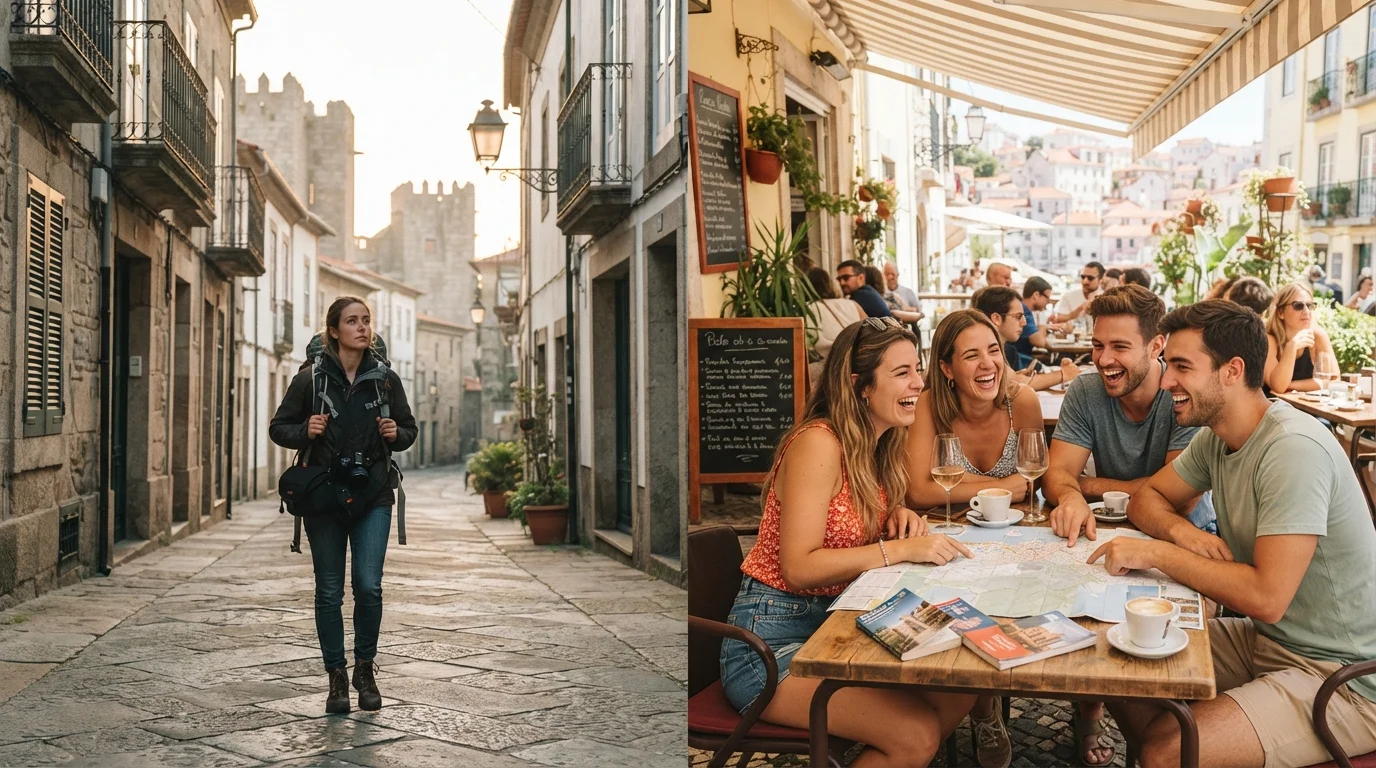
Photo credit: ResultsPivot.com | Discover Insightful Content!
In this article
Going it alone or travelling with others shapes more than your itinerary. Explore how each approach affects confidence, culture, and self-awareness.
Key Takeaways
- Solo travel builds self-reliance and forces you to engage directly with unfamiliar cultures and situations.
- Group travel deepens bonds and offers shared perspective, but can create a social buffer from the destination.
- Neither style is objectively better — your travel goals and personality shape which approach serves you most.
- Many seasoned travelers alternate between both styles depending on destination, purpose, and life stage.
- Both approaches influence how you interpret the world long after you return home.
How Each Style Changes the Way You Experience a Place
Travel has always been about more than geography. Where you go matters, but how you go — alone or alongside others — shapes the entire lens through which a destination lands. Solo and group travel aren't just logistical choices; they're fundamentally different ways of being in the world.
When you travel solo, every interaction is unfiltered. You're the one who has to ask for directions in broken Italian, figure out the bus schedule, or sit with a stranger at a shared table because there's nowhere else to sit. That friction is also the point. It pushes you into the destination rather than around it. Many solo travelers report that the absence of familiar social cues — friends to default to, group norms to follow — makes them far more observant, more patient, and more open to the unexpected. For a deeper look at how slowing down amplifies this effect, see The Slow Travel Movement.
Group travel operates on a different register. When you experience something remarkable alongside people you know, the meaning compounds. You're not just watching the sunrise over Angkor Wat — you're watching it with someone, and that shared frame becomes part of the memory itself. Groups also create their own micro-culture: inside jokes, collective rituals, collaborative problem-solving. The destination becomes a backdrop to a relationship story, which is its own kind of depth.
| Criterion | Solo Travel | Group Travel |
|---|---|---|
| Decision-making | Entirely self-directed | Shared and negotiated |
| Cultural immersion | Typically deeper, more direct | Variable; depends on group intent |
| Personal growth focus | Self-reliance and independence | Interpersonal and collaborative skills |
| Social connection | With locals and strangers | Primarily within the group |
| Flexibility | Maximum — change plans freely | Limited by group consensus |
| Safety net | Self-managed; requires preparation | Built-in support from companions |
| Memory-making | Personal and introspective | Shared and relational |
The Internal Shift: Confidence, Comfort, and Self-Knowledge
Solo travel has a reputation for being transformative, and that reputation is largely earned — though perhaps not for the reasons people expect. It's rarely the dramatic moments that change you. It's the accumulation of small decisions made entirely on your own: where to eat, whether to stay an extra day, how to handle a plan that falls apart. Over time, those micro-decisions add up to something real: a quiet but durable confidence that you can handle uncertainty.
72%
Solo travelers who report increased self-confidence
A widely cited survey by travel research group SOLO Traveler found nearly three-quarters of solo travelers felt more confident after their first solo trip.
3 in 5
Group travelers who cite shared memories as primary motivation
Traveler sentiment studies consistently show that the desire to create shared memories is the leading reason people choose to travel with others.
54%
Travelers who have tried both solo and group travel
According to general travel industry surveys, more than half of regular travelers have deliberately alternated between solo and group trips at different life stages.
Group travel builds a different kind of self-knowledge. When you're navigating shared decisions — different energy levels, conflicting preferences, the social dynamics of who leads and who follows — you learn a lot about how you operate with others. Patience, compromise, and the ability to find joy in someone else's priority are skills that group trips quietly develop. That's not a lesser form of growth; it's just a different one.
Worth noting: many experienced travelers describe a pattern of alternating between the two. Solo trips for recalibration and self-discovery; group trips for connection and celebration. The guided tours vs. independent travel question often maps onto this same divide — how much structure and shared experience do you actually want?
Cultural Immersion: Who Gets Closer to the Destination?
One of the most consistent observations among frequent travelers is that solo travel tends to produce deeper cultural contact. Without a ready-made social group to retreat into, solo travelers are effectively required to engage with the world around them. Locals are more likely to approach a solo traveler than a group. Conversations happen more naturally. You eat where the food is good rather than where everyone can agree.
That said, group travel isn't culturally shallow by nature. The difference lies in intentionality. A group that actively seeks out local experiences — choosing a neighborhood restaurant over a tourist strip, taking a cooking class with residents, staying in smaller accommodations — can access genuine cultural exchange. The challenge is that the group's internal social gravity sometimes wins out over the pull of the unfamiliar. It's simply easier to stay comfortable when comfort is already present in the people around you.
If you're interested in how our assumptions about other cultures shape travel experiences in subtle ways, cultural assumptions that frequent travelers often get wrong is worth reading alongside this comparison. And if you're new to solo travel and wrestling with second thoughts, solo travel myths that keep people from going addresses the most common fears directly.
Neither Style Is a Permanent Identity
Solo and group travel are approaches, not labels. The traveler who spent three months backpacking alone in Southeast Asia might plan a group trip to Portugal the following year. Your circumstances, travel purpose, and what you need from a trip at any given moment all shape which style makes sense. It's also worth noting that 'group travel' covers a wide spectrum — from a trip with one close friend to an organized tour with dozens of strangers. The dynamics, and the growth that follows, can vary enormously within that range.

Author
Travel Editorial Team
Travel Editorial Team is the collective byline for our editorial team and contributor network. Articles published under this byline or an editorial pen name are researched, written, and reviewed according to our editorial standards for clarity, consistency, and independence before publication.
View all articles →