
Ways Frequent Travel Quietly Rewires Everyday Habits
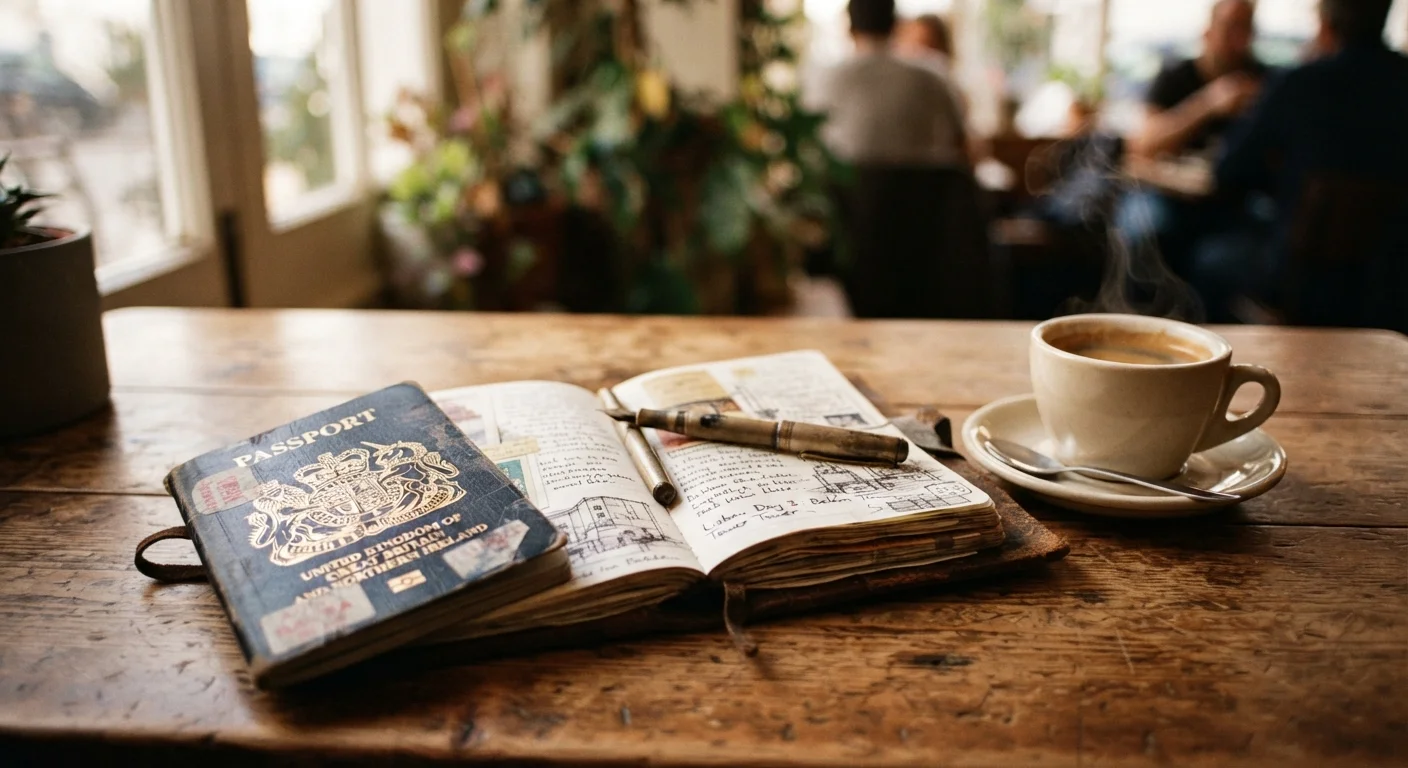
Photo credit: ResultsPivot.com | Discover Insightful Content!
From meal timing to social rituals, habitual travelers often return home changed in subtle ways. Explore the lifestyle shifts that tend to follow the passport stamp.
Key Takeaways
- Habitual travel gradually reshapes meal timing, sleep patterns, and daily routines in lasting ways.
- Exposure to different cultures often reduces rigid thinking and increases comfort with ambiguity.
- Frequent travelers tend to own less and place higher value on experience over possessions.
- Navigating unfamiliar environments builds practical problem-solving skills that transfer to everyday life.
- Social habits — how travelers connect, converse, and maintain friendships — often shift noticeably over time.
The Quiet Rewiring That Happens Between Trips
Most people notice the obvious souvenirs: a rug rolled up in the closet, a phrase picked up in another language. But the deeper changes that frequent travel leaves behind tend to arrive quietly, threading themselves into daily rhythms long after the suitcase is unpacked.
These aren't dramatic personality transformations. They're subtler — a recalibrated relationship with time, a looser grip on routine, a different way of reading a room full of strangers. Avid travelers often describe a slow-growing sense that their home life no longer quite fits the mold it once did. The research broadly supports this: repeated cross-cultural exposure is associated with increased cognitive flexibility and shifts in values around ownership and belonging.
The list below explores some of the most commonly reported habit shifts — not as prescriptions for what travel should do, but as honest observations about what it often does. Whether you've spent months abroad or just taken a few longer trips, you may recognize more than a few of these in your own life. For more on how extended time away reshapes daily structure, see our look at what staying flexible actually looks like on the road.
Meal timing becomes more relaxed and exploratory
Spending time in countries where lunch runs two hours and dinner starts at 9 p.m. has a way of loosening a traveler's grip on the clock. Many frequent travelers report abandoning rigid mealtimes at home in favor of eating when hungry, lingering longer at the table, or happily trying foods at unconventional hours.
There's also a willingness to eat unfamiliar things without much deliberation — a habit born from necessity on the road that quietly persists at home. The post-meal walk, common in many European and Latin American cultures, is another small ritual that often travels back in a carry-on. (The physiological case for that short walk after eating turns out to be genuinely compelling.)
Eating when hungry — not when the clock says so — is a shift many travelers never quite undo.
Possessions start to feel more negotiable
Living out of a single bag for weeks teaches a practical lesson: most of what's in the closet at home isn't strictly necessary. Returning travelers frequently describe a low-grade restlessness with clutter, an urge to clear shelves and pare back to what actually gets used.
This isn't minimalism as an aesthetic choice so much as minimalism as a side effect of experience. When you've managed perfectly well with two pairs of pants for three weeks, the fifth pair on the rack starts to look different. Our feature on how minimalist packing shifts the way travelers think about ownership explores this dynamic in depth.
When you've thrived with almost nothing, accumulation starts to feel more like noise than comfort.
Tolerance for ambiguity quietly expands
Missing a connection, navigating a transit system with no English signage, booking a place to stay in a city you've never seen — frequent travel involves a steady diet of managed uncertainty. Over time, this builds a kind of low-grade resilience: the ability to sit with an unresolved situation without immediately catastrophizing.
Back home, this often shows up as greater patience with plans that change, less anxiety about outcomes that aren't yet certain, and a more pragmatic response to small inconveniences. It's a transferable skill in the truest sense — one that moves seamlessly between contexts. See how this kind of adaptive capacity fits into the broader picture of skills that travel well across different areas of life.
Regular navigation of uncertainty gradually makes uncertainty itself feel less like a crisis.
Conversational depth with strangers increases
Travelers frequently rely on quick, genuine connections with people they've just met — hostel common rooms, shared train compartments, spontaneous dinner invitations. This repeated practice at forming fast bonds with unfamiliar people tends to recalibrate social habits at home.
Many frequent travelers describe becoming more willing to ask questions of strangers, more comfortable with brief silences, and less reliant on shared history as a precondition for meaningful conversation. The small talk that once felt obligatory can give way to a preference for more direct, curious exchanges — a shift that isn't always comfortable for people around them, but is rarely reversible.
Striking up real conversations with strangers on the road makes surface-level small talk feel increasingly hollow at home.
Pace of daily life shifts — often permanently
Spending extended time in cultures where afternoons pause, where weekends are genuinely off, or where the concept of a productive hour looks completely different has a lasting effect on how travelers structure their days. Many describe a gradual unwillingness to fill every block of time with productivity-adjacent activity.
This isn't laziness — it's a recalibrated sense of what a well-spent day looks like. The slow travel philosophy reflects this instinct: that depth, not speed, is where the value tends to live. Whether applied to a trip or a Tuesday afternoon at home, it's a reorientation that tends to stick.
Cultures that treat rest as legitimate — not lazy — have a way of quietly making that idea stick.
Assumptions about "normal" become noticeably harder to hold
Perhaps the most lasting change of all is epistemic: frequent travel chips away at the unconscious sense that one's own cultural defaults are universal. After seeing how many different approaches exist to everything from conflict resolution to personal space to timekeeping, the idea that any single way is simply "the way" becomes harder to maintain.
This shift doesn't always feel tidy. It can produce genuine disorientation — a sense of no longer belonging entirely to any one place or set of norms. But it also opens up a more honest engagement with the world, built on curiosity rather than assumption. That's the kind of expertise that accumulates without fanfare, explored further in our piece on uncommon ways people build expertise quietly over time.
Once you've seen a dozen versions of 'normal,' your own stops feeling like the default.
Coming Home With New Eyes
None of these shifts are inevitable, and they rarely happen all at once. But for many habitual travelers, the accumulated effect is a life that looks outwardly familiar yet operates on slightly different assumptions — about time, stuff, discomfort, and connection.
Pay Attention to What Feels Off When You Return
The discomfort of re-entry — the moment home feels slightly foreign — is often where the most useful self-knowledge lives. Rather than rushing to feel settled again, try noting which routines feel natural to return to and which ones feel like a poor fit. Those frictions are worth examining. They can point toward small, practical changes that make everyday life more intentional — even without another trip on the horizon.
It's also worth noting that not every change feels welcome. Some travelers report friction re-entering routines they once found satisfying, or impatience with social norms that previously went unquestioned. Those tensions, while uncomfortable, can also be genuinely productive — prompting reflection on which habits are worth keeping and which just stuck around by default. If you're curious how cultural exposure sometimes trips up even seasoned explorers, our piece on cultural assumptions frequent travelers often get wrong is worth a read.
The larger point is that travel's most lasting influence often isn't geographical at all — it's behavioral. And the everyday routines we keep at home end up quietly shaped by every place we've moved through.

Author
Travel Editorial Team
Travel Editorial Team is the collective byline for our editorial team and contributor network. Articles published under this byline or an editorial pen name are researched, written, and reviewed according to our editorial standards for clarity, consistency, and independence before publication.
View all articles →