
City Driving vs. Motorway Driving: Why the Skills Aren't Interchangeable
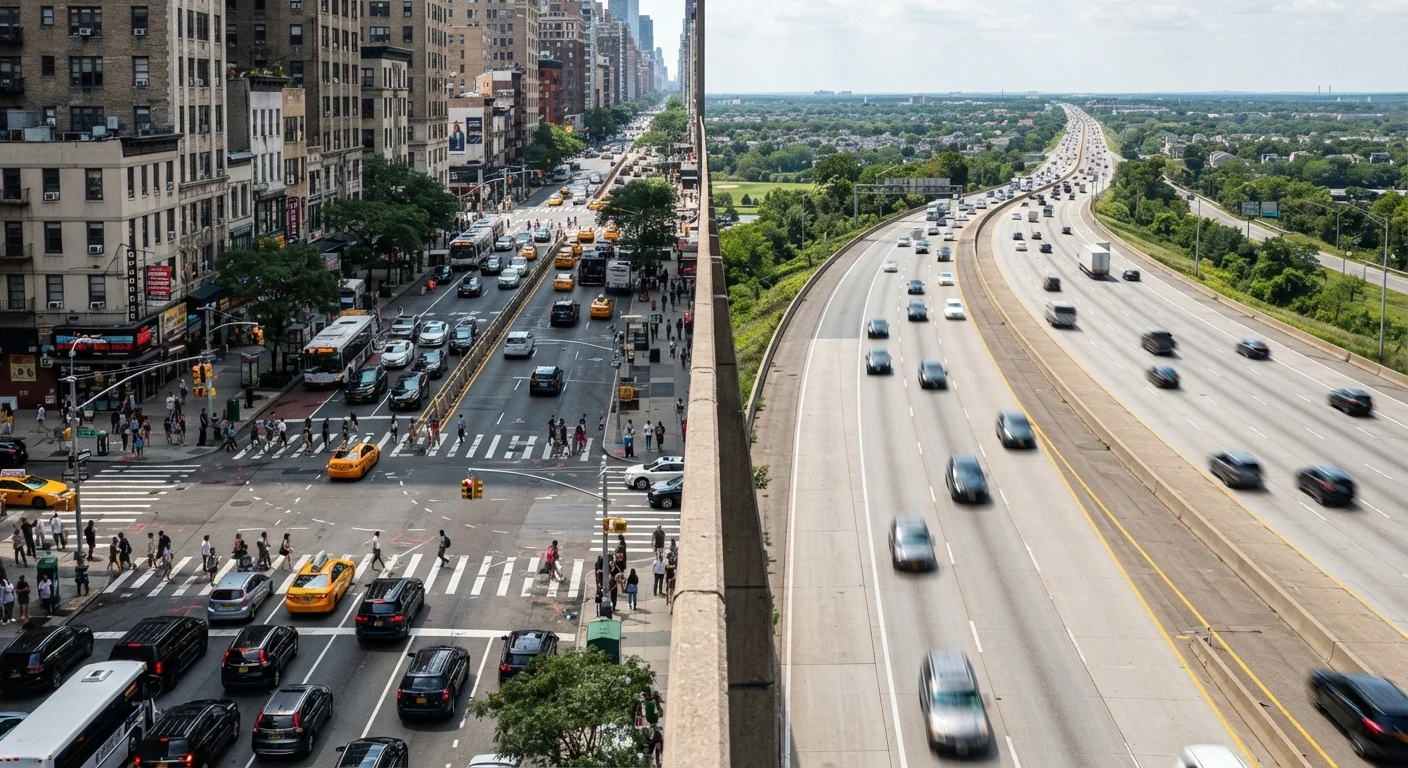
Photo credit: ResultsPivot.com | Discover Insightful Content!
In this article
Urban and motorway driving demand distinct habits, hazard awareness, and decision speeds. Here's where each one trips drivers up.
Key Takeaways
- City driving demands constant, rapid hazard scanning across multiple directions simultaneously.
- Motorway driving requires sustained concentration at speed, where reaction time margins are much tighter.
- Complacency is the biggest risk on motorways; information overload is the biggest risk in cities.
- Lane discipline, mirror checks, and following distance rules differ meaningfully between the two environments.
- Neither skill set is automatically transferable — drivers who excel in one environment can still struggle in the other.
Two Environments, Two Different Brains
Most drivers assume that if you can handle one type of road, the other comes naturally. In practice, city and motorway driving place completely different demands on your attention, your physical inputs, and your decision-making speed.
In a city, you're processing dozens of small hazards in rapid succession — a pedestrian stepping off the curb, a cyclist filtering between lanes, a bus pulling out ahead. The speed is lower, but the cognitive load is relentless. On a motorway, the hazards are fewer but the consequences of missing one are far more serious, because everything happens at 60–70 mph with much less time to correct.
Understanding that distinction isn't just academic — it shapes how you should approach each environment and what habits are worth deliberately building. For a look at how driving style affects your vehicle's fuel use across both settings, see fuel-efficient driving habits that apply in real traffic conditions.
| Criterion | City Driving | Motorway Driving |
|---|---|---|
| Typical speed range | 10–40 mph | 50–70 mph |
| Primary hazard type | Pedestrians, cyclists, junctions | Speed differentials, lane changes |
| Decision frequency | Very high — constant | Lower but higher-stakes |
| Key attention risk | Overload and missed hazards | Monotony and complacency |
| Following distance guidance | At least 2 seconds | Minimum 2 seconds; more in wet |
| Mirror check frequency | Every 5–8 seconds recommended | Every 10–12 seconds recommended |
| Lane discipline complexity | Multiple lane types, bus lanes | Keep left, signal, check blind spot |
What City Driving Actually Demands
Urban driving is a sustained exercise in multi-directional awareness. You're not just watching the car in front — you're monitoring the pavement edge, checking mirrors for cyclists, reading traffic light phases, and anticipating what that van double-parked ahead is about to do.
The hazards are also less predictable. Pedestrians don't always use crossings. Cyclists appear from blind spots. Junctions can involve five or six possible conflict points at once. New drivers often find roundabouts especially disorienting because right-of-way rules and lane positioning require quick judgement under pressure — something our article on why new drivers struggle with roundabouts explores in depth.
Speed management in cities also works differently. Frequent acceleration and braking cycles mean smooth throttle control and early anticipation matter more than raw reaction time. The driver who reads a red light 200 meters ahead and coasts to a stop will always outperform the one who brakes hard at the line.
~40%
Urban roads' share of reported injury collisions
UK Department for Transport road casualty data consistently shows that built-up areas account for a significant proportion of injury collisions, reflecting the density of road users and hazard types.
200 ft
Distance covered in 2 seconds at 70 mph
At motorway speeds, even a brief lapse in attention covers a substantial distance before the driver can react — reinforcing why sustained focus matters more than reflexes.
What Motorway Driving Actually Demands
Motorways remove most of the city's low-speed clutter — no pedestrians, no traffic lights, no tight junctions. What they introduce instead is speed, sustained concentration, and the particular danger of monotony.
At 70 mph, a two-second lapse in attention covers roughly 200 feet of road. The two-second following distance rule that feels generous in a city becomes genuinely necessary on a motorway. Lane discipline matters more too: staying in the left lane except to overtake, signalling early, and checking mirrors before any lane change are non-negotiable habits rather than optional courtesies.
Motorway fatigue is also a real phenomenon. Long, unchanging stretches of road lower alertness faster than city driving, where constant stimulation keeps the brain engaged. Planned rest stops on long journeys aren't just comfort breaks — they're a safety measure.
Weather compounds motorway risk significantly. Spray from other vehicles, crosswinds on exposed stretches, and reduced stopping distances in wet conditions all demand headspace. Our guide on driving in rain, fog, and snow covers how to adjust your approach before conditions catch you off guard.
Motorway Driving Isn't Covered in Basic Tests
In the UK, standard driving tests do not include motorway driving — new drivers are legally permitted on motorways only after passing their test, without any mandatory motorway-specific instruction. Post-pass motorway lessons with an approved driving instructor are available and widely recommended for newly qualified drivers who haven't had structured exposure to high-speed roads.
The Skills Gap Most Drivers Don't Notice
The subtlest issue with city-vs-motorway skill transfer is that drivers rarely notice the gap until they're in it. An experienced city commuter who rarely uses motorways can feel genuinely unsettled by the speed differential on their first long-distance trip. Conversely, a rural driver who's comfortable at 70 mph can find urban stop-start traffic exhausting and anxiety-inducing.
Neither reaction means the driver is bad at driving — it means they've optimised for one environment and haven't calibrated for the other. The fix is deliberate exposure, not more hours in your comfort zone.
If you're interested in how different driving contexts push different aspects of car control, track days versus street driving offers a useful angle on how environment shapes driver instinct more broadly.
Whichever environment you're working on, the underlying principle is the same: anticipate rather than react, manage your attention deliberately, and don't assume past experience fully covers new terrain.

Author
Automotive Editorial Team
Automotive Editorial Team is the collective byline for our editorial team and contributor network. Articles published under this byline or an editorial pen name are researched, written, and reviewed according to our editorial standards for clarity, consistency, and independence before publication.
View all articles →