
Driving in Rain, Fog, and Snow: Adapting to Conditions Most Drivers Underestimate
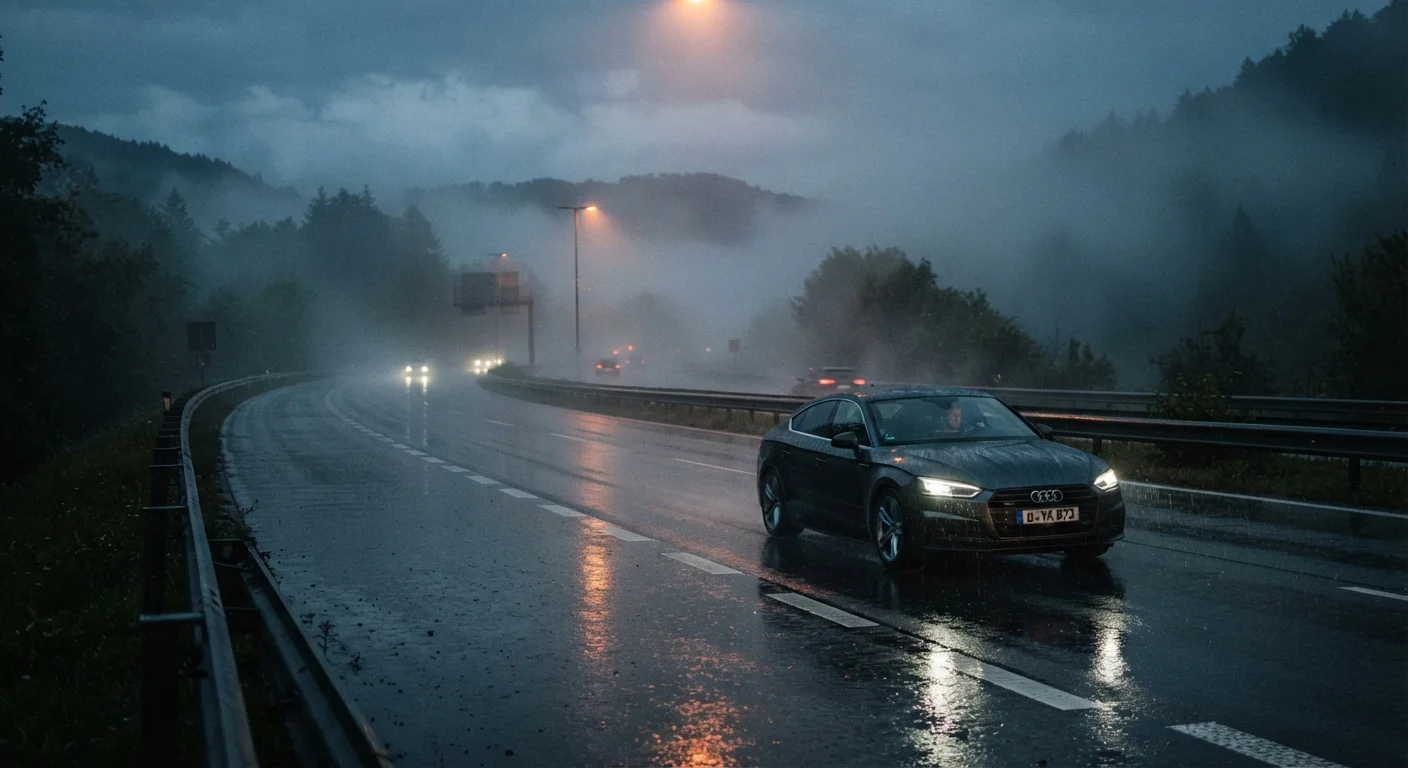
Photo credit: ResultsPivot.com | Discover Insightful Content!
In this article
Wet roads, reduced visibility, and icy surfaces demand different habits. Here's how to adjust your driving before conditions catch you off guard.
Key Takeaways
- Wet roads can triple stopping distances — increasing your following distance is non-negotiable.
- Fog requires low-beam headlights and fog lights, never high beams, which reflect glare back at you.
- In snowy or icy conditions, gentle inputs on the steering wheel and pedals prevent skids.
- Overconfidence — not inexperience — causes most weather-related crashes.
- Pre-trip vehicle checks are especially critical before driving in adverse conditions.
Why Drivers Underestimate Weather Conditions
Most drivers adjust their speed when weather turns bad. Fewer adjust everything else — their following distance, their braking behavior, their lane positioning, and their exit strategy if conditions worsen. That gap between what drivers think they're doing and what the road actually demands is where most weather-related incidents happen.
Research consistently shows that familiar routes feel safer than unfamiliar ones, even when conditions are objectively more dangerous. If you've driven a road a hundred times in dry weather, your brain discounts how different that same road behaves at 34°F with a light drizzle. Familiarity breeds complacency, and complacency in poor conditions can be costly.
The good news: the adjustments that matter most aren't complicated. They're about building deliberate habits before conditions catch you mid-journey. A solid start is reviewing your vehicle's readiness — our pre-trip vehicle check guide covers what to inspect before any journey.
17%
Crashes occurring on wet pavement annually
According to the US Federal Highway Administration, roughly 17% of all vehicle crashes in the US occur on wet pavement each year.
10x
Longer stopping distance on ice vs. dry road
The AAA Foundation for Traffic Safety notes that stopping distances on ice can be up to ten times longer than in dry conditions at the same speed.
Rain: Traction Is Gone Sooner Than You Think
The first few minutes of rainfall are often the most dangerous. Water mixes with accumulated oil and dust on the road surface to create a slippery film before it washes away. This is when grip decreases most sharply — and when many drivers are least alert to it.
Increase your following distance to at least four seconds in wet conditions.
Wet roads significantly extend stopping distances. The two-second rule that works in dry conditions isn't adequate when traction is reduced — four seconds gives you a meaningful safety buffer if the vehicle ahead brakes suddenly.
Brake gently and early, avoiding sharp pedal application.
Hard braking on wet surfaces — especially during that first-rain period — can overwhelm available traction even on vehicles with ABS. Earlier, lighter braking maintains control and reduces the risk of aquaplaning.
Turn on headlights when wipers are running — it's required by law in most US states.
Running headlights in rain makes your vehicle visible to others as much as it helps you see. Many modern vehicles have automatic lights, but older models require manual activation. Being seen is half the safety equation.
Steer through aquaplaning — don't brake sharply.
Aquaplaning occurs when tires ride on a layer of water rather than the road surface, causing a momentary loss of steering control. Braking hard during aquaplaning can cause a spin. Holding the wheel steady and easing off the accelerator allows the tires to reconnect with the road.
Smooth, measured inputs also benefit your fuel consumption. The same anticipatory braking that prevents slides on wet roads reduces unnecessary fuel burn — a principle covered in detail in our piece on fuel-efficient driving habits.
Fog: The Visibility Trap
Fog is deceptive because it creates a false sense of how far ahead you can see. Depth perception degrades in fog, and the road seems to just stop at a wall of grey. Drivers frequently travel faster than their stopping distance allows — a condition sometimes called "overdriving your headlights."
Use Low Beams and Fog Lights in Fog
High beams reflect off water droplets in fog and create glare that reduces your own visibility — the opposite of what you need. Use low beams paired with rear fog lights if your vehicle has them. If you're unsure whether your car is equipped with fog lights, check the instrument panel for the fog light indicator symbols (typically a stylized lamp with wavy lines).
One underappreciated fog hazard: other drivers. Not everyone uses their lights correctly in fog, which makes slower-moving or stationary vehicles harder to spot. Increase your following distance substantially — in thick fog, doubling your normal gap is reasonable — and be especially cautious at junctions and roundabouts where visibility across lanes is severely limited.
Snow and Ice: When Gentle Is Faster
Snow and ice change the physics of driving more dramatically than most people are prepared for. On ice, braking distances can be up to ten times longer than on dry roads. Steering inputs that feel normal — a quick lane change, a sharp corner entry — can send a vehicle sideways before the driver has time to react.
The principle here is counterintuitive: gentle is faster. Smooth, gradual acceleration, light braking started earlier than usual, and wide, unhurried turns all help maintain the traction that ice and packed snow threaten. If your vehicle has traction control or stability control (most vehicles built after the mid-2000s do), leave these systems on — they work best when the driver doesn't fight them.
The skill set for snow and ice also differs from other adverse conditions. If you're more familiar with navigating dense urban traffic, note that city driving habits — frequent stops, tight turns, close-following — are particularly risky on icy surfaces. Our article on city vs. motorway driving skills explores why the habits you build in one environment don't always transfer cleanly to another.
“Speed is the single biggest contributing factor in weather-related crashes. The speed limit tells you the maximum for ideal conditions — in snow and ice, the appropriate speed is whatever the road surface can safely support, which is often dramatically lower.”
— National Highway Traffic Safety Administration, US federal road safety authority

Author
Automotive Editorial Team
Automotive Editorial Team is the collective byline for our editorial team and contributor network. Articles published under this byline or an editorial pen name are researched, written, and reviewed according to our editorial standards for clarity, consistency, and independence before publication.
View all articles →