
Tipping Culture in American Restaurants: What the Debate Actually Reveals
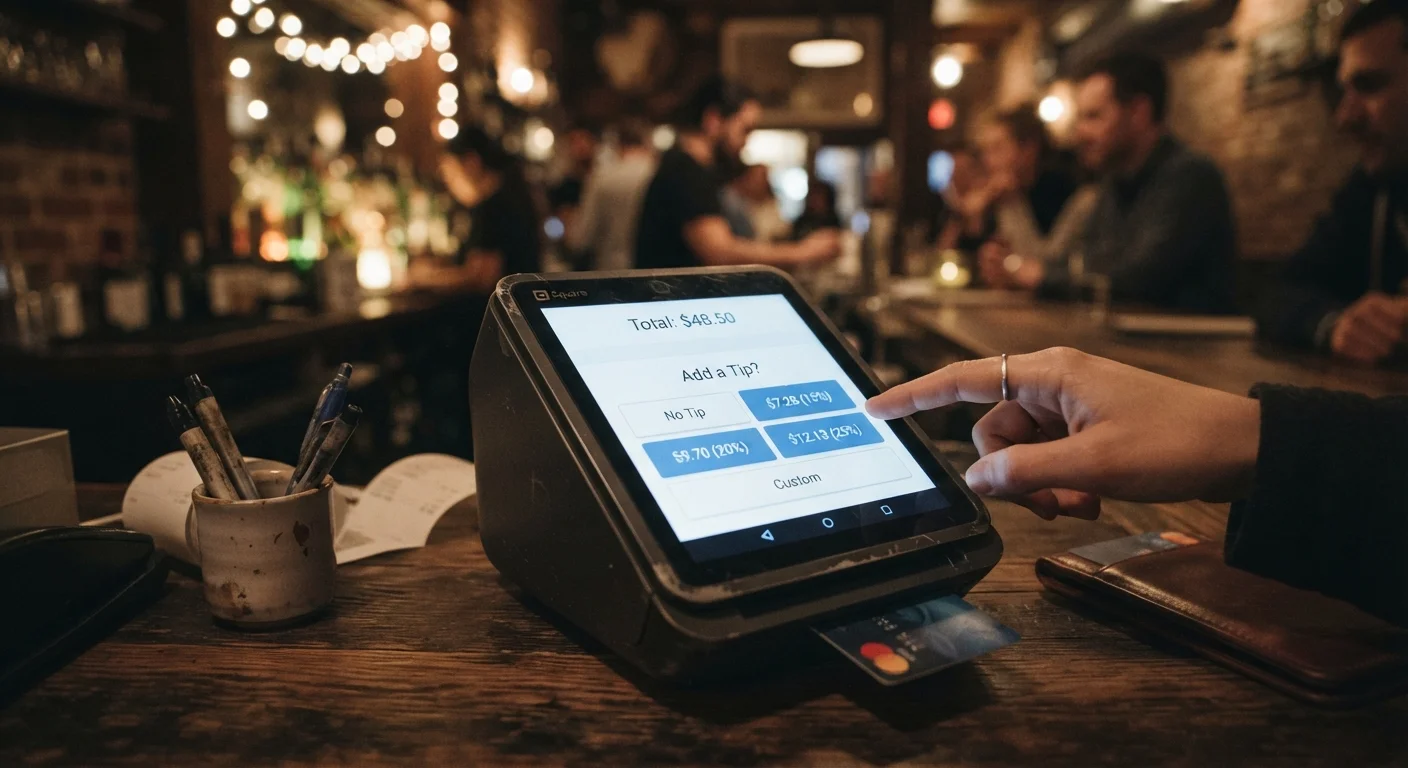
Photo credit: ResultsPivot.com | Discover Insightful Content!
In this article
From tip screens to no-tipping experiments, the tipping conversation in the US is getting louder. Here's what's really driving the tension on both sides.
Key Takeaways
- Tipped workers in most US states are legally entitled to a guaranteed minimum wage if tips fall short.
- No-tipping restaurant models have shown mixed results, with some reverting to tipping after revenue dips.
- The tip-creep phenomenon is driven partly by point-of-sale technology defaulting to higher suggested percentages.
- Tipping norms vary significantly by service type, region, and dining format across the US.
Why the Tipping Debate Has Reached a Boiling Point
Walk up to a coffee counter, tap your card, and you're likely to face a screen asking for 18%, 20%, or 25% — before you've even tasted your drink. That moment of friction is everywhere now, and it's made tipping one of the most charged conversations in American dining culture. But a lot of what people believe about tipping — how it works, who it helps, whether it's even optional — turns out to be more complicated than the outrage cycle suggests.
The tension isn't just about money. It's about labor, technology, social expectation, and a dining culture that's shifting in real time. Understanding the actual mechanics behind tipping can help make sense of why this debate keeps intensifying — and what it says about how Americans relate to the people who feed them.
For a broader look at how the physical and social landscape of eating out is evolving, check out our piece on dining formats changing the restaurant experience.
Myth
Servers keep 100% of the tips customers leave them.
Fact
In many restaurants, tips are pooled or shared with other staff, including bussers, bartenders, and sometimes kitchen workers.
Tip pooling is a common practice in US restaurants. Under federal law, employers who don't take a tip credit (meaning they pay the full federal minimum wage) can require tip pooling that includes back-of-house employees like cooks and dishwashers. Restaurants that do take a tip credit are generally restricted from including non-tipped employees in pools. The specifics vary by state law and restaurant policy, so what happens to a tip after it's left depends significantly on where you're eating.
Myth
Tipped workers earn less than minimum wage and have no protection if tips are low.
Fact
Federal law requires that employers make up the difference if a tipped worker's tips plus their tipped minimum wage don't reach the federal minimum wage.
The federal tipped minimum wage has been $2.13 per hour for decades, which alarms a lot of people — but there is a legal floor. If tips don't bring a worker up to at least $7.25 per hour (the federal minimum), the employer is required by law to cover the gap. That said, enforcement is inconsistent, and many states have set their own, higher tipped minimum wages. Several states, including California and Washington, require tipped workers to be paid the full state minimum wage regardless of tips received.
Myth
The standard tip has always been 15–20%, and anything higher is just modern greed.
Fact
Tipping norms have shifted gradually over decades and vary by context — 20% has become a common baseline in sit-down dining, but norms differ widely by service type.
Etiquette guidance on tipping has evolved over time. What was once considered generous (15%) has, in many full-service dining contexts, become the lower bound of an acceptable tip. Part of this shift is driven by inflation — as menu prices rise, a fixed percentage yields more in absolute terms, but servers' costs of living rise too. Point-of-sale systems that default to 20%, 25%, or even 30% have also nudged expectations upward. Norms for counter service, delivery, and other formats are far less settled and genuinely vary across regions and demographics.
Myth
Tip prompts on screens at coffee shops and counter-service spots mean tipping is now required everywhere.
Fact
Tip prompts are a design choice by the payment software — tipping at counter-service establishments remains optional and socially less established than in full-service dining.
The proliferation of tip screens is largely a function of point-of-sale platforms making it easy for any merchant to activate the feature. There is no legal or universal social obligation to tip at a coffee counter or fast-casual window, and surveys consistently show that a significant portion of Americans select "no tip" in those contexts without guilt. The discomfort many people feel comes from the public, face-to-face nature of the screen — not from an actual norm violation. Full-service restaurant tipping, where servers provide ongoing tableside service and typically earn the tipped minimum wage, carries a much stronger social expectation.
Myth
Eliminating tipping would automatically make things fairer for restaurant workers.
Fact
No-tipping models redistribute income differently but don't automatically raise overall worker compensation — outcomes depend heavily on how service charges are structured and distributed.
When restaurants switch to a no-tipping model and raise menu prices, the resulting revenue is controlled by management, which decides how to distribute it. Some restaurants have used this to raise back-of-house wages meaningfully. Others have seen front-of-house workers leave because their effective hourly rate dropped. The fairness question hinges on transparency: how the added revenue is split, whether workers have input, and how it compares to what skilled servers could earn with tips on a busy Saturday night. It's a structural shift, not a guaranteed fix.
What No-Tipping Experiments Have Actually Taught Us
Over the past decade, a handful of high-profile restaurants — particularly in New York and San Francisco — tried eliminating tips entirely, rolling service charges into menu prices instead. The goal was to reduce income inequality between front-of-house servers and back-of-house kitchen staff, who typically don't share in tips.
The results were instructive but uneven. Some restaurants reported that customers resisted higher sticker prices even when total costs were comparable. Others found that veteran servers, accustomed to earning more via tips on busy nights, left for tip-friendly competitors. A few establishments reversed course entirely. Those that stuck with the model often operated in fine-dining contexts where diners had greater price flexibility.
7
US states requiring full minimum wage for tipped workers
States including California, Oregon, and Minnesota require employers to pay tipped workers the full state minimum wage before tips are counted, according to the Economic Policy Institute.
~72%
Americans who say tipping expectations have increased
A Pew Research Center survey found roughly seven in ten US adults feel tipping is expected in more situations than it was five years ago.
The lesson isn't that no-tipping is a failure — it's that restructuring decades of ingrained habit requires both cultural buy-in and business model alignment. The conversation is part of a larger shift in how Americans think about labor, value, and who actually gets paid when a meal goes well. It connects, in interesting ways, to how communal and shared dining experiences are also reshaping restaurant norms — something we explore in our article on the rise of the communal table.
Tip Pooling Rules Changed in 2018
A 2018 amendment to the Fair Labor Standards Act significantly changed who can participate in tip pools. Employers who pay the full minimum wage (forgoing the tip credit) may now include back-of-house workers in tip pools. However, managers and supervisors are prohibited from keeping any portion of pooled tips under federal law. State laws may impose additional restrictions, so the rules at any given restaurant depend on both federal and state regulations.
Where the Culture Goes From Here
American tipping norms are genuinely in flux. Younger diners report higher tipping fatigue, particularly at quick-service and counter-service spots where the expectation is relatively new. At the same time, awareness of server wages has grown, and many people tip more consciously than they did a decade ago.
Tip Shaming Is a Real Pressure — But It's Not a Legal Obligation
The social discomfort of a tip screen turned toward you, or a digital receipt with the tip line in bold, can feel coercive — but tipping in the US remains a voluntary social custom, not a legal requirement. If you're in a situation where a service charge is listed on the bill (distinct from a tip line), that amount may be mandatory — read the menu or receipt carefully to understand what's required versus what's suggested.
What's clear is that tipping culture is less a fixed tradition than a negotiated social contract — one that gets renegotiated every time a new payment screen design rolls out or a state legislature debates the tipped minimum wage. For curious diners, understanding the mechanics is half the battle. For the broader food trends conversation, tipping is a surprisingly revealing lens on what Americans value when they eat out — and who they think deserves to share in it.

Author
Food & Drink Editorial Team
Food & Drink Editorial Team is the collective byline for our editorial team and contributor network. Articles published under this byline or an editorial pen name are researched, written, and reviewed according to our editorial standards for clarity, consistency, and independence before publication.
View all articles →