
The Rise of the Communal Table: Why Americans Are Eating Together Again
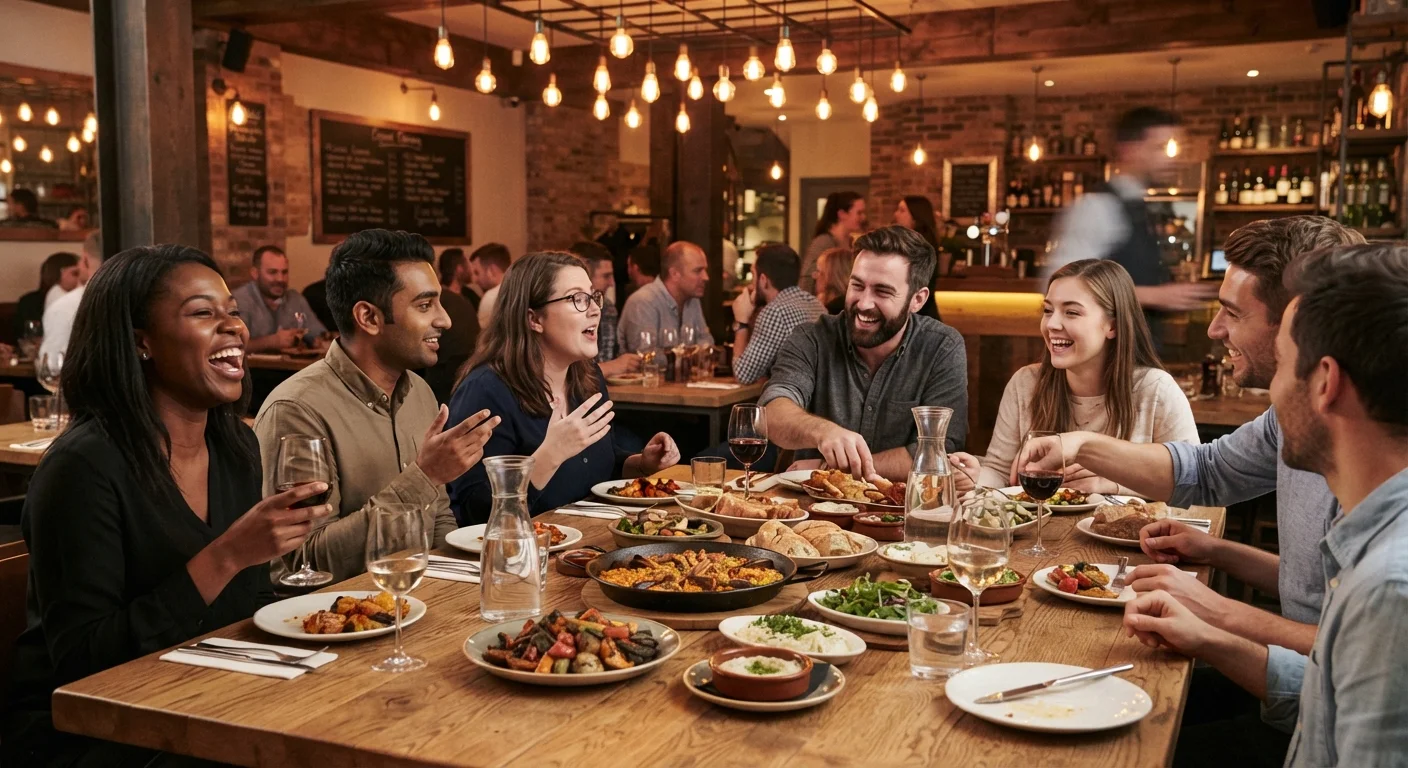
Photo credit: ResultsPivot.com | Discover Insightful Content!
In this article
Communal dining is reshaping US restaurant culture. Explore why shared tables are making a comeback and what it says about how Americans connect over food.
Key Takeaways
- Communal tables are appearing in more US restaurants as a deliberate design and cultural choice.
- The format taps into a post-pandemic appetite for genuine in-person connection.
- Communal dining has deep roots in American food traditions, from church suppers to family-style restaurants.
- Restaurants use the format to maximize space while also shaping a more social guest experience.
- Not all communal dining is the same — format, food style, and neighborhood context all shape how it feels.
What's Driving the Communal Table Comeback
Walk into a buzzy food hall, a craft ramen counter, or a farm-to-table spot in any major American city, and you're likely to find it: a long, shared table where strangers sit elbow-to-elbow, passing dishes and swapping recommendations with people they've never met. The communal table — once a fixture of church suppers and family-style Italian joints — is having a serious cultural moment in US restaurants.
What's behind it? Researchers and hospitality professionals point to several converging forces. There's the well-documented hunger for social connection that intensified during and after the pandemic. There's a broader cultural push back toward authenticity and experience over mere transaction. And there's the restaurant industry's practical need to seat more guests in tighter spaces without sacrificing atmosphere.
58%
Americans who feel lonelier than past generations
According to a 2023 advisory from the U.S. Surgeon General, roughly 3 in 5 Americans report feeling lonely, a figure that has shaped demand for more socially engaging dining formats.
72%
Diners who say atmosphere matters as much as food
A National Restaurant Association survey found that a strong majority of diners factor overall experience and social environment into their restaurant choices, not just menu quality.
2x
Growth in food hall openings across the US
Food halls — which often center on communal seating — more than doubled in number across the US between 2015 and 2023, according to industry tracking by Cushman & Wakefield.
For many diners, the communal table delivers something that a private booth simply can't: the low-stakes thrill of a spontaneous conversation with a stranger over a bowl of something delicious. It's casual intimacy — and it turns out Americans are increasingly into it.
A Format With Deep American Roots
Despite feeling trendy, communal eating is woven into the fabric of American food history. Church potlucks, Thanksgiving gatherings, clambakes, and harvest suppers have always centered on the idea that food tastes better — and means more — when it's shared with others. Regional dining traditions across the country, from low-country boils in the South to fish fries in the Midwest, are built around exactly this premise.
What restaurants are doing now is formalizing and amplifying that instinct. By designing spaces around a single shared table rather than rows of private two-tops, they're making a deliberate statement about what kind of experience they want to offer. The table becomes the centerpiece — not just functionally, but symbolically.
“Humans have always gathered around food — it's one of the most ancient forms of community-building we have. What restaurants are doing with communal tables is simply making that visible again in a setting where we'd stopped expecting it.”
— Krishnendu Ray, Food Studies Professor, New York University
This framing resonates with the growing interest in dining formats that blur traditional boundaries between chef, kitchen, and guest. Communal tables are part of a broader redesign of how Americans experience eating out.
The Social Psychology of Sharing a Table
There's genuine psychology at work when strangers share a meal. Research in social science has long suggested that eating together builds trust and rapport faster than almost any other shared activity. The act of breaking bread — literally and figuratively — lowers social guards in ways that, say, sitting next to someone on a plane simply doesn't.
How to Make the Most of a Communal Table
If you're new to communal dining, a light opener — commenting on a dish your neighbor ordered, or asking the server for a recommendation out loud — is usually all it takes to spark a conversation. You're under no obligation to chat, but leaving a little openness goes a long way. Think of it less like a dinner party and more like a lively neighborhood bar where food happens to be the main event.
Restaurants that lean into communal dining often see this play out in real time: guests who arrived as strangers leave having exchanged restaurant recommendations, Instagram handles, or even dinner plans. The table creates a container for connection that doesn't require anyone to "try" to be social — proximity and good food do the work.
This stands in interesting contrast to the equally real rise of solo dining in America, which speaks to a different but equally valid hunger: for quiet, self-directed space. The two trends aren't contradictory — they reflect the full spectrum of how Americans want to engage with the act of eating out.
What Makes Communal Dining Work (and When It Doesn't)
Not every long table qualifies as a great communal dining experience. The format works best when the restaurant actively supports it — through menu design, staff culture, and physical space. Shared plates and family-style menus naturally invite conversation and passing; individually plated, formal courses less so. The noise level, lighting, and table height all shape whether strangers feel invited to connect or awkwardly siloed.
Communal Tables Aren't Universal
While the trend is growing, communal seating remains a deliberate design choice — not a default. Many restaurants that offer communal tables also maintain private seating for guests who prefer it. The format resonates most in specific dining cultures and neighborhoods, and restaurants that force the concept without the right menu or atmosphere often find it falls flat.
Context matters enormously, too. A communal table at a lively taproom or ramen spot feels energizing; the same setup at a hushed, upscale restaurant might just feel uncomfortable. This is why the trend has taken hold most strongly in fast-casual and casual dining environments rather than fine dining rooms.
When it clicks, though, the communal table offers something increasingly rare in American public life: an unscripted moment of genuine human contact. In a culture often accused of digital isolation, there's something quietly radical about sitting down with strangers and sharing a meal. That, more than any design trend, may be why the communal table keeps pulling people in — and why it's likely here to stay.
Curious about where all of this fits in the bigger picture of what Americans are eating and craving? Explore more in our Food Trends coverage.
Frequently Asked Questions

Author
Food & Drink Editorial Team
Food & Drink Editorial Team is the collective byline for our editorial team and contributor network. Articles published under this byline or an editorial pen name are researched, written, and reviewed according to our editorial standards for clarity, consistency, and independence before publication.
View all articles →