
Plant-Based Meat vs. Whole-Food Vegetarian Eating: What the Trend Data Actually Shows
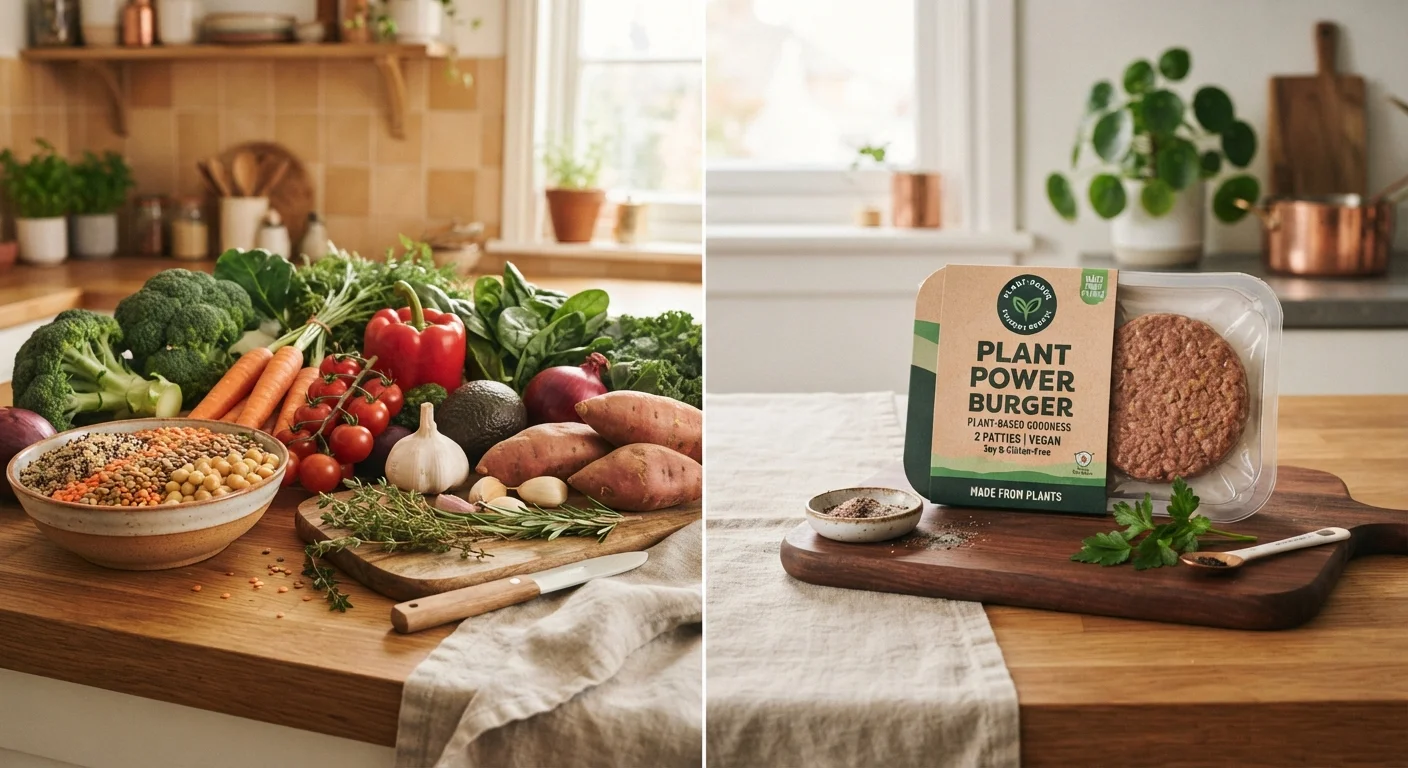
Photo credit: ResultsPivot.com | Discover Insightful Content!
In this article
Sales of plant-based burgers have slowed while whole-food vegetarian cooking surges. A look at what's really shifting on American plates.
Key Takeaways
- US retail sales of plant-based meat have declined several years running after peaking around 2021.
- Whole-food vegetarian ingredients like lentils, chickpeas, and tempeh are seeing steady grocery growth.
- Consumer surveys point to price, taste fatigue, and ingredient skepticism as top reasons for plant-based meat's slide.
- Whole-food vegetarian eating is driven by cost savings, curiosity, and broader wellness awareness.
- Neither approach is nutritionally superior in every context — eating patterns and overall diet quality matter most.
The Boom, the Plateau, and the Pullback
A few years ago, plant-based burgers seemed poised to reshape American eating. Grocery freezer aisles expanded, fast-food chains ran high-profile launches, and investors poured money into alt-protein startups. Then the numbers started telling a different story.
Retail sales data tracked by analysts including those at Bloomberg Intelligence showed US plant-based meat sales declining in 2022 and continuing to soften through 2023, even as the broader food market grew. The category that once seemed unstoppable had hit a wall — and consumer research began filling in why.
Price was the loudest complaint. Plant-based burgers and sausages consistently cost more per pound than conventional ground beef or chicken, a gap that became harder to justify as inflation squeezed household budgets. Taste fatigue and skepticism about long ingredient lists were close behind. Many shoppers who tried alt-meat as a novelty simply didn't repurchase.
–12%
US plant-based meat retail sales decline
Bloomberg Intelligence tracked roughly a 12% drop in US retail plant-based meat dollar sales in 2023, continuing a trend that began after 2021's peak.
~$1.40
Avg. cost per serving, dried lentils
USDA food cost data consistently places dried legumes among the lowest-cost protein sources available in American grocery stores.
2x+
Price premium of alt-meat over ground beef
Consumer price comparisons from grocery retail analysts in 2023 found plant-based burgers often cost more than twice as much per pound as conventional ground beef.
This doesn't mean plant-based eating stalled — far from it. It means Americans separated two things that marketing had bundled together: eating less meat, and eating processed meat substitutes. To understand what's actually growing, you have to look at the produce aisle, not the freezer section. For a broader look at how food trends form and fade, see our breakdown of how US food trends actually spread.
What's Actually Growing: The Whole-Food Shift
While alt-meat stumbled, a quieter movement was gaining traction. Sales of dried legumes, canned beans, lentils, and tempeh have seen consistent growth at US grocery retailers. Recipe searches for dishes built around chickpeas, black beans, tofu, and farro climbed steadily on major cooking platforms. The shift is less dramatic to market — there's no flashy brand behind a pot of lentil soup — but it's arguably more durable.
| Criterion | Plant-Based Meat | Whole-Food Vegetarian |
|---|---|---|
| Typical cost per serving | Higher (premium-priced) | Lower (legumes, grains) |
| Ingredient complexity | Long, processed ingredient list | Short, recognizable ingredients |
| Cooking learning curve | Minimal — cooks like meat | Moderate — new techniques |
| Sodium content | Often high | Naturally low (without added salt) |
| Retail sales trend (US) | Declining since ~2021 | Steadily growing |
| Cultural versatility | Mainly Western formats | Draws on global cuisines |
| Protein completeness | Often engineered to be complete | Requires food variety/planning |
Whole-food vegetarian cooking is, in many ways, a return to how most of the world has always eaten. Cuisines from South Asia, the Middle East, Latin America, and East Africa center legumes and vegetables not as a trend but as a foundation. American cooks are increasingly borrowing from these traditions — think dal, mujaddara, and black bean tacos — and discovering that the results are both satisfying and economical.
Cost matters here. Dried lentils and canned chickpeas are among the most affordable protein sources in any American grocery store, a fact that resonates with budget-conscious households. And unlike alt-meat, these ingredients don't require a loyalty to any particular brand or product line. For more on how to think about the spectrum between whole and processed foods, this guide breaks down the real difference.
Nutrition: What the Evidence Actually Says
Both approaches to plant-forward eating have genuine nutritional merit, and both have limitations. Plant-based meat alternatives can be lower in saturated fat than conventional red meat and are often fortified with iron and B12. However, they tend to be high in sodium and contain processed ingredients — oils, starches, binders — that aren't found in their whole-food counterparts.
A Note on Nutrition Research Limits
Most nutrition research on plant-based diets relies on observational studies, which can identify associations but not prove cause and effect. Factors like overall lifestyle, socioeconomic status, and total diet pattern are difficult to isolate. Treat population-level findings as directional, not prescriptive, and seek personalized guidance from a registered dietitian for your specific situation.
Whole-food vegetarian eating, when varied and well-planned, is associated with fiber intake, micronutrient diversity, and eating patterns that researchers have linked to positive health outcomes in observational studies. That said, it requires more attention to certain nutrients — B12, iron, zinc, and complete protein — that are harder to get from plants alone without planning or supplementation.
The honest answer is that neither category automatically makes a diet healthy or complete. What matters is the full pattern of eating. Research on everyday eating habits suggests that consistency, food variety, and overall diet quality matter far more than any single food category.
This article is for informational purposes only and is not a substitute for advice from a qualified healthcare or nutrition professional. Individual dietary needs vary — consult a registered dietitian or doctor before making significant changes to your eating pattern.

Author
Food & Drink Editorial Team
Food & Drink Editorial Team is the collective byline for our editorial team and contributor network. Articles published under this byline or an editorial pen name are researched, written, and reviewed according to our editorial standards for clarity, consistency, and independence before publication.
View all articles →