
Whole Foods vs. Processed Foods: Understanding the Real Difference
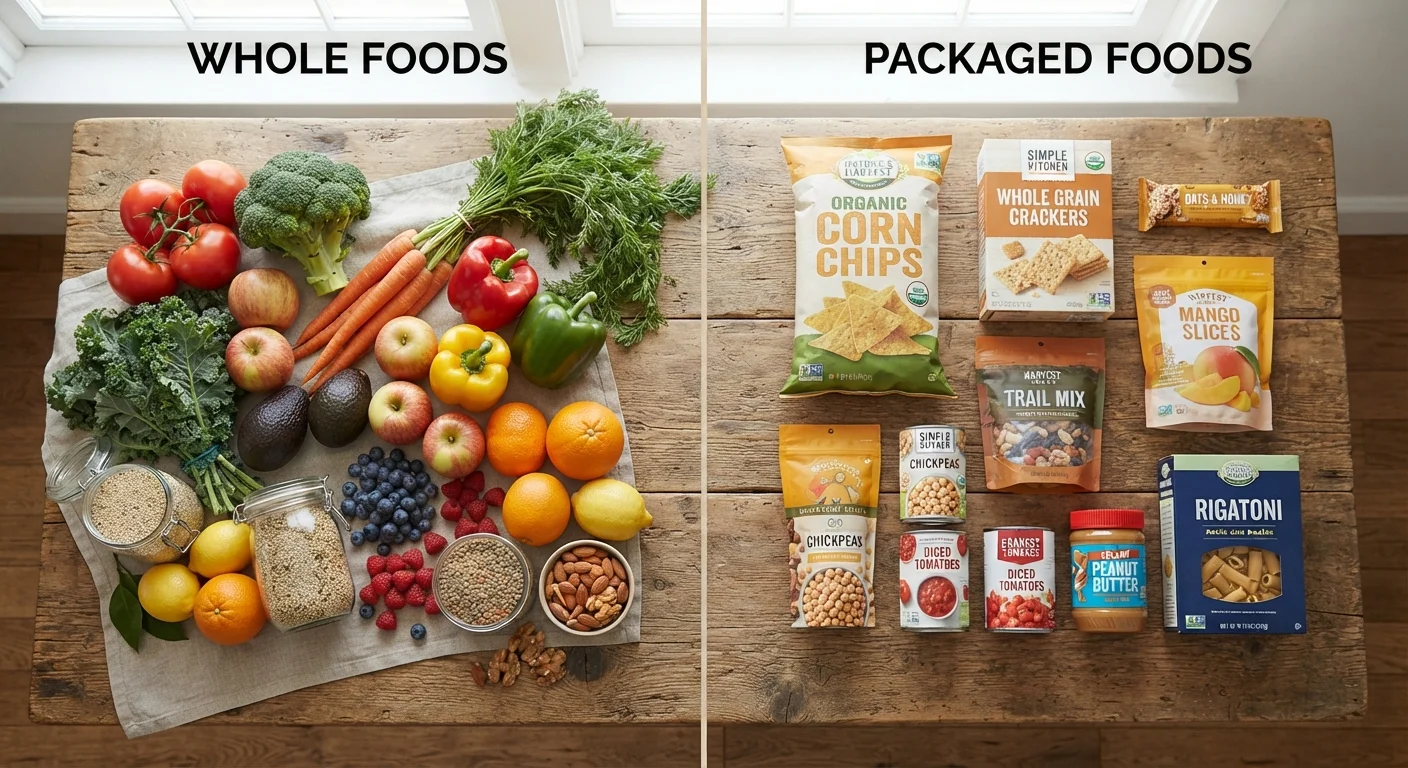
Photo credit: ResultsPivot.com | Discover Insightful Content!
In this article
Not all processed foods are equal, and not all whole foods are perfect. Here's how to make sense of the spectrum when shopping and eating.
Key Takeaways
- Processing exists on a spectrum — canned beans and frozen vegetables are processed but still nutritious choices.
- Ultra-processed foods, defined by their industrial ingredients and additives, are the category most linked to poor health outcomes in research.
- Whole foods retain more fiber, micronutrients, and beneficial plant compounds than their heavily processed counterparts.
- Reading ingredient lists, not just front-of-pack claims, is the most reliable way to evaluate any packaged food.
- Practical eating means balancing cost, time, and nutrition — not achieving a purely unprocessed diet.
Defining the Terms: It's Not Black and White
The word "processed" covers an enormous range — from oats that were rolled and flaked, to breakfast cereals engineered with artificial colors and dozens of additives. Calling all of them equally harmful, or treating every whole food as automatically superior, misses the nuance that actually matters for everyday eating decisions.
Nutritionists and food researchers often use the NOVA classification system, developed by researchers at the University of São Paulo, which sorts foods into four groups based on the extent and purpose of processing. Group 1 covers unprocessed or minimally processed foods (fresh fruit, plain meat, dried legumes). Group 4 — labeled ultra-processed — covers industrial formulations that often contain ingredients rarely found in a home kitchen, such as modified starches, emulsifiers, flavor enhancers, and hydrogenated oils.
It's the Group 4 ultra-processed category that has drawn the most concern from public health researchers, not the full category of "processed foods" writ large. Understanding this distinction changes how you shop and eat — and helps avoid unnecessary anxiety about, say, a can of tomatoes or a tub of plain yogurt.
| Criterion | Whole Foods | Processed Foods |
|---|---|---|
| Definition | Unaltered or minimally prepared | Modified from natural state; ranges widely |
| Examples | Fresh vegetables, eggs, dried lentils | Canned soup, frozen meals, packaged snacks |
| Nutrient retention | Generally higher fiber and micronutrients | Varies; ultra-processed often lower |
| Added ingredients | None to very few | Ranges from salt/oil to dozens of additives |
| Cost and convenience | Can be higher cost, more prep time | Often cheaper and quicker to use |
| Shelf life | Usually shorter | Often extended via additives or packaging |
| Health research association | Linked to better long-term outcomes | Ultra-processed linked to higher disease risk |
What the Research Actually Says
Observational studies — including large cohort studies published in journals such as The BMJ and JAMA Internal Medicine — have associated high ultra-processed food consumption with elevated risks of cardiovascular disease, type 2 diabetes, and other chronic conditions. It's important to note that most of this evidence is associational rather than definitively causal, meaning researchers observe links but haven't always ruled out confounding factors.
57%
Share of US calories from ultra-processed foods
A study published in BMJ Open estimated that ultra-processed foods account for roughly 57% of energy intake in the average American diet.
32%
Higher cardiovascular risk association
A large prospective cohort study published in The BMJ found a significant association between high ultra-processed food intake and cardiovascular disease risk.
4 groups
NOVA food processing classification levels
The NOVA system, developed by researchers at the University of São Paulo, categorizes all foods into four groups based on degree and purpose of industrial processing.
That said, the consistency of findings across multiple countries and populations has led many health authorities to recommend limiting ultra-processed food intake as a reasonable, precautionary guideline. Whole and minimally processed foods, by contrast, tend to retain their natural fiber, micronutrients, and phytonutrients — compounds that emerging research continues to associate with better long-term health outcomes.
For a practical lens on evaluating any packaged item, the ingredient list on the back of the pack tells a more honest story than front-of-pack health claims ever will.
Not All Processing Is Equal
Pasteurizing milk, freezing peas, and fermenting yogurt are all forms of processing — yet these methods often preserve or even enhance nutritional value. The concern from researchers is directed primarily at ultra-processed products engineered for hyper-palatability, long shelf life, and low cost using industrial ingredients. When evaluating any food, consider the full ingredient list rather than defaulting to the word 'processed' as a shorthand for unhealthy.
Making Practical, Balanced Choices
Eating an entirely unprocessed diet is unrealistic for most people, and it isn't necessarily the goal. Frozen vegetables, canned fish, plain nut butters, and whole-grain bread all involve some form of processing — yet they contribute meaningfully to a nutritious diet. The practical question isn't is this processed? but rather how processed, and what was added or removed?
A few guidelines that nutrition educators commonly suggest: favor foods with short, recognizable ingredient lists; choose options with little to no added sugar and modest sodium; and build meals around vegetables, legumes, whole grains, and lean proteins as a base before layering in convenience foods where needed.
If you're curious how these principles apply specifically to plant-based eating, the debate between plant-based meat products and whole-food vegetarian cooking offers a useful case study in how processing level plays out within a single dietary pattern.
The spectrum is wide. Navigating it confidently means being informed — not perfectionistic.
This article is for general informational and educational purposes only and is not a substitute for professional medical or dietary advice. Consult a qualified healthcare provider or registered dietitian for guidance tailored to your individual health needs.

Author
Health & Wellness Editorial Team
Health & Wellness Editorial Team is the collective byline for our editorial team and contributor network. Articles published under this byline or an editorial pen name are researched, written, and reviewed according to our editorial standards for clarity, consistency, and independence before publication.
View all articles →