
The Rise of Birria: How a Mexican Street Taco Conquered American Menus
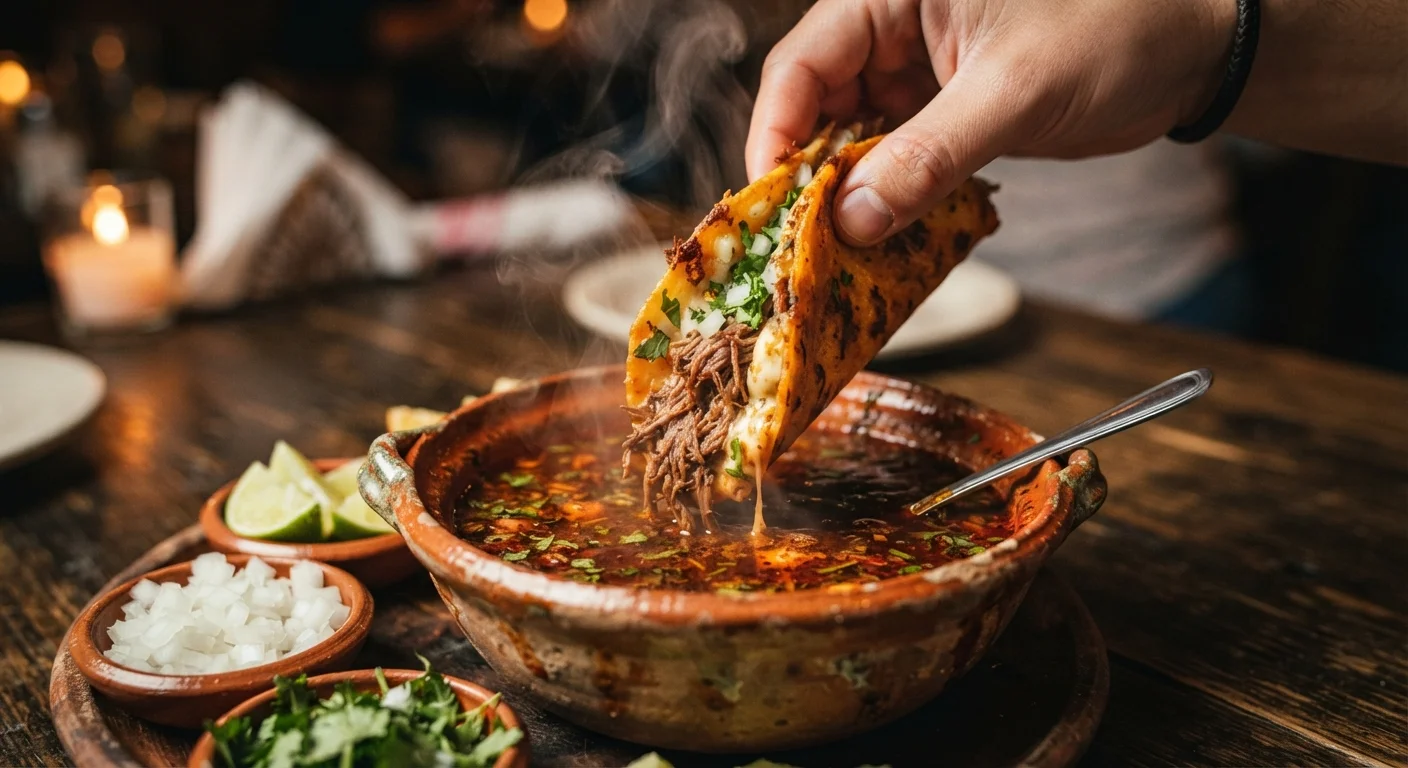
Photo credit: ResultsPivot.com | Discover Insightful Content!
In this article
Birria went from regional Mexican stew to a US food phenomenon almost overnight. Here's the cultural story behind the craze.
Key Takeaways
- Birria is a centuries-old Mexican stew from Jalisco that only recently became a US mainstream phenomenon.
- The consommé dip — dunking a crispy, cheesy taco into broth — is the defining sensory hook that made birria go viral.
- Social media, particularly Instagram and TikTok, played a direct role in catapulting birria from regional favorite to national craze.
- Birria is now appearing on menus far beyond Mexican restaurants, including American diners, food halls, and fast-casual chains.
- The trend reflects a broader American appetite for bold, globally rooted comfort food with visual drama.
From Jalisco Celebration Food to American Obsession
Birria has been simmering in Jalisco, Mexico for centuries. Traditionally prepared for weddings, baptisms, and major holidays, it was the kind of dish families made in giant pots — slow, labor-intensive, and worth every hour. Goat was the original protein, cooked low and slow in a sauce built from dried chiles, vinegar, garlic, and a warming blend of spices. The result: fall-apart meat with a broth so deeply flavorful it deserved its own vessel.
For decades, birria existed comfortably as a regional Mexican specialty, well-known within diaspora communities in cities like Los Angeles but largely off the radar of mainstream American dining. Then, somewhere between 2018 and 2020, everything changed.
#1
Most searched taco style in the US
Google Trends data from around 2021 showed birria tacos surging to become one of the most searched food terms nationally, reflecting the speed of the trend's spread.
500+
Years of birria's culinary history
Culinary historians trace birria's origins in Jalisco, Mexico back to the colonial era, making it one of the older regional dishes to achieve recent mainstream US popularity.
Billions
TikTok views under #birriataco
The hashtag #birriataco accumulated billions of views on TikTok as of the mid-2020s, making it one of the platform's most enduring food content categories.
The pivot point was the quesabirria taco — a riff on the classic that dips a tortilla in the cooking consommé, fills it with shredded beef and Oaxacan cheese, then fries it until the outside is lacquered and crisp. It was a format built for visual drama, and the internet noticed immediately.
The Role of Social Media in the Birria Boom
Few food trends in recent memory have a clearer cause-and-effect relationship with social media than birria. The visuals are simply irresistible: the deep mahogany red of the consommé, the cheese pull, the satisfying dip before each bite. On Instagram and TikTok, videos of birria tacos being dunked into broth racked up millions of views, creating a feedback loop of curiosity and craving.
“The birria taco is a perfect convergence of comfort, culture, and camera appeal. It doesn't just taste extraordinary — it performs extraordinarily, which in the social media age is its own kind of superpower.”
— A food culture writer and culinary trend analyst, Contributing editor at a national food publication
Food trucks in Los Angeles were among the first to formalize the quesabirria format for American audiences, building lines around the block and attracting food bloggers and influencers who spread the imagery far beyond California. What had been a neighborhood staple became a national talking point almost overnight.
This pattern — street-level authenticity amplified by visual content — is one that shows up again and again in how American food trends form and spread. For a deeper look at the mechanics behind why certain foods break through while others don't, see Inside the Anatomy of a Food Trend.
How to Order Birria Like a Regular
When you order at a dedicated birria spot, ask for the consommé on the side and don't skip the dip — that's the defining experience. A squeeze of lime and some fresh chopped white onion and cilantro on top round out the flavors beautifully. If you're new to the dish, start with beef birria before exploring goat or lamb versions.
Birria's Expansion Across American Menus
Once the trend escaped its regional roots, the menu expansion was swift. Birria began appearing not just at Mexican restaurants but at American diners, food halls, ghost kitchens, and eventually fast-casual chains. Birria ramen, birria grilled cheese, birria pizza, and birria burritos all emerged as chefs and operators tested where the flavor profile could stretch.
That adaptability is part of what separates a lasting trend from a passing fad. Birria's core flavor — rich, chile-forward, deeply savory — works across formats in a way that feels exciting rather than gimmicky. It belongs to the same wave of globally rooted comfort foods winning American plates, a movement explored in depth in Global Flavors Finding a Permanent Home in American Kitchens.
Birria's Regional Variations Are Real
Not all birria is the same. Jalisco-style birria, which uses goat and a vinegar-forward marinade, differs from the beef-heavy versions popularized in Tijuana and later adopted widely in the US. If you see 'Tijuana-style' or 'Jalisco-style' on a menu, that distinction is meaningful — both are authentic, just different expressions of the same tradition.
The consommé itself has also developed a following of its own — ordered as a standalone soup, used as a cooking liquid for rice, or even sipped straight. This depth of use signals a level of cultural adoption that goes beyond trend-chasing.
What Birria's Rise Tells Us About American Food Culture
Birria's ascent isn't just a food story — it's a cultural one. It reflects a growing American appetite for dishes with genuine heritage, bold flavor layering, and a theatrical eating experience. In an era when diners increasingly want to know where their food comes from and what story it carries, birria delivers on every front.
There's also something important in recognizing that birria was always delicious — the trend didn't create that. What changed was access and visibility. Mexican-American communities had been enjoying birria for generations before it became a mainstream sensation, and acknowledging that context matters. Trend coverage that strips the cultural origin from the food does a disservice to the cooks and communities who developed it.
The same curiosity driving birria's popularity is reshaping other corners of American food culture, from fermented flavors moving into the mainstream — as seen with fermented foods Americans are actually eating} — to the steady integration of global ingredients into home kitchens. Birria just happens to be one of the most vivid examples of that shift: a dish that earned its moment not through marketing, but through flavor.
Frequently Asked Questions

Author
Food & Drink Editorial Team
Food & Drink Editorial Team is the collective byline for our editorial team and contributor network. Articles published under this byline or an editorial pen name are researched, written, and reviewed according to our editorial standards for clarity, consistency, and independence before publication.
View all articles →