
Mixing Vintage and Contemporary Pieces Without the Room Feeling Accidental
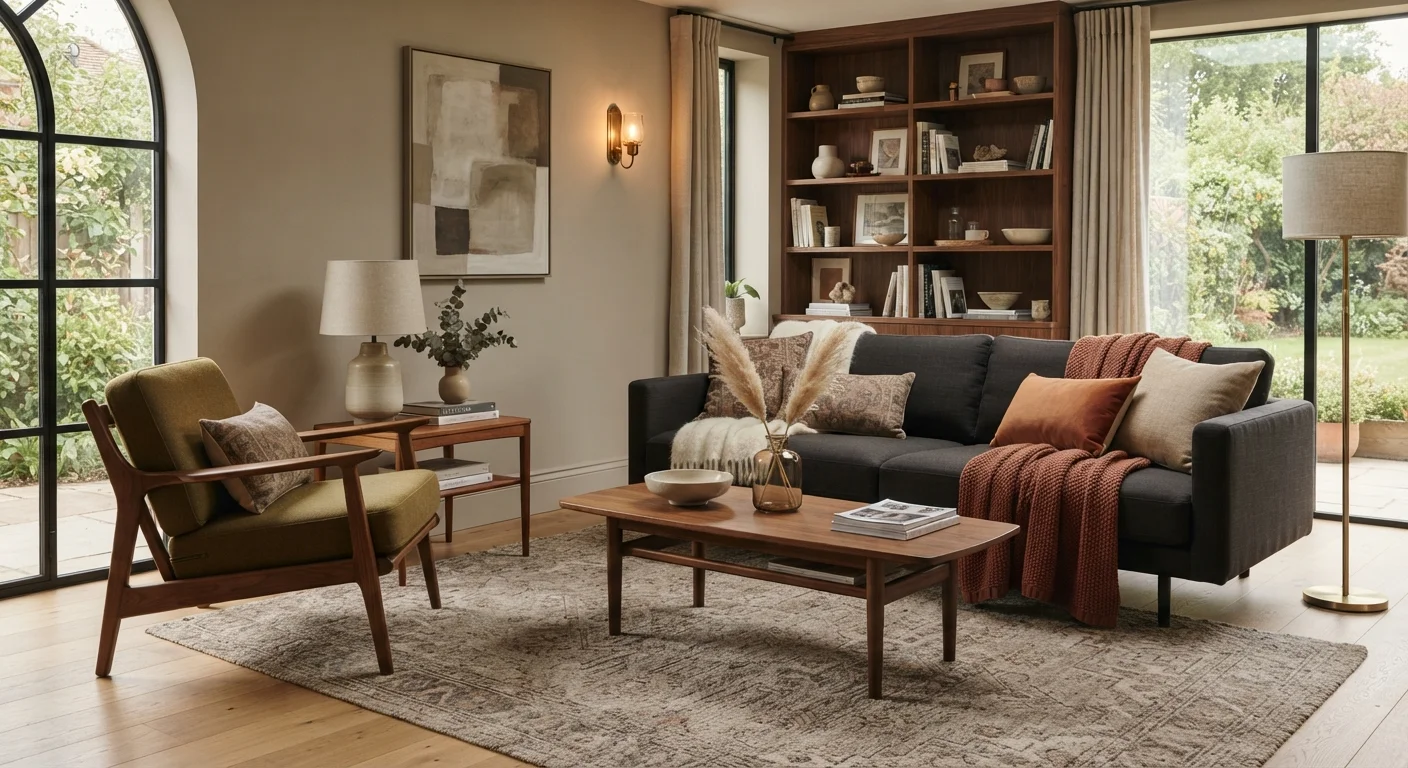
Photo credit: ResultsPivot.com | Discover Insightful Content!
In this article
Blending old and new can look intentional or chaotic depending on a few key decisions. Here's what experienced decorators keep in mind.
Key Takeaways
- A shared color palette is the single most effective way to unify pieces from different eras.
- Odd-numbered groupings and repeated materials help vintage items feel curated, not collected by accident.
- One dominant style should anchor the room; vintage pieces work best as accents, not the majority.
- Scale and proportion matter more than era — a bulky antique next to a delicate modern piece will always look off.
- Texture repetition across old and new items creates visual continuity without matching.
Why Mixed-Era Rooms Go Wrong
Most rooms that feel unintentionally cluttered when mixing vintage and contemporary pieces share one problem: there's no organizing principle. Without a thread connecting the old and new — whether that's color, material, or visual weight — the eye has nowhere to rest. Each piece demands attention on its own terms, and the result reads as a collection of objects rather than a designed space.
The good news is that the fix rarely involves getting rid of anything. It usually means making a few deliberate decisions about what role each piece plays. Interior designers often describe this as giving every item a job — whether that's anchoring the room, adding contrast, or introducing warmth.
“A room should not be a showroom of styles competing for attention. The goal is a sense that everything has been gathered with intention — as if it all belongs to the same person, even if it comes from different centuries.”
— Albert Hadley, Influential American interior decorator
Best Practices for Blending Old and New
These are the principles experienced decorators return to when styling rooms that span multiple eras. None of them require a design degree — just a willingness to step back and look at the room as a whole rather than piece by piece.
Establish a shared color palette before you place anything.
Color is the fastest way for a room to feel cohesive or chaotic. When a vintage piece and a modern one share even one color — a warm walnut tone, a dusty sage — the eye reads them as related. Without that thread, different eras will always feel like they wandered in from different houses.
Let one era dominate and use the other as accent.
Equal parts vintage and contemporary creates visual competition — neither style wins, and the room feels unsettled. Choosing a dominant style (typically whatever your larger furniture represents) gives the space a point of view. Accent pieces from another era then add depth rather than confusion.
Repeat materials across both old and new items.
Material repetition is one of the subtler tools in a decorator's kit. When a reclaimed wood shelf echoes the tones of a vintage side table across the room, those two pieces create a visual rhythm that makes the whole room feel thought-through.
Match the visual weight, not the style.
A heavy, ornate antique next to a slender, minimalist contemporary piece will always look mismatched regardless of how well the colors work. Visual weight — the sense of mass, solidity, and presence a piece projects — should be roughly balanced across pieces that sit near each other.
Group vintage items in odd numbers.
Single vintage pieces can look stranded; pairs can look too formal. Three vintage objects grouped together — even mismatched ones — read as a deliberate vignette. Odd-number groupings are a longstanding styling convention because they feel naturally balanced without being symmetrical.
Start Here: Quick Moves With Immediate Impact
If you're not ready for a full room overhaul, these targeted actions can meaningfully shift how a mixed space reads — often in an afternoon.
For a deeper look at how spatial organization supports visual coherence, see our guide to zones and flow — the same principles that keep a room tidy also help mixed-era styling feel purposeful rather than random.
Knowing When to Lean Into a Style
There's a difference between a room that blends eras and a room that's trying to be too many things at once. If you're drawn to a specific aesthetic — say, the layered, nature-inspired warmth of cottagecore — it can actually be easier to anchor your vintage finds within that framework. A dominant style gives you a filter: does this piece fit the mood, or is it fighting it? Our practical guide to cottagecore interiors explores how to translate that kind of trend into real decisions about furniture and objects.
68%
Homeowners mixing old and new furniture
According to a Houzz survey on interior design trends, a majority of homeowners reported intentionally combining vintage or antique items with modern furniture in their primary living spaces.
3x
More visual interest with layered textures
Design researchers have broadly observed that rooms with multiple layered textures — regardless of era — are consistently rated as more visually engaging by study participants than single-texture rooms.
The Mirror Test for Cohesion
When in doubt, photograph your room in black and white. Removing color lets you see the room's true structure — how visual weight is distributed, whether scale is balanced, and whether any single piece is fighting for attention. If the room looks calm in grayscale, the color palette is doing its job; if it still looks chaotic, the issue is proportion or placement.
Vintage Doesn't Mean Antique
In decorating conversations, 'vintage' typically refers to pieces from roughly 20 to 100 years old, while 'antique' usually means over 100 years old. The mixing principles here apply equally to both — the age of a piece matters less than its visual characteristics. A 1980s lacquered side table can present the same styling challenges as an 1880s one.

Author
Home & Living Editorial Team
Home & Living Editorial Team is the collective byline for our editorial team and contributor network. Articles published under this byline or an editorial pen name are researched, written, and reviewed according to our editorial standards for clarity, consistency, and independence before publication.
View all articles →