
Warm Minimalism vs. Cold Minimalism: What Sets These Two Aesthetics Apart
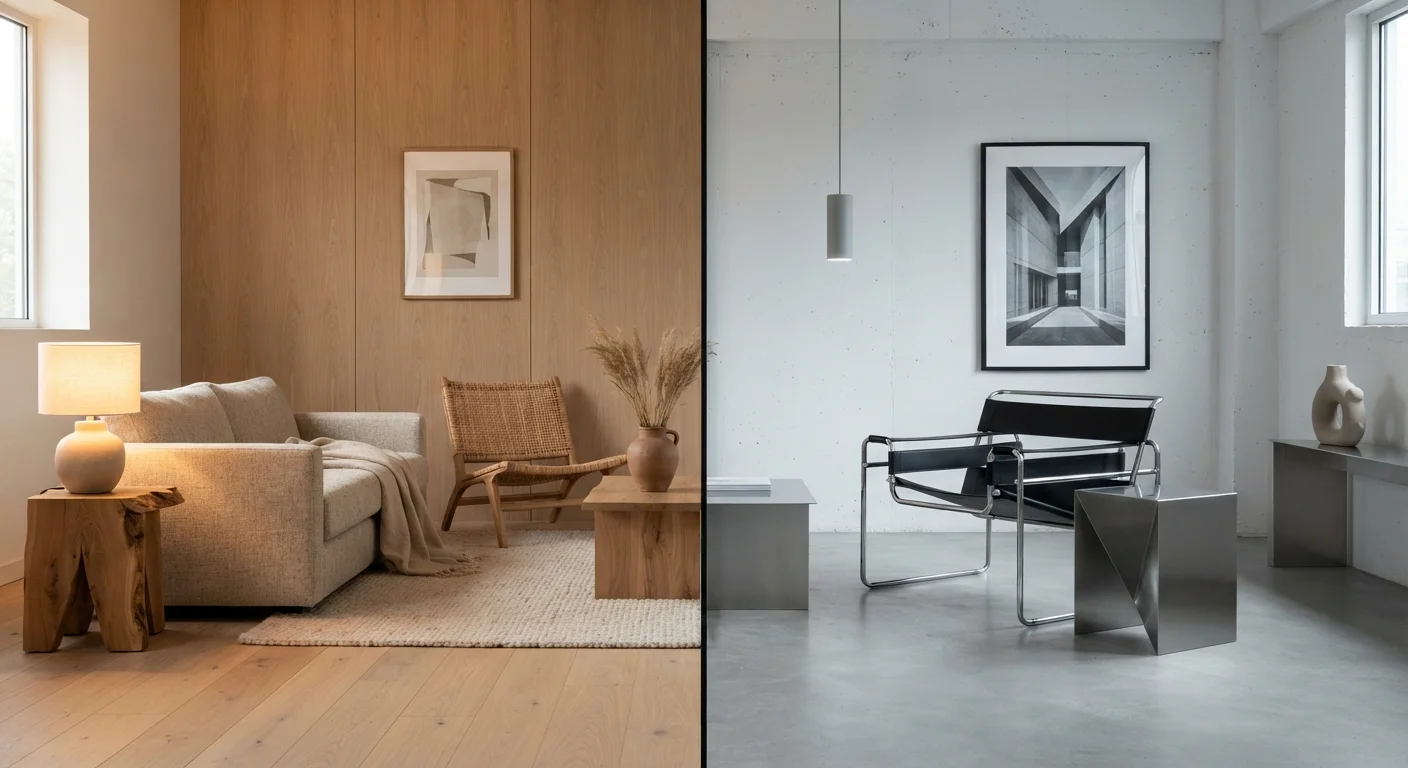
Photo credit: ResultsPivot.com | Discover Insightful Content!
In this article
Both styles strip back the clutter, but the mood couldn't be more different. Here's how warm and cold minimalism diverge in colour, texture, and feel.
Key Takeaways
- Both styles reduce clutter, but warm minimalism layers in texture and organic materials while cold minimalism favours hard, smooth surfaces.
- Colour palette is the fastest tell: warm minimalism skews toward earthy neutrals; cold minimalism leans into white, grey, and cool blue-toned hues.
- Lighting choices differ sharply — warm minimalism uses soft, amber-toned light sources, while cold minimalism typically relies on cooler, more diffuse illumination.
- Warm minimalism tends to feel accessible and easy to live in; cold minimalism demands more intentional upkeep to sustain its precision.
- Neither aesthetic is inherently better — the right fit depends on your lifestyle, climate, and how you want your home to feel day to day.
The Core Distinction: Mood, Not Just Décor
Both warm and cold minimalism share the same foundational premise: remove the excess, keep only what earns its place. Where they split is in how that restraint feels once you're standing in the room. Warm minimalism reads as serene but approachable — the kind of interior that looks considered yet invites you to sit down and stay a while. Cold minimalism reads as precise and composed, closer to the atmosphere of a well-curated gallery than a lived-in home.
The distinction matters because minimalism is often treated as a single aesthetic when, in practice, it covers a wide spectrum. Understanding which end of that spectrum suits you saves a lot of second-guessing during decorating decisions. It's also worth noting that both styles sit comfortably adjacent to broader trends — the understated elegance of quiet luxury interiors shares DNA with warm minimalism in particular, borrowing its natural materials and restrained palette.
| Criterion | Warm Minimalism | Cold Minimalism |
|---|---|---|
| Colour palette | Earthy neutrals, warm whites, terracotta | Cool whites, greys, slate, black |
| Primary materials | Wood, linen, ceramic, rattan | Concrete, stone, steel, glass |
| Texture approach | Organic, tactile, layered | Smooth, uniform, precise |
| Lighting tone | Warm amber, soft and indirect | Cool, diffuse, even |
| Overall mood | Calm and welcoming | Composed and architectural |
| Upkeep demand | Relatively forgiving | Requires disciplined curation |
Colour, Texture, and Material: Where the Differences Show Up
Colour palette is the most immediate giveaway. Warm minimalism draws from an earthy register — raw linen, undyed wool, sandstone, warm white, terracotta, and muted sage. Cold minimalism reaches instead for crisp whites, cool greys, slate, and occasionally a steely blue or black. Neither style tolerates visual noise, but their neutrals sit at opposite ends of the temperature dial.
Materials reinforce that temperature difference. In a warm minimalist space you'll typically find natural wood (especially lighter species like oak or ash), rattan, unglazed ceramic, and textile layers — a chunky knit throw, a jute rug, linen curtains. Cold minimalism favours polished or honed stone, poured concrete, steel, glass, and lacquered surfaces. Texture is present in both, but warm minimalism leans into organic irregularity while cold minimalism favours smooth consistency.
~60%
of US adults prefer warmer home colour palettes
Surveys conducted by interior design platforms consistently show a majority preference for warm-toned neutrals over cool ones in residential spaces.
2700K
Typical bulb colour temperature in warm minimalist rooms
Lighting designers commonly recommend bulbs in the 2700–3000K range to achieve the soft, amber quality associated with warm minimalist interiors.
Lighting follows the same logic. Warm minimalism tends to use lower-temperature bulbs (around 2700–3000K is common), pendant shades in natural materials, and an emphasis on indirect, pooling light. Cold minimalism typically opts for higher colour temperatures, recessed ceiling fixtures, and diffuse illumination that keeps the geometry of the room visible and uncompromised.
Practicality and Lifestyle Fit
Cold minimalism is honest about one thing: it asks more of you. Keeping a cold minimalist space looking intentional means very few items left out on surfaces, consistent material choices throughout, and a certain comfort with a spare, unadorned environment day-to-day. It rewards those who genuinely enjoy that level of visual control and find it calming rather than austere.
Warm minimalism is generally more forgiving. A few objects on a shelf, a basket of blankets, a wooden bowl on the kitchen counter — these details reinforce the aesthetic rather than undermining it, because organic variety is part of the point. That forgiving quality is part of why warm minimalism has grown steadily in popularity; it aligns minimalist principles with the reality of actually living in a home.
You Don't Have to Commit to One Fully
Many people land somewhere between the two aesthetics — warm materials and earthy tones with a cooler, more pared-back structural approach. Design categories are useful for identifying preferences, not mandates. If a concrete countertop paired with a linen sofa speaks to you, that's a valid direction. The goal is a home that genuinely suits how you live.
If you find yourself drawn to the idea of owning less and curating carefully, it's worth exploring how that instinct plays out beyond the home. Some readers find that the same drive behind minimalist interiors shapes how they travel and relate to possessions more broadly — an idea explored in depth in this piece on how minimalist packing shifts the way travelers think about ownership.

Author
Home & Living Editorial Team
Home & Living Editorial Team is the collective byline for our editorial team and contributor network. Articles published under this byline or an editorial pen name are researched, written, and reviewed according to our editorial standards for clarity, consistency, and independence before publication.
View all articles →