
Raw Diet vs. Commercially Prepared Food for Pets
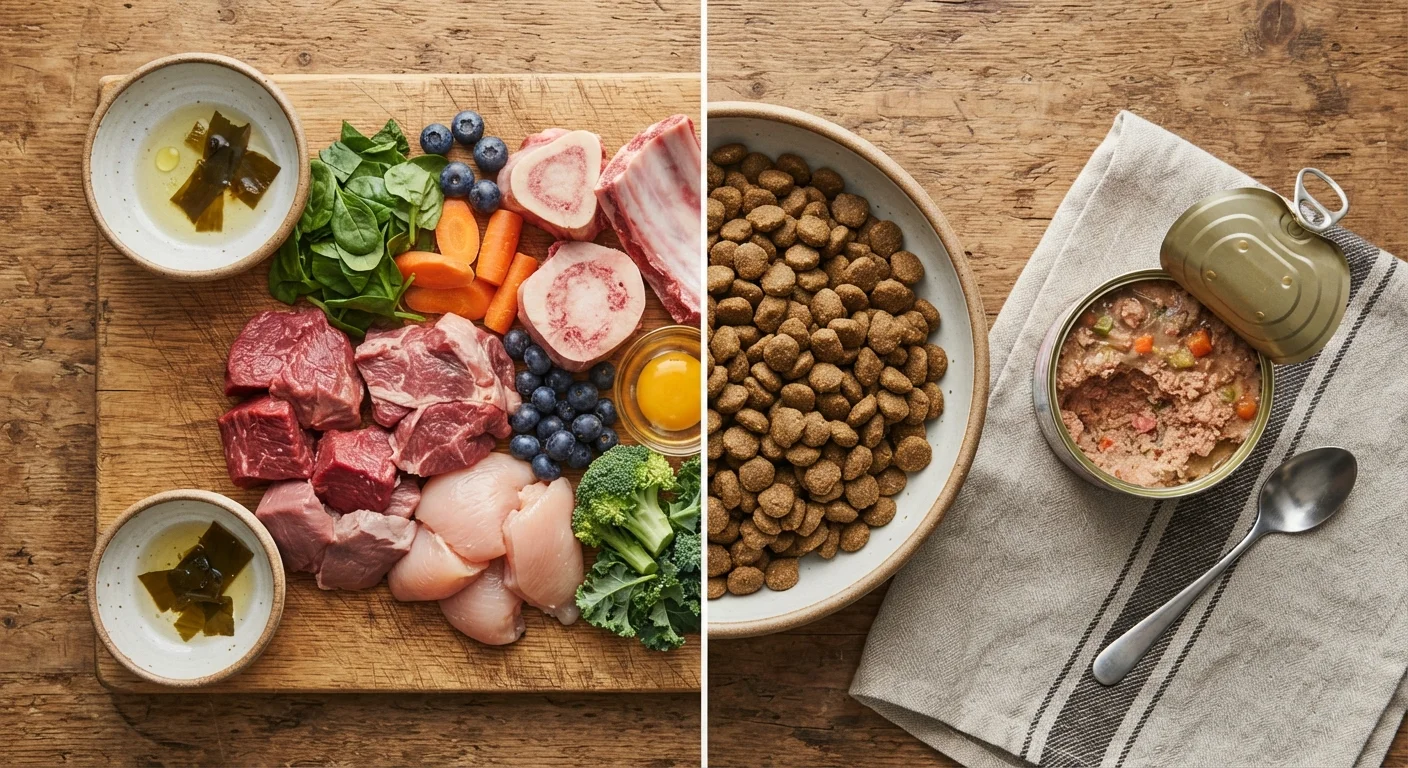
Photo credit: ResultsPivot.com | Discover Insightful Content!
In this article
A balanced look at what raw feeding and commercial pet food each offer — and the practical trade-offs worth understanding before switching.
Key Takeaways
- Raw diets can offer less-processed nutrition but carry real food-safety and nutrient-balance risks.
- Commercial pet foods labeled 'complete and balanced' must meet established nutritional standards.
- Switching diets should always involve a conversation with your veterinarian.
- Neither approach is universally superior — the right choice depends on your pet's individual needs.
- Handling raw meat for pets requires the same hygiene precautions as handling it for humans.
Minimal processing, closer to whole-food ingredients
Raw diets skip the heat processing and binders used in most kibble, which some researchers suggest may preserve certain heat-sensitive nutrients, though the full extent of this benefit in pet health outcomes is still being studied.
Potential for improved coat and digestion in some pets
Some pet owners and veterinarians report anecdotal improvements in coat quality and stool consistency when switching to raw, though controlled studies on these effects are limited and results vary by individual animal.
Greater control over ingredient sourcing
When preparing raw meals at home, owners can choose specific protein sources and avoid ingredients their pet is sensitive to — useful for animals with documented food allergies or intolerances.
Can be highly palatable for picky eaters
Many pets find raw food highly appealing due to its texture and smell, which can be useful for animals who reject standard commercial foods — though palatability alone isn't a measure of nutritional adequacy.
Pathogen risk for pets and human household members
Raw meat can harbor Salmonella, Listeria, and other bacteria that pose health risks to both pets and people — particularly vulnerable individuals like young children or the immunocompromised.
Difficult to achieve complete, balanced nutrition
Formulating a nutritionally complete raw diet requires careful planning; homemade versions frequently fall short in key minerals like calcium, phosphorus, or specific vitamins unless professionally designed.
Higher cost and time commitment
Sourcing, preparing, and storing raw food safely adds up in both expense and daily effort — a practical barrier for many pet owners, especially those with multiple animals.
Bone hazards if not handled correctly
Raw meaty bones are a component of many raw diets, but certain bones — particularly cooked ones or those that splinter — can cause dental fractures, choking, or intestinal injury.
Limited long-term research base
Most veterinary nutrition research focuses on commercial diets; the evidence base for long-term health outcomes of raw feeding is comparatively thin, making strong claims in either direction difficult to support.
What We're Actually Comparing
When people talk about a raw diet for pets, they typically mean feeding uncooked muscle meat, organ meat, raw meaty bones, and sometimes fresh fruits or vegetables. This is often called a BARF diet (Biologically Appropriate Raw Food) or a prey-model diet. On the other side, commercially prepared pet food covers everything from dry kibble and canned wet food to freeze-dried and dehydrated options — products manufactured to meet nutritional standards set by bodies like the Association of American Feed Control Officials (AAFCO).
These are genuinely different philosophies about what animals should eat, and the debate between them is active in both veterinary medicine and pet-owner communities. Understanding the real trade-offs matters more than picking a side. For a deeper look at the nutrients at stake in either approach, see our guide to key pet nutrients.
The Case for Raw Feeding
Proponents of raw diets point to several potential advantages, and some of these have legitimate backing — though research is still evolving.
Minimal processing, closer to whole-food ingredients
Raw diets skip the heat processing and binders used in most kibble, which some researchers suggest may preserve certain heat-sensitive nutrients, though the full extent of this benefit in pet health outcomes is still being studied.
Potential for improved coat and digestion in some pets
Some pet owners and veterinarians report anecdotal improvements in coat quality and stool consistency when switching to raw, though controlled studies on these effects are limited and results vary by individual animal.
Greater control over ingredient sourcing
When preparing raw meals at home, owners can choose specific protein sources and avoid ingredients their pet is sensitive to — useful for animals with documented food allergies or intolerances.
Can be highly palatable for picky eaters
Many pets find raw food highly appealing due to its texture and smell, which can be useful for animals who reject standard commercial foods — though palatability alone isn't a measure of nutritional adequacy.
It's worth noting that the quality of a raw diet varies enormously depending on how it's sourced and formulated. A poorly balanced homemade raw diet can create nutrient deficiencies just as serious as any other nutritional mistake. Our article on common pet nutrition mistakes covers how assumptions about "natural" eating can backfire.
The Case for Commercial Pet Food
Commercial pet foods, particularly those labeled "complete and balanced," have been formulated to meet AAFCO nutrient profiles or have undergone feeding trials. That's a meaningful baseline.
Pathogen risk for pets and human household members
Raw meat can harbor Salmonella, Listeria, and other bacteria that pose health risks to both pets and people — particularly vulnerable individuals like young children or the immunocompromised.
Difficult to achieve complete, balanced nutrition
Formulating a nutritionally complete raw diet requires careful planning; homemade versions frequently fall short in key minerals like calcium, phosphorus, or specific vitamins unless professionally designed.
Higher cost and time commitment
Sourcing, preparing, and storing raw food safely adds up in both expense and daily effort — a practical barrier for many pet owners, especially those with multiple animals.
Bone hazards if not handled correctly
Raw meaty bones are a component of many raw diets, but certain bones — particularly cooked ones or those that splinter — can cause dental fractures, choking, or intestinal injury.
Limited long-term research base
Most veterinary nutrition research focuses on commercial diets; the evidence base for long-term health outcomes of raw feeding is comparatively thin, making strong claims in either direction difficult to support.
~90%
Share of US pet owners using commercial pet food
Industry surveys consistently show the vast majority of US dog and cat owners rely primarily on commercially prepared pet food as their pet's main diet.
35%+
Of raw pet food samples testing positive for Salmonella
A study published in the journal Preventive Veterinary Medicine found Salmonella in over a third of raw dog food samples tested, highlighting the pathogen concern.
If you want to make more confident choices within the commercial food aisle, learning to read ingredient lists is genuinely useful — our piece on what pet food ingredients actually mean breaks that down plainly.
Food Safety Is Not a Minor Detail
One area where raw diets require extra attention is food safety. Raw meat — for pets or people — can carry pathogens including Salmonella, Listeria, and E. coli. The concern isn't just for your pet; it extends to human household members who handle the food or come into contact with surfaces and pet dishes.
A Note on Vulnerable Households
If anyone in your home is pregnant, elderly, very young, or has a compromised immune system, the food-safety risks associated with raw pet food handling deserve extra scrutiny. This doesn't mean raw feeding is impossible in these households, but it does mean the hygiene protocols need to be thorough and consistent. Talk to both your physician and your veterinarian about the specific risks relevant to your situation.
The CDC and multiple veterinary organizations have issued guidance on this risk, particularly for households with young children, elderly individuals, pregnant people, or anyone who is immunocompromised. These aren't reasons to automatically rule out raw feeding, but they are reasons to treat it seriously rather than casually.
Commercial foods — especially dry kibble — carry a much lower pathogen risk by design, though recalls do happen and it's worth knowing how to check for them through the FDA's recall database.
Making a Decision That Fits Your Pet
The honest answer is that this isn't a decision to make based on trends or what a pet influencer recommends. It's one that should factor in your pet's species, age, health status, and your own household's capacity to manage the feeding approach consistently and safely.
A veterinarian — ideally one with a background in veterinary nutrition — is the right starting point before any significant diet change. Some pets have medical conditions that make certain dietary choices genuinely risky, while others may actually benefit from a tailored approach. Combining your chosen diet with a consistent feeding schedule also matters; see our guide to feeding schedules and portion sizes for practical structure regardless of which food you choose.
And if you're curious how this pet food debate mirrors broader human nutrition conversations, the whole foods vs. processed foods discussion covers similar ground in a relatable way.
This article is for general informational purposes only and does not constitute veterinary or nutritional advice. Always consult a licensed veterinarian before making significant changes to your pet's diet.

Author
Pets Editorial Team
Pets Editorial Team is the collective byline for our editorial team and contributor network. Articles published under this byline or an editorial pen name are researched, written, and reviewed according to our editorial standards for clarity, consistency, and independence before publication.
View all articles →