
Secondhand First: How Resale Culture Became a Mainstream Shopping Habit
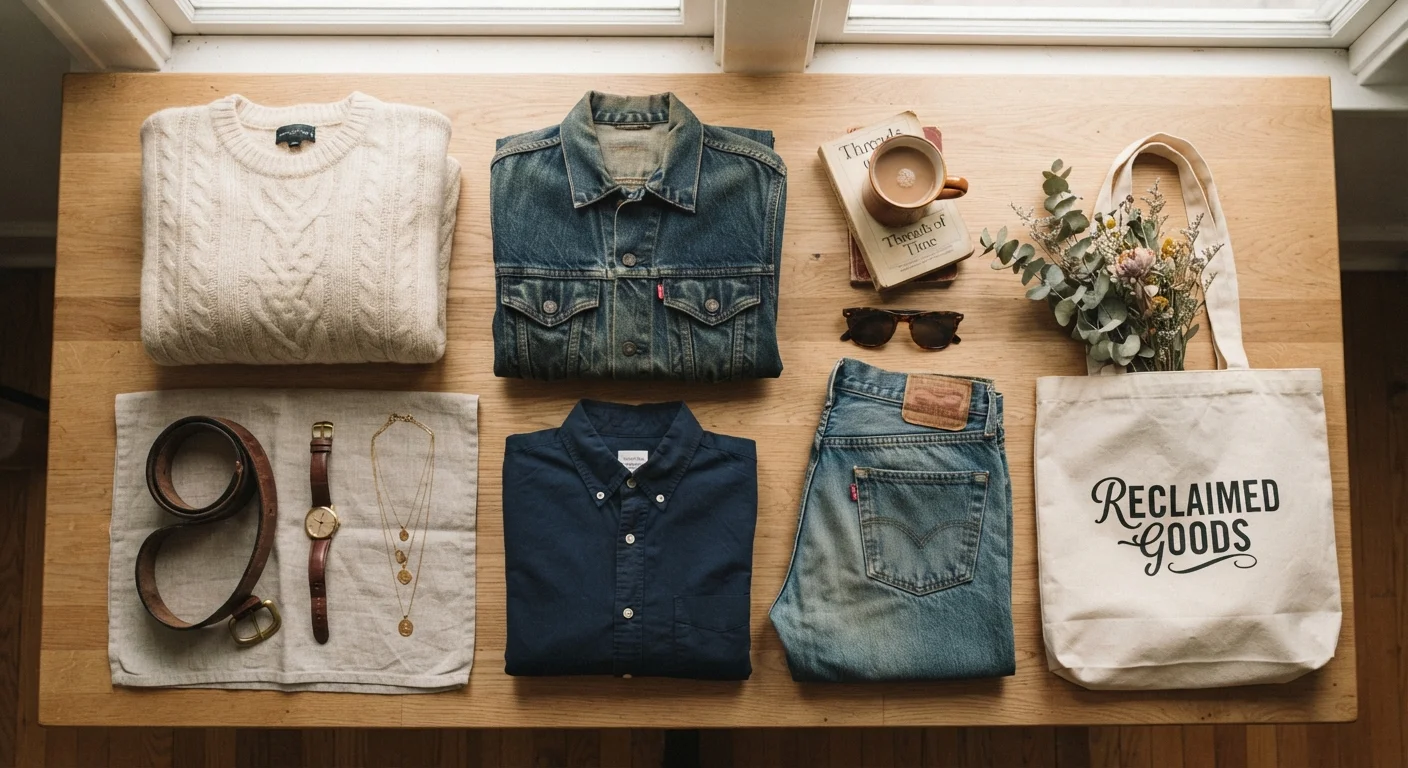
Photo credit: ResultsPivot.com | Discover Insightful Content!
In this article
Resale and pre-owned shopping has moved from niche to normal. Explore the cultural and economic forces driving this shift in consumer behaviour.
Key Takeaways
- Resale has grown from a niche habit into a multi-billion-dollar segment of the U.S. retail market.
- Economic pressure, sustainability values, and platform convenience are all fueling adoption simultaneously.
- Buyers span all income levels and age groups — this is no longer a trend confined to younger shoppers.
- Resale platforms vary significantly in verification, fees, and return policies — details that affect real value.
- Selling unused items can offset new purchase costs, but outcomes depend heavily on category and condition.
From Thrift Stigma to Cultural Moment
Not long ago, buying secondhand carried a social caveat — something you did quietly, not something you talked about at the office. That perception has flipped. Today, sharing a resale find on social media is a flex, not an embarrassment. Vintage scores get more engagement than new-item hauls, and resale platforms have accumulated user bases that rival traditional retail apps.
The shift didn't happen overnight. It took a convergence of economic anxiety, growing environmental awareness, and — critically — platforms that made buying pre-owned as frictionless as clicking "add to cart" on any major retailer. Once the experience became familiar and the stigma eroded, a tipping point arrived. Resale went from subculture to mainstream shopping habit.
This evolution fits alongside other big changes in how Americans shop. Emerging retail formats like live-stream selling and dark stores are also reshaping where and how purchases happen — resale is part of that same broader disruption.
The Numbers Behind the Shift
The resale market's scale is no longer speculative. Industry research firms have tracked consistent double-digit annual growth in the pre-owned goods segment — particularly in apparel, electronics, and home goods. Projections widely suggest the U.S. resale market could reach or exceed $70 billion within this decade, though individual estimates vary by methodology and category scope.
$70B+
Projected U.S. resale market size
Multiple industry research firms project the U.S. secondhand market could surpass $70 billion within this decade, driven by apparel, electronics, and home goods.
40–60%
Typical discount vs. retail price
Pre-owned items in good condition commonly list at 40 to 60 percent below their original retail price, according to broad market observations across resale categories.
1 in 3
U.S. consumers who bought secondhand
Consumer surveys conducted by resale platforms and market researchers consistently find that roughly one in three U.S. adults has purchased a pre-owned item in the past year.
What makes these numbers notable is that growth is happening even during periods when consumer spending broadly contracts. Resale appears to function partly as a counter-cyclical category — when budgets tighten, more people both buy and sell pre-owned goods.
Who Is Actually Shopping Secondhand?
Early narratives framed resale as a Gen Z or millennial phenomenon driven by sustainability values. The data tells a more nuanced story. While younger shoppers were early adopters of app-based resale platforms, adoption has broadened considerably across age groups and income brackets.
Middle-income households shop resale as a value strategy. Higher-income buyers participate in authenticated luxury resale. Older consumers have long used estate sales, consignment, and, increasingly, online platforms. The common thread isn't demographics — it's a rational response to value and availability. If a pre-owned item is in good condition, competitively priced, and easy to acquire, the purchase calculus works for a wide range of people.
When evaluating a secondhand purchase, search completed — not active — listings to see what items in similar condition actually sold for, not just what sellers are asking.
Asking prices on resale platforms are often aspirational; completed sale data gives you ground truth on real market value and helps you avoid overpaying.
Prioritize categories with standardized condition grading — certified pre-owned electronics and authenticated luxury goods carry more reliable descriptions than loosely listed apparel.
The more standardized the grading system, the less guesswork is involved in assessing value and condition remotely, which is the core challenge in any secondhand transaction.
This matters for how we understand resale's staying power. A trend anchored in one demographic cohort is fragile; a behavior adopted across income levels and age groups is structural.
What's Driving the Mainstream Adoption
Several forces are operating simultaneously, which explains why the shift has been durable rather than a passing trend:
- Platform maturity: Peer-to-peer resale apps have improved significantly in search, authentication, payment protection, and dispute resolution — reducing the risk that once made secondhand buying feel uncertain.
- Economic pressure: Persistent inflation has made the price difference between new and pre-owned goods more salient. When a pre-owned item can cost 40–60% less than its retail equivalent, the math is hard to ignore.
- Sustainability framing: Environmental considerations have become a meaningful factor for a growing segment of shoppers, particularly for categories like clothing where the environmental cost of production is well documented.
- Social normalization: Resale finds circulate on social platforms, creating visibility and desirability. Social commerce dynamics have accelerated this normalization by making peer recommendations central to how people discover products.
Track What You Actually Use
Before buying secondhand, audit what you already own in that category. Resale's lower prices can make impulse buying feel low-stakes, but accumulating items you don't use defeats the value and sustainability arguments entirely. Understanding impulse buying mechanics is useful context here.
Friction Points Worth Knowing
Mainstream adoption doesn't mean frictionless. Resale still comes with real trade-offs that new participants often underestimate.
Counterfeit Risk Is Real in Some Categories
High-demand categories — particularly sneakers, luxury accessories, and certain electronics — attract counterfeit listings on less-regulated platforms. If authentication matters for a purchase, use platforms with verified authentication programs or request provenance documentation from sellers. Never assume a low price is simply a good deal; it may signal a problem with the item's legitimacy.
Authentication is inconsistent across platforms. Some categories — sneakers, luxury handbags, electronics — have dedicated verification services, but many listings rely on seller descriptions and photos alone. Return policies on peer-to-peer platforms are often far more restrictive than traditional retail. Item condition can vary widely even within the same grade label.
The experience also differs sharply depending on which platform or format you use. App-based peer sales, curated consignment shops, and auction-style listings each carry different risk profiles and fee structures. App-based shopping trade-offs apply in the resale context just as they do in conventional retail.
Resale Fees Vary Significantly by Platform
Most peer-to-peer resale platforms charge sellers a percentage of the sale price, which sellers may factor into their listing prices. Buyers should be aware that platform buyer protection fees or shipping costs may also apply. Reading a platform's full fee schedule before transacting — whether buying or selling — avoids surprises at checkout.
How to Approach Resale Smartly
Resale rewards informed buyers. A few consistent principles separate good experiences from frustrating ones:
- Research the platform's protections first. Understand what buyer guarantees exist, how disputes are resolved, and whether returns are permitted before committing to a purchase.
- Know what you're buying. For higher-value items — electronics, authenticated goods, collectibles — independently verify condition criteria and ask sellers specific questions. Vague listings are a flag.
- Factor in total cost. Platform fees, shipping, and any necessary repairs or cleaning can close the gap between secondhand and retail prices more than the listing price suggests.
- Use selling to offset buying. Many active resale participants fund new purchases by listing items they no longer use. This circular approach can reduce net spending over time, though results depend on category demand and item condition.
If you're evaluating how resale fits alongside other shopping habits — such as subscription models or one-off retail purchases — it's worth thinking structurally about what each format costs and delivers. Comparing shopping models can clarify where resale fills genuine gaps versus where it creates additional complexity. More frameworks for value-driven decision-making are collected in the Smart Shopping hub.
“The resale market is no longer an alternative to retail — it is retail for a growing share of consumers. The platforms that succeed will be those that match the trust and convenience consumers already expect from traditional shopping.”
— Retail Industry Analysts, Consumer behavior research community, broadly cited in trade coverage of resale market growth

Author
Shopping Editorial Team
Shopping Editorial Team is the collective byline for our editorial team and contributor network. Articles published under this byline or an editorial pen name are researched, written, and reviewed according to our editorial standards for clarity, consistency, and independence before publication.
View all articles →