
Shopping Formats Redefining Retail Right Now
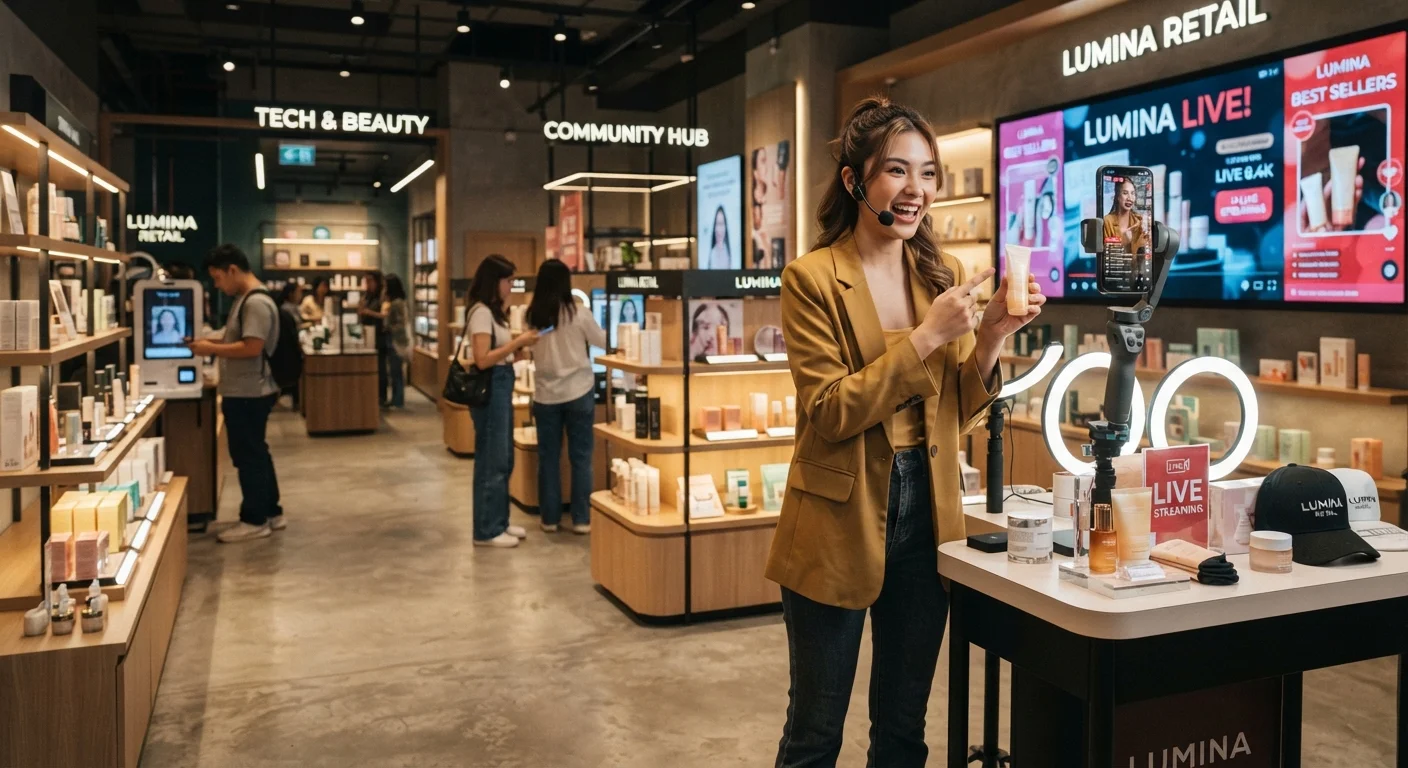
Photo credit: ResultsPivot.com | Discover Insightful Content!
In this article
From live-stream selling to dark stores, these emerging retail formats are changing where, when, and how consumers make purchases.
Key Takeaways
- Live-stream shopping merges entertainment and commerce in real time, driving impulsive but engaged purchasing behavior.
- Dark stores function as hyper-local fulfillment hubs, enabling ultra-fast grocery and essentials delivery.
- Social commerce embeds checkout directly inside social media feeds, collapsing the steps between discovery and purchase.
- Resale-integrated retail is now a mainstream feature in physical stores, not just a niche online market.
- Micro-fulfillment and pop-up formats are helping retailers meet consumers where they actually are.
Retail Is Being Rebuilt From the Ground Up
The store as most Americans have known it — fixed aisles, checkout lines, loyalty punch cards — is being quietly dismantled and reassembled in ways that are faster, more social, and dramatically more data-driven. Retailers large and small are experimenting with formats that blur the line between entertainment and commerce, physical and digital, brand-new and pre-owned.
Understanding these shifts matters for everyday shoppers. How you discover products, how quickly they reach you, and even what counts as a "store" are all in flux. The formats below aren't hypothetical futures — they're operational now, shaping consumer habits whether or not shoppers are conscious of them. If you've noticed that buying something feels different than it did five years ago, these formats are a big reason why.
These Formats Often Overlap
In practice, many retailers combine several of these formats simultaneously — a brand might run a live-stream event that links to its social commerce storefront and fulfills orders through a nearby micro-fulfillment center. Understanding each format individually helps you recognize when multiple mechanisms are working in tandem. The boundaries between formats are increasingly blurry by design.
The Formats Changing How We Shop
Live-Stream Shopping
Live-stream commerce blends product demonstration with real-time audience interaction. A host — often a creator or brand representative — showcases items while viewers comment, ask questions, and purchase without leaving the stream. Originally dominant in China, the format has been expanding steadily across Western platforms.
What makes it distinct from traditional home shopping TV is the two-way engagement: viewers can influence what gets demonstrated next, and scarcity cues (limited quantities visible on screen) drive urgency in the moment. For shoppers, it can surface products in context — styled, used, and discussed — in ways that static product pages rarely replicate.
Live-stream shopping turns product browsing into a two-way social event.
Dark Stores
A dark store looks like a supermarket from the inside but is permanently closed to the public. These facilities are purpose-built or converted specifically for picking and packing online orders, optimized for speed rather than browsing. They've become the backbone of rapid grocery delivery services promising sub-30-minute windows.
The model trades the traditional retail experience for raw logistics efficiency. Inventory is arranged around picker routes rather than shopper psychology, and the locations are chosen based on delivery radius rather than foot traffic. For consumers, the result is speed — but at the cost of the serendipitous aisle discovery that physical shopping still offers.
Dark stores prioritize fulfillment speed over the in-store browsing experience entirely.
Social Commerce
Social commerce embeds the full purchase journey — product discovery, review reading, and checkout — inside social media platforms without routing the shopper to an external website. The distinction from social media advertising is significant: instead of clicking through to a retailer's site, transactions complete natively within the app.
This compression of steps between discovery and purchase is intentional. Each additional click in a traditional e-commerce flow is a potential drop-off point; social commerce eliminates most of them. For shoppers, it raises real questions about how much of what feels like organic discovery is actually curated commerce.
Social commerce collapses discovery and checkout into a single seamless in-app experience.
Resale-Integrated Retail
Several major retailers now operate resale sections — physical or digital — alongside new merchandise. Rather than treating secondhand as a separate category, they've folded it into the standard shopping experience. Shoppers can trade in used items for credit and browse pre-owned goods in the same session as new ones.
This integration reflects a broader cultural normalization of secondhand purchasing. It's no longer a thrift-store subculture; it's a deliberate retail strategy responding to documented consumer demand, particularly among younger shoppers conscious of both cost and environmental footprint.
Resale is now a built-in feature of mainstream retail, not a fringe alternative.
Pop-Up and Ephemeral Retail
Pop-up stores — temporary retail spaces that open for days, weeks, or a single event — have evolved from a marketing novelty into a genuine distribution strategy. Brands use them to test new markets, launch products, or create shareable physical moments without the overhead of a permanent lease.
For consumers, the appeal is the sense of limited access and curated experience that permanent stores struggle to replicate. From a retail strategy perspective, the data gathered from even a short-run pop-up — foot traffic patterns, conversion rates, demographic engagement — can inform long-term decisions without committing to a full store buildout.
Pop-ups let brands test markets and create buzz without long-term real estate commitments.
Micro-Fulfillment Centers
Micro-fulfillment centers (MFCs) are small, automated warehouses embedded inside or adjacent to existing retail locations — sometimes inside a back room of a grocery store. They use robotics to assemble online orders faster and more accurately than human pickers in conventional warehouses.
The strategic advantage is proximity: by placing fulfillment close to where customers already live and shop, retailers can reduce last-mile delivery times and costs. For shoppers, MFCs are largely invisible — the experience is just faster, more reliable order fulfillment. But they represent a significant capital shift in how retailers think about their physical square footage.
Micro-fulfillment centers use robotics inside existing stores to dramatically cut delivery times.
Stay Intentional Across All Formats
Each of these formats is engineered to reduce the time between wanting something and buying it. Building a brief pause into any purchase — whether you're watching a live stream or checking out inside a social app — gives you a moment to evaluate whether the buy reflects what you actually need. A simple habit like adding items to a cart and revisiting them a few hours later can offset the urgency these formats deliberately create.
What This Means for the Everyday Shopper
Each of these formats is designed — in part — to reduce friction and accelerate the path from wanting something to owning it. That can be genuinely useful, but it also means more opportunities for unplanned spending. Understanding how these environments work is one of the most practical tools a consumer can have. For a deeper look at how personalized feeds amplify this effect, see our piece on impulse buying in the age of personalisation.
Not every format will suit every shopper. Subscription models versus one-time purchases is a related question worth thinking through, especially as more formats bundle convenience with recurring commitment. And for those drawn to the resale wave, our full breakdown of resale culture going mainstream offers useful context. For broader guidance on staying intentional at the checkout — in any format — the Smart Shopping hub is a solid starting point.

Author
Shopping Editorial Team
Shopping Editorial Team is the collective byline for our editorial team and contributor network. Articles published under this byline or an editorial pen name are researched, written, and reviewed according to our editorial standards for clarity, consistency, and independence before publication.
View all articles →