
Places That Look Nothing Like Their Travel Photos
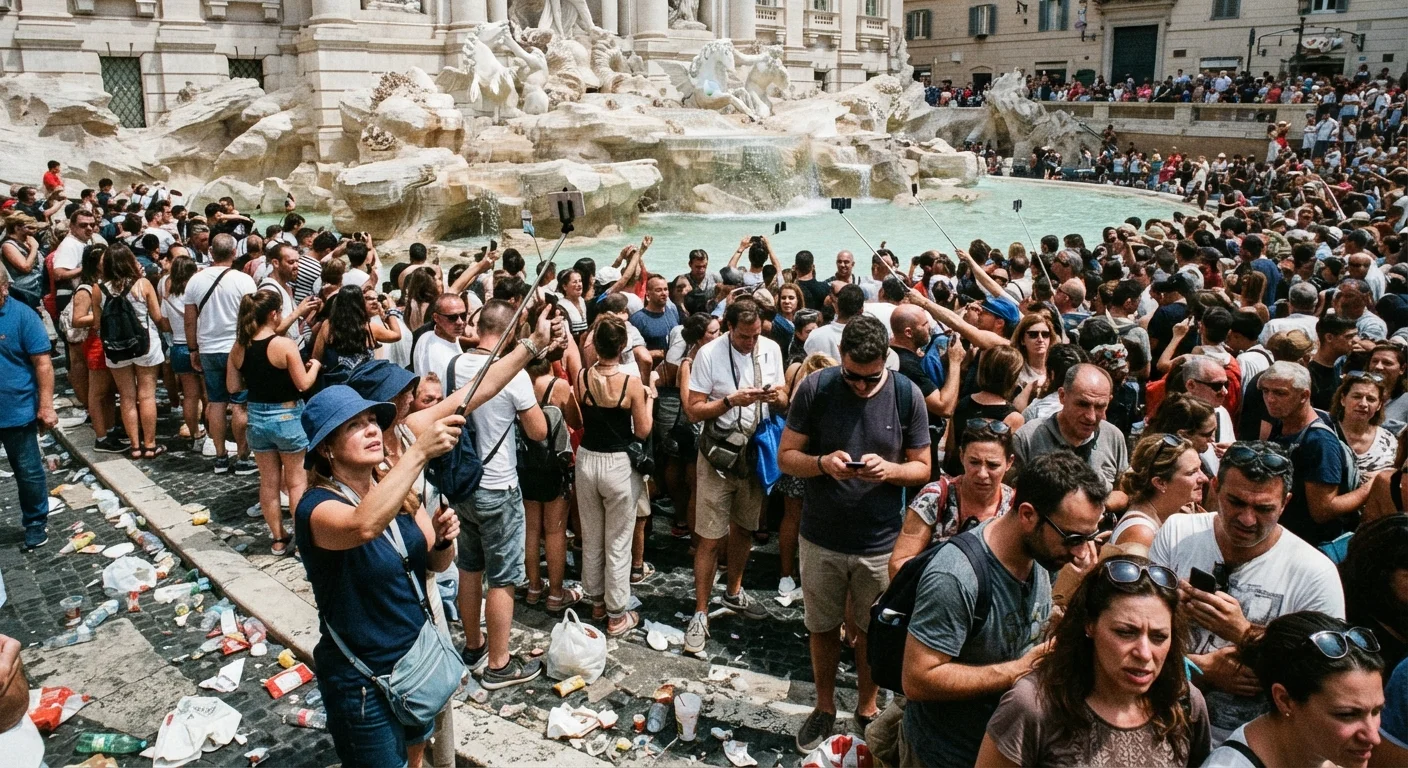
Photo credit: ResultsPivot.com | Discover Insightful Content!
In this article
From overcrowded landmarks to colour-corrected coastlines, here's what popular destinations actually look like — and smarter ways to visit them.
Key Takeaways
- Most iconic travel photos are taken at dawn, in rare weather, or with heavy post-processing — not typical conditions.
- Overcrowding, noise, and commercialisation are common realities at the world's most photographed destinations.
- Understanding what a place actually looks like helps you plan smarter and enjoy the experience more.
- Shoulder-season visits and early arrivals can dramatically close the gap between expectation and reality.
- Lesser-known spots nearby often deliver more of what travellers hoped the famous landmark would feel like.
Why Travel Photos Lie — And Why We Keep Believing Them
There's a specific kind of disappointment that hits when you round the corner toward a landmark you've been dreaming about — and find it surrounded by tour buses, selfie sticks, and a gift shop. You've seen the moody long-exposure shot of this exact spot. You've pinned the version where the light is golden and the piazza is empty. Nobody warned you about the version that actually exists on a Tuesday in July.
Social media and travel marketing have always favoured the extraordinary over the ordinary — but the gap between promoted image and lived experience has widened considerably as editing tools and algorithmic curation have become more sophisticated. Photos are taken at dawn before crowds gather, with telephoto lenses that compress and omit, then colour-graded in ways that bear little resemblance to what the human eye sees. The result is a collective imagination shaped by images that, at best, represent rare conditions and, at worst, are outright fabrications.
That's not an argument against visiting iconic places. It's an argument for going in with accurate expectations — and a few practical tools. Understanding a destination's real character before you arrive changes what you notice, what you plan for, and ultimately how much you enjoy the trip.
Myth
The Trevi Fountain in Rome is a serene, romantic spot where you can sit quietly and toss a coin into glittering water.
Fact
It's one of the most densely crowded sites in Europe — shoulder-to-shoulder visitors for most of the day, year-round.
The Trevi Fountain is genuinely beautiful, but the version you've seen in films and on Instagram typically exists for about forty minutes before 7 a.m. on a weekday. By mid-morning, the piazza around it can hold thousands of people simultaneously. The fountain itself is cordoned off, pickpocketing is common in the crush, and the ambient noise makes the experience feel far more like a stadium than a romantic city square. Early morning visits are the practical workaround — but it's worth going in knowing what to expect.
Myth
The Maldives looks exactly as it does in photos — white sand, vibrant turquoise water, and lush green palms as far as the eye can see.
Fact
Many Maldivian beaches are affected by seasonal seaweed and coral debris, and the turquoise colour is highly dependent on sun angle and time of day.
The Maldives genuinely is stunning — the coral atolls and underwater clarity are world-class. But the flawlessly colour-saturated images circulated online are almost always taken under direct overhead sun on a calm, wind-free day. Monsoon season (roughly May through October) brings grey skies, choppier water, and significantly different colours. Seagrass and natural marine debris frequently wash onto beaches. Understanding seasonal variation — not just the postcard version — leads to better trip planning and fewer surprises on arrival.
Myth
The Great Wall of China stretches across dramatic mountain ridges in pristine condition, looking much as it did centuries ago.
Fact
Most accessible sections near Beijing are heavily restored or reconstructed, and the most photographed sections draw very large crowds.
Sections like Badaling and Mutianyu — the ones most visitors see — have been substantially restored and are surrounded by infrastructure including cable cars and visitor centres. The photogenic crumbling sections that suggest unbroken historical continuity are typically far less accessible. Badaling alone receives millions of visitors annually, making the experience on peak days feel closer to a theme park than a remote historical site. Less-visited sections such as Jinshanling offer more of the rugged character many travellers are seeking — but require more planning to reach.
Myth
Santorini's cliffside villages are quiet, picturesque retreats where you can explore cobbled lanes in peaceful solitude.
Fact
Oia and Fira are among the most visited spots in Greece, and the famous sunset viewpoints draw enormous crowds every evening.
The blue-domed churches and whitewashed walls are real and genuinely photogenic. What the photos don't show is the 6 a.m. cruise ship arrivals that can swell the island's population dramatically on any given day. The famous Oia sunset draws hundreds of visitors to a relatively small viewing area, creating what can feel more like a concert crowd than a romantic coastal moment. Visiting in April, May, or late October significantly reduces the density. The island itself has genuine charm — it's the expectation of solitude that's usually the problem.
Myth
Banff National Park looks exactly like its Instagram images all year — mirrored lakes, snow-capped peaks, and zero other humans in frame.
Fact
Lake Louise and Moraine Lake are extremely popular in peak summer, and parking lots frequently fill before 6 a.m. during July and August.
Banff is spectacular — the Rockies deliver on their reputation for scale and drama. But the mirror-flat lake reflections you've seen require completely calm conditions that occur unpredictably, often early in the morning. Summer peak season sees shuttle bus systems, timed parking, and visitor management strategies at the most iconic spots, because unmanaged demand would damage the very environment people come to see. The park remains worth visiting, but arriving at dawn, exploring less-photographed trails, or timing a visit for shoulder season transforms the experience considerably.
What Actually Helps: Planning Around the Real Version
Once you've accepted that the promoted image is a curated highlight reel, the practical question is: how do you get closer to something meaningful?
80%
Tourists visit just 10% of destinations
Research on global tourism patterns consistently shows the vast majority of international visitors concentrate in a small fraction of available destinations, amplifying overcrowding at famous sites.
~30 min
Average time spent at major landmarks
Studies of visitor behaviour at popular sites suggest most tourists spend less than half an hour at famous landmarks — often less time than they spent travelling to them.
Timing is the biggest lever. Most of the world's overcrowded landmarks are manageable — even beautiful — during shoulder season or at the edges of the day. Sunrise visits are almost universally worthwhile, not because the light is better (though it often is), but because the crowds haven't arrived yet. Arriving at a site thirty minutes before it opens can transform the experience entirely.
Proximity is the second lever. Almost every over-photographed landmark sits near less-visited alternatives that deliver more of what travellers were originally looking for. First-time visitors routinely overlook the neighbourhoods and rhythms that define a city — drawn toward the famous sights that photograph well rather than the ones that feel alive.
Don't Build Your Entire Trip Around One Photo
Structuring a long and expensive journey around recreating a single image sets up a fragile itinerary. Weather, crowd levels, access restrictions, or simple bad luck can prevent the shot. Build flexibility into your plans and treat iconic sites as one part of the trip, not the whole reason for it. The most memorable travel moments are rarely the ones you scripted in advance.
There's also the mindset question. Travelling with fixed expectations — a mental image of how a place should look — almost guarantees some degree of disappointment. Even experienced travellers carry hidden assumptions that shape what they see. Arriving curious rather than expectant tends to produce better trips. The landmark may not match the photo — but what's actually there often has its own story, once you stop grieving the version you imagined.
If the real appeal was always solitude and untouched scenery, it may be worth looking further afield entirely. Remote and lesser-known destinations reward curiosity, but they demand real preparation.
Verify Entry and Access Conditions Before You Go
Timed entry systems, reservation requirements, and seasonal closures are now common at heavily visited sites worldwide. What was freely accessible when a travel article was published may require advance booking or may be restricted entirely. Always check with official park, site, or government tourism sources close to your departure date — not just travel blogs or social media.

Author
Travel Editorial Team
Travel Editorial Team is the collective byline for our editorial team and contributor network. Articles published under this byline or an editorial pen name are researched, written, and reviewed according to our editorial standards for clarity, consistency, and independence before publication.
View all articles →