
Guided Tours vs. Independent Travel: Choosing the Right Fit
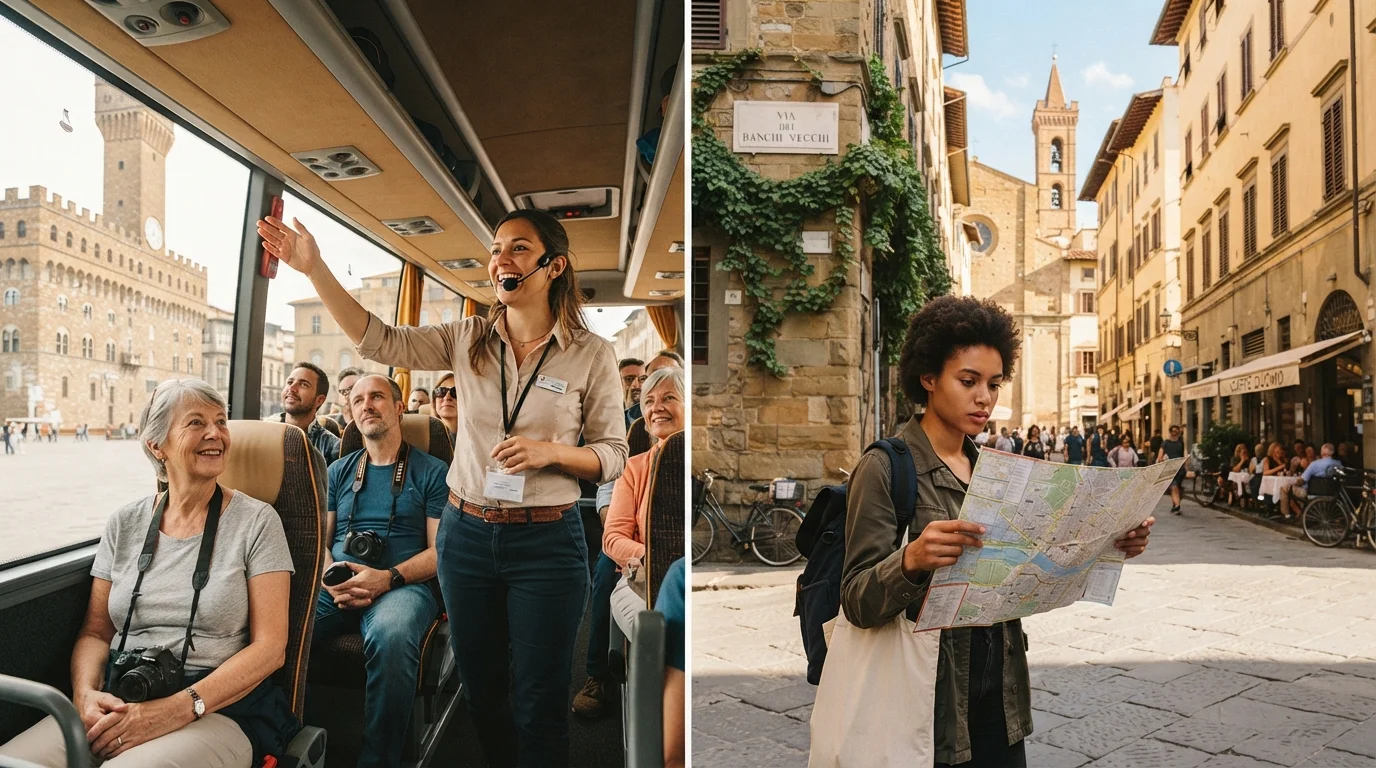
Photo credit: ResultsPivot.com | Discover Insightful Content!
In this article
Both approaches have genuine strengths. Understand the practical differences to decide which style suits your trip, budget, and personality.
Key Takeaways
- Guided tours handle logistics so you can focus entirely on the experience.
- Independent travel offers maximum flexibility but requires more upfront planning.
- Cost differences vary widely depending on destination, style, and trip length.
- Your comfort with uncertainty is one of the best indicators of which approach suits you.
- Many travelers blend both styles within a single trip for the best of both worlds.
What Each Approach Actually Looks Like
Guided tours range from small-group cultural immersions led by a local expert to large coach tours covering multiple countries in two weeks. What they share: someone else handles the reservations, transportation, and day-to-day logistics. You show up, follow the plan, and absorb the experience.
Independent travel means you're the architect. You research destinations, book your own accommodation, navigate public transit, and adapt when plans change. That autonomy is thrilling for some people — and genuinely stressful for others. Neither reaction is wrong.
It's worth noting that the line between the two isn't always firm. Many independent travelers book a day tour here, a cooking class there, or a guided hike in a national park. Equally, some group tour itineraries include free days where participants wander on their own. Think of these as two ends of a spectrum rather than a binary choice. For a deeper look at how your destination type shapes this decision, see our guide on coastal villages vs. mountain retreats.
| Criterion | Guided Tours | Independent Travel |
|---|---|---|
| Logistics | Handled by the operator | Managed by you |
| Flexibility | Fixed itinerary | Fully adaptable |
| Social connection | Built-in group dynamic | Self-directed socializing |
| Local expertise | Professional guide included | Research-dependent |
| Best trip length | Short to medium trips | Any length, especially longer |
| Ideal for | First-timers, complex regions | Experienced, flexible travelers |
| Planning effort | Minimal once booked | Significant and ongoing |
The Practical Trade-Offs Worth Weighing
Cost: Guided tours bundle costs — accommodation, transport, guides, sometimes meals — into one price. That predictability is useful for budgeting, but you're also paying for convenience. Independent travel can be cheaper if you're resourceful, but hidden costs (last-minute bookings, getting lost, expensive mistakes) add up. Neither is automatically more affordable.
Time efficiency: Tours are optimized for seeing a lot within a fixed window, which suits shorter trips. Independent travel often involves more time in transit, researching on the fly, or recovering from a booking snafu — but also more time in the places you genuinely want to be.
Depth vs. breadth: Most group tours prioritize highlights and major landmarks. Independent travel rewards patience and curiosity — the kind of traveler who'd rather spend a morning at a local market than rush through three museums.
72%
Travelers who mix guided and independent elements
A MMGY Global Portrait of American Travelers survey found a substantial majority of US leisure travelers combine organized excursions with free exploration within the same trip.
~50%
Group tour participants who are solo travelers
Industry research from tour operators consistently shows roughly half of group tour bookings are made by people traveling without a companion.
Before committing to either approach, it's worth thinking through how much advance planning you actually want to do. Our article on booking everything in advance walks through the real trade-offs.
Who Thrives with Each Style
Guided tours tend to suit first-time visitors to a destination, travelers with limited time who want to maximize what they see, older travelers or those with mobility considerations who benefit from organized transport, and anyone heading somewhere with significant language barriers or complex entry logistics.
Independent travel tends to suit experienced travelers comfortable with uncertainty, those with flexible schedules, people who travel frequently and have built up practical skills over multiple trips, and anyone whose travel goals center on immersion rather than coverage.
If you're weighing the social dimension — traveling alone versus with a group — that's a related but distinct question. Our piece on solo travel vs. group travel explores how each approach affects your mindset and experience on the road.
Verify Entry and Safety Details Independently
Whether you're on a guided tour or traveling solo, visa requirements, health documentation, and local travel advisories can change. Always verify current entry requirements with official government sources and your country's foreign affairs or state department before departure. Tour operators provide guidance, but final responsibility rests with you.
And if your interest leans toward remote or lesser-known destinations, independent travel demands especially careful groundwork. See our off-the-beaten-path checklist before you commit to anything.

Author
Travel Editorial Team
Travel Editorial Team is the collective byline for our editorial team and contributor network. Articles published under this byline or an editorial pen name are researched, written, and reviewed according to our editorial standards for clarity, consistency, and independence before publication.
View all articles →