
Why Your Travel Days Feel So Exhausting — And What Actually Helps
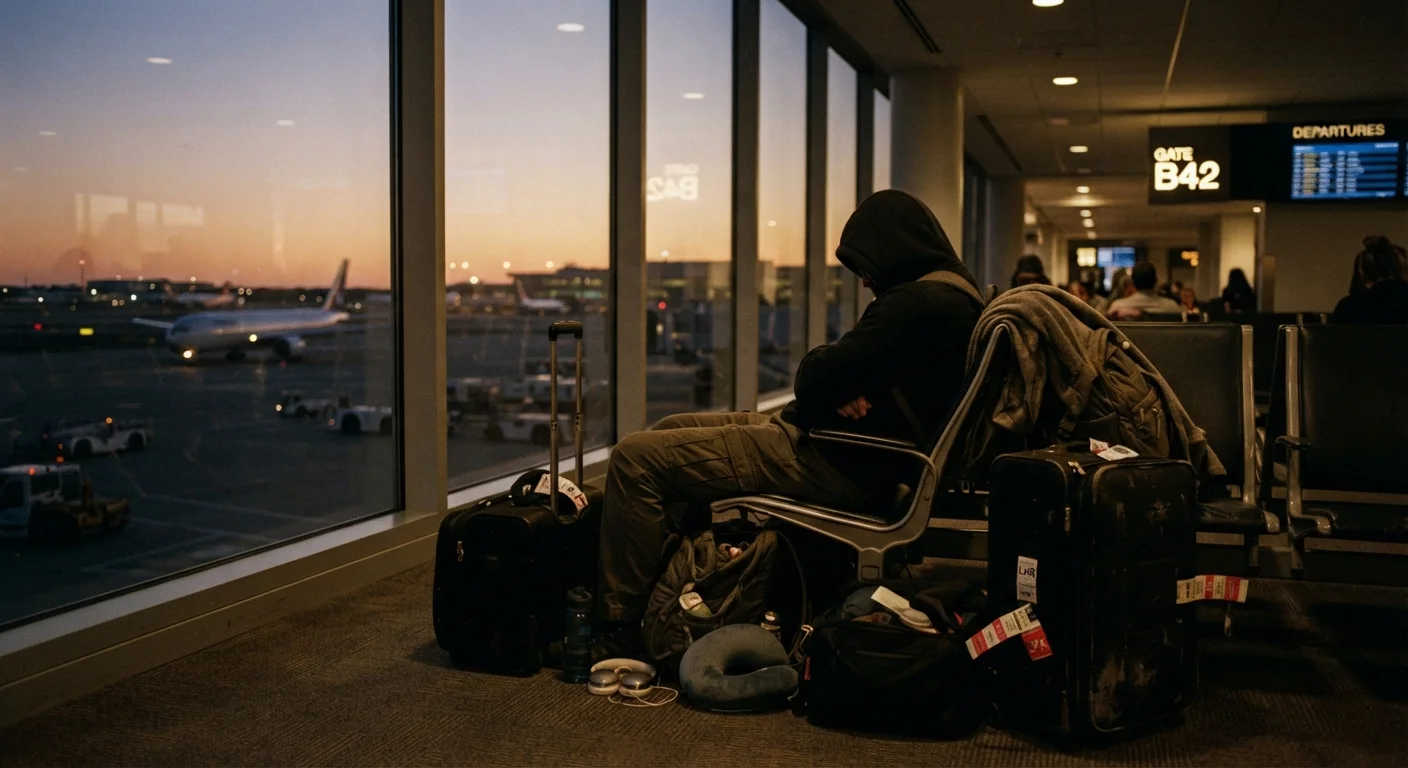
Photo credit: ResultsPivot.com | Discover Insightful Content!
In this article
Long travel days drain more than just energy. Understand the causes of travel fatigue and practical ways to arrive feeling more human.
Key Takeaways
- Travel fatigue has real physiological causes, not just psychological ones.
- Low cabin humidity and reduced oxygen levels on flights accelerate dehydration and brain fog.
- Decision fatigue from constant micro-choices drains mental energy faster than most travelers expect.
- Consistent hydration, movement, and modest sleep anchors are among the most effective counter-strategies.
- Pacing your first 24 hours at a destination significantly affects how quickly you bounce back.
It's Not Just 'Being Tired' — Here's What's Actually Happening
You touched down, grabbed your bag, and somehow feel like you ran a half-marathon — even though you sat in a chair for six hours. That disconnect is exactly what makes travel fatigue so disorienting. Your body was working hard the entire time, even if nothing felt strenuous.
On flights, cabin pressure is typically maintained at the equivalent of 6,000 to 8,000 feet above sea level. At that altitude, your blood carries slightly less oxygen per breath, nudging your heart and respiratory system to compensate. Cabin humidity can drop as low as 10–15%, far drier than most homes or offices, which accelerates dehydration without you noticing thirst cues. Add background engine noise — a low, constant stressor your nervous system never fully tunes out — and you arrive already depleted.
Ground travel isn't necessarily easier. Long drives involve sustained visual focus, postural tension, and the kind of low-grade stress that never fully discharges. Even train or bus travel means hours of passive vigilance in unfamiliar spaces.
Travel Fatigue vs. Burnout: A Key Distinction
Travel fatigue is typically acute — it resolves with rest, hydration, and time. If exhaustion from travel feels chronic, emotionally heavy, or connected to a deeper sense of depletion, that may point to something different. Our article on how emotional burnout differs from ordinary tiredness explores that distinction in more depth.
The Hidden Drain: Decision Fatigue and Sensory Load
Beyond the physical, travel days are relentlessly cognitively demanding. From the moment you leave home, you're making micro-decisions: which line to join, where to store your bag, whether that gate change is real, what to eat from an unfamiliar menu. Each choice draws on the same mental reservoir.
Psychologists use the term decision fatigue to describe how the quality of our choices degrades as the number of decisions accumulates. By hour four of a travel day, your brain is genuinely more depleted — not as a metaphor, but as a measurable shift in cognitive performance.
Airports and transit hubs layer on sensory overload: PA announcements, crowds, shifting light levels, unfamiliar smells. Your brain processes all of it, even when you feel like you're zoning out. This is one reason slow travel advocates often report feeling less wrung-out — fewer high-stimulus travel days means less cumulative cognitive drain.
“The body keeps the score — even in an airport. You're asking your nervous system to stay alert in a completely novel, high-stimulus environment for hours at a time. That has a real cost.”
— Matthew Walker, Neuroscientist and sleep researcher, author of 'Why We Sleep'
What Actually Helps (and What's Mostly Noise)
The good news: a handful of consistent habits meaningfully reduce how beaten-up you feel on arrival.
- Hydrate deliberately. Don't wait for thirst — drink water steadily throughout your journey, not just when you remember. Avoid using alcohol as a relaxant in-flight; it compounds dehydration significantly.
- Move when you can. On flights, stand and walk the aisle every hour or so. On drives, factor in genuine stretch stops. Even five minutes of light movement resets circulation and reduces postural fatigue.
- Protect your sleep anchor. If you can align your sleep timing with your destination's night — even imperfectly — you'll recover faster. Experienced long-term travelers often build this rhythm deliberately, even when schedules are unpredictable.
- Simplify your first evening. Arriving and immediately trying to do everything is a recipe for a terrible next day. A modest, low-stimulation first few hours at your destination pays forward significantly.
What tends not to help: expensive supplements with limited evidence, sleeping pills that leave you groggy, and trying to push through exhaustion with caffeine alone. For more on how travel gradually reshapes your daily patterns, see how frequent travel quietly rewires everyday habits.
Plan a Soft Landing at Your Destination
Resist the urge to pack your first evening with activities. Give yourself a genuine low-key arrival: find food, get oriented, and sleep at a reasonable local hour. Travelers who protect their first night consistently report bouncing back faster the following day.
Setting Yourself Up Before You Even Leave
Arriving in better shape often starts days before departure. Traveling with a sleep deficit already in place is one of the most common — and avoidable — amplifiers of travel fatigue. Even one or two nights of poor sleep beforehand meaningfully worsens how you handle a long transit day.
Researching your destination in advance also reduces the decision load once you're moving. Knowing roughly where you're going, what entry requirements exist, and what your first hours will look like means your brain isn't improvising everything from scratch while also managing jet lag. Our guide to reading a place before you arrive walks through how that kind of grounding pays off on the ground.
Travel fatigue is real, and it's not just in your head — but it's also not inevitable in its worst forms. Understanding what's driving it is half the battle. The rest is building a few consistent habits that work with your body rather than against it.
This article is for general informational purposes only and is not medical advice. If you have health concerns related to travel, consult a qualified healthcare professional before your trip.
Frequently Asked Questions

Author
Travel Editorial Team
Travel Editorial Team is the collective byline for our editorial team and contributor network. Articles published under this byline or an editorial pen name are researched, written, and reviewed according to our editorial standards for clarity, consistency, and independence before publication.
View all articles →