
Regional Dining Rituals That Define American Food Identity
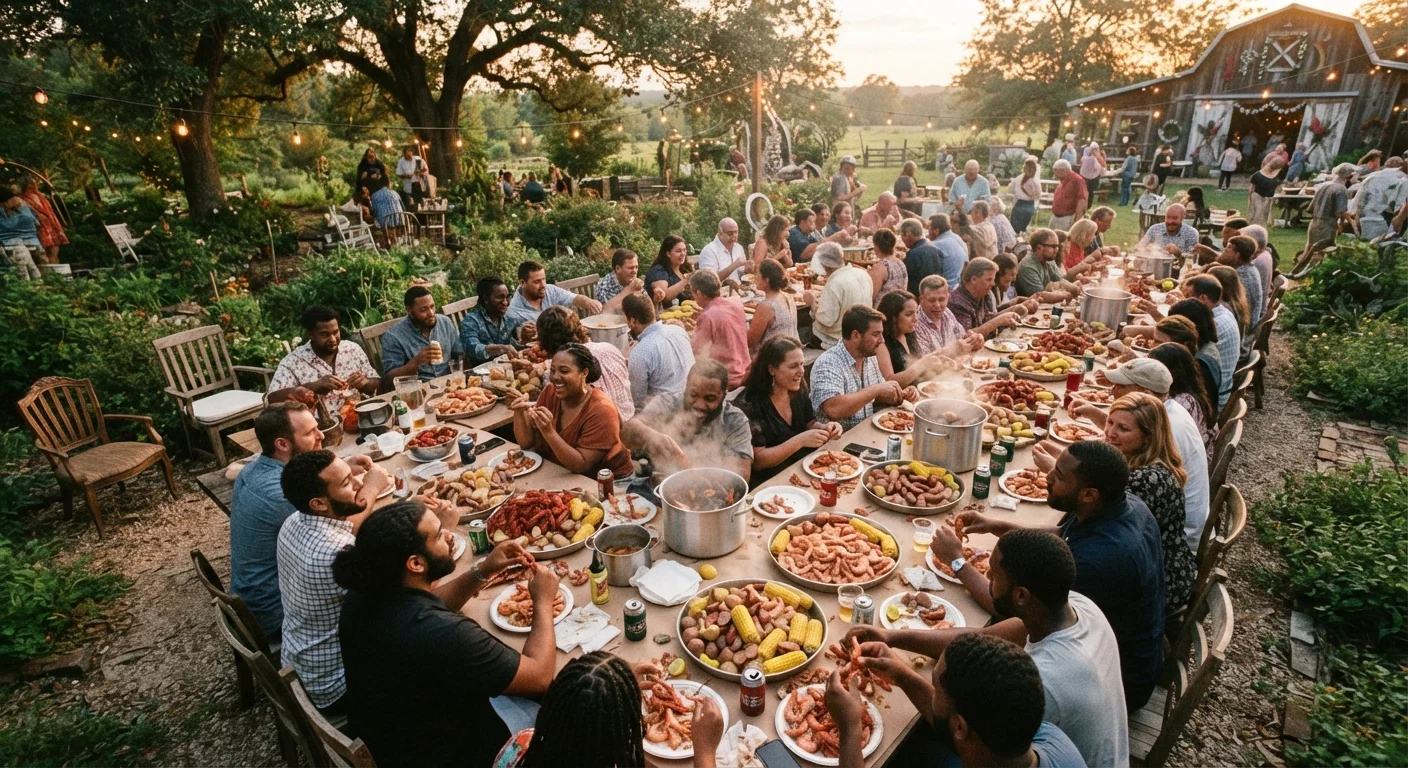
Photo credit: ResultsPivot.com | Discover Insightful Content!
From Sunday fish fries in the Midwest to low-country boils in the South, regional dining traditions reveal how Americans build community around the table.
Key Takeaways
- Regional dining rituals in the US are shaped by geography, immigration history, and shared community values.
- These traditions often serve as social anchors, bringing neighbors and families together on a regular schedule.
- Understanding local food customs reveals as much about American identity as any national trend.
- Many regional rituals are adapting to modern dining culture without losing their communal core.
- Food rituals often coexist with — and sometimes push back against — the homogenizing force of national chain dining.
Why Dining Rituals Matter More Than the Food Itself
Ask someone from Louisiana what a crawfish boil means to them, and they'll probably skip the recipe entirely. They'll tell you about the newspaper spread across a folding table in a backyard, cousins arguing over spice levels, and the way the whole thing stretches across an entire Saturday afternoon. The food is almost beside the point — it's the structure that carries the meaning.
Regional dining rituals are among the most honest expressions of American identity. They don't emerge from trend forecasts or chef tasting menus. They develop over generations, shaped by what the land provides, who immigrated where, and what people needed from each other. They're also surprisingly durable. Even as national fast-casual chains and shifting dining preferences reshape how Americans eat out, these local traditions quietly hold their ground.
Below are seven regional dining rituals that tell a particularly vivid story about place, people, and what it means to share a table in America. And if you want to understand how local drinks reinforce these same cultural identities, regional beverages tell an equally compelling story.
The Friday Fish Fry (Great Lakes & Midwest)
In Wisconsin, Michigan, and much of the upper Midwest, Friday night means one thing: the fish fry. Rooted in Catholic traditions of abstaining from meat on Fridays, this weekly ritual has long since expanded beyond any single faith community. Local bars, supper clubs, and church basements serve battered perch, walleye, or cod alongside coleslaw, rye bread, and potato pancakes. The fish fry is less a restaurant experience and more a civic institution — a predictable weekly gathering that doubles as neighborhood check-in.
The Friday fish fry is less a meal than a civic institution — a predictable weekly neighborhood gathering.
The Low-Country Boil (South Carolina & Georgia Coast)
A low-country boil — sometimes called a Frogmore stew — is equal parts cooking method and social event. Shrimp, corn, smoked sausage, and potatoes go into a massive seasoned pot and get dumped directly onto a paper-covered table when done. There are no plates in the traditional sense. The communal, hands-on nature of the meal is deliberately egalitarian: everyone eats the same thing, at the same time, standing elbow-to-elbow. It's a format that makes pretension structurally impossible.
The low-country boil is deliberately egalitarian — everyone eats the same thing, standing elbow-to-elbow.
The Crawfish Boil (Louisiana)
Louisiana's crawfish boil culture is arguably the most elaborately social dining ritual in the country. The season runs roughly from late winter into early summer, and during those months, weekend backyards across the state transform into outdoor kitchens. Crawfish are boiled in heavily spiced water with potatoes, corn, and mushrooms, then piled high on a table. Eating is slow, tactile, and social by design — peeling crawfish simply takes too long to rush, which forces conversation.
Peeling crawfish takes too long to rush — the ritual forces conversation by design.
The Sunday Supper (Italian-American Northeast)
In Italian-American communities throughout New York, New Jersey, and parts of New England, Sunday supper is a multi-hour ritual built around a long table and an even longer meal. Gravy — the term many families use for slow-cooked tomato sauce — simmers from the morning. Extended family arrives in waves. The meal isn't rushed; courses are separated by conversation, and the table doesn't clear until the espresso does. This tradition speaks to how immigrant communities used the dining table as a primary site of cultural transmission across generations.
For Italian-American families, the Sunday supper table has served as a primary site of cultural transmission for generations.
The Backyard Barbecue (Texas Hill Country & Beyond)
Texas barbecue has its own denomination-level disputes — brisket vs. ribs, oak vs. mesquite, sauce vs. no sauce — but beneath the debates is a deeply shared ritual logic. Pits are tended through the night. Meat is sliced to order at a counter lined with butcher paper. Diners eat at long communal picnic tables. The format is egalitarian and unhurried. While Texas is the epicenter, versions of this backyard pit-culture ritual extend into Kansas City, the Carolinas, and Memphis, each with its own distinct character and rules.
Texas barbecue's pit-to-picnic-table format is egalitarian and unhurried — the format itself is the message.
The Clambake (New England)
New England's clambake is one of the oldest European-adapted food rituals in America, drawing on Indigenous cooking methods of steaming shellfish over hot rocks layered with seaweed. Modern versions range from backyard gatherings to seaside restaurant events, but the essential elements — clams, lobster, corn, and potatoes, often cooked together in a single massive vessel — remain consistent. Clambakes are seasonal, tied to the summer coast, and carry an almost ceremonial quality that sets them apart from ordinary meals.
The clambake draws on Indigenous cooking methods and carries a ceremonial quality no other regional meal quite matches.
The Church Potluck (Rural South & Appalachia)
Across rural Southern and Appalachian communities, the church potluck — or "dinner on the grounds" — is one of the most consistent communal dining rituals in American life. Held after Sunday services, these events feature dishes brought by congregation members, laid out buffet-style on folding tables. The food itself is a form of communication: what you bring signals effort, skill, and care. Dishes carry family histories. And the shared meal reinforces a sense of belonging that extends well beyond the religious context of the gathering.
At a church potluck, what you bring signals effort and care — the food itself is a form of community communication.
Tradition and Tomorrow's Table
What makes these rituals so compelling — and so resilient — is that they aren't really about the food. They're about the choreography: who sets up, who calls people in, who gets the last piece. Strip away the crawfish or the smoked brisket and you're left with a set of shared expectations that hold a community together.
Experiencing Regional Rituals as a Visitor
If you're traveling and want to participate in a local dining ritual, look beyond restaurants. Fish fries, church potlucks, and crawfish boils often appear in community event listings, local newspapers, and neighborhood Facebook groups. Showing up curious and respectful — and willing to eat with your hands — goes a long way.
That said, these traditions aren't frozen in amber. Low-country boils now occasionally feature plant-based sausage. Friday fish fries in some parishes include catfish alongside perch. The rituals flex to accommodate new neighbors, new dietary needs, and new interpretations — which is, arguably, exactly how they've survived this long. This complexity is worth sitting with: the question of what makes a food tradition "authentic" is thornier than it first appears, a tension explored thoughtfully in our piece on what Americans misunderstand about authentic cuisine.
In an era when communal dining is making a broader comeback in American restaurants, it's worth remembering that regional rituals have been doing this all along — building connection around a shared table long before it became a hospitality trend.
Ritual and the Question of Authenticity
Regional dining traditions evolve constantly, absorbing new ingredients, dietary needs, and cultural influences. A low-country boil with plant-based sausage is still a low-country boil. Debates about what counts as "authentic" often say more about who gets to define a tradition than about the food itself. The most vital traditions tend to be the ones that know how to bend without breaking.

Author
Food & Drink Editorial Team
Food & Drink Editorial Team is the collective byline for our editorial team and contributor network. Articles published under this byline or an editorial pen name are researched, written, and reviewed according to our editorial standards for clarity, consistency, and independence before publication.
View all articles →