
Regional Drinks That Define American Food Identity
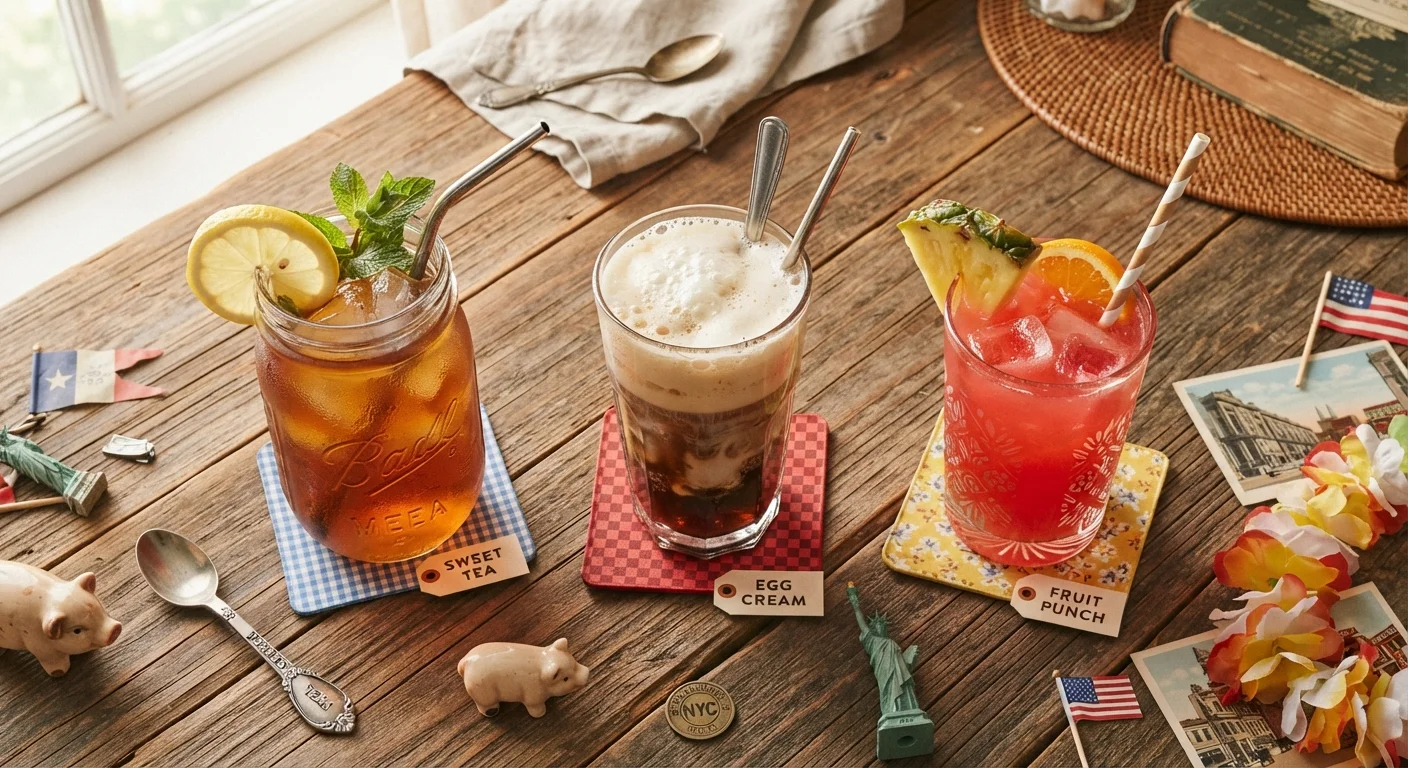
Photo credit: ResultsPivot.com | Discover Insightful Content!
In this article
From sweet tea in the South to egg creams in New York, these locally beloved drinks reveal a lot about where Americans come from.
Key Takeaways
- Regional drinks are deeply tied to local history, climate, and cultural heritage across the US.
- Many iconic American beverages, like sweet tea and egg creams, are strongly defended by locals as their own.
- These drinks reveal how geography and migration have shaped what Americans pour and sip.
- Several regionally beloved beverages are now gaining national attention and cultural curiosity.
- Understanding local drinks is a flavorful entry point into broader American dining and food identity.
What's in Your Glass Says a Lot About Where You're From
Ask someone from Georgia what they want to drink and sweet tea is practically a reflex. Order a "soda" in Boston and you might get a blank stare — they call it "tonic" there. Across the United States, the beverages people reach for without thinking twice are windows into local history, geography, and culture.
These aren't just quirky preferences. Regional drinks often trace back to waves of immigration, local agricultural abundance, or the practical ingenuity of communities making do with what was on hand. They carry stories the same way regional dining traditions do — reflecting how Americans have always built identity around the table, and the glass.
Below, we've rounded up some of the most beloved and culturally rooted regional drinks in America. Each one is a small geography lesson hiding in plain sight.
Sweet Tea (The American South)
In the South, sweet tea isn't just a beverage — it's a cultural institution. Made by brewing strong black tea and dissolving sugar into it while still hot (so it integrates fully, rather than sitting on the bottom), sweet tea has been a Southern staple since at least the late 19th century. Its dominance in states like Georgia, Mississippi, and the Carolinas is so complete that ordering "unsweet" tea can still feel like a minor act of defiance in some diners.
The drink's deep roots are tied to the region's hot climate, the abundance of sugar production historically, and its place as an affordable, hospitable offering. It's the drink you're handed before you even ask.
In the South, ordering unsweet tea can still feel like a minor act of defiance.
Egg Cream (New York City)
Despite the name, a New York egg cream contains neither eggs nor cream. It's a simple, almost sparkling concoction of cold milk, chocolate (or vanilla) syrup, and seltzer, mixed in a specific order to create a frothy, satisfying glass that's more than the sum of its parts. The drink was born in the Jewish immigrant neighborhoods of Brooklyn and the Lower East Side in the late 1800s and early 1900s, and it became inseparable from the city's old-school soda fountain culture.
Today, finding a proper egg cream means tracking down one of New York's surviving old-style delis or soda counters — and locals will tell you that the technique matters as much as the ingredients. It's the kind of drink that makes New Yorkers fiercely nostalgic.
An egg cream contains neither eggs nor cream — yet it's one of New York's most fiercely defended drinks.
Vernors Ginger Ale (Michigan)
Michiganders have a particular attachment to Vernors, a ginger ale with a distinctly bold, almost woody bite that sets it apart from the milder national brands. Claimed to be one of the oldest surviving soft drink brands in the United States, Vernors has a devoted Midwest fanbase that treats it as more of a cure-all comfort drink than just a mixer. It's common to find it served warm as a remedy for upset stomachs, or mixed with vanilla ice cream in a classic "Boston cooler" (a Michigan-born float, despite the name).
Its strong ginger flavor gives it a personality that feels uniquely regional — assertive, a little old-fashioned, and entirely satisfying.
Michiganders often drink Vernors warm as a stomach remedy — a regional tradition that outsiders find surprising.
Chicory Coffee (New Orleans)
New Orleans has a coffee culture all its own, and chicory is at the heart of it. Chicory root — roasted and ground alongside coffee — adds a slightly bitter, woody, almost chocolatey note to the brew that softens the coffee's natural acidity. The practice dates to the Civil War era when coffee was scarce and chicory served as a stretching agent. New Orleanians liked the flavor so much that they kept it after shortages ended.
Served as café au lait — half strong chicory coffee, half hot scalded milk — at historic establishments like Café Du Monde, it remains one of the most distinctive and beloved regional drinks in the country. It's a drink that carries a whole city's history in every cup.
New Orleans kept chicory in its coffee after shortages ended because locals simply preferred the flavor.
Pickle Juice Shots (Texas and the American South)
Before it became a sports recovery trend, drinking pickle juice was a deeply regional habit — especially in Texas and parts of the South, where it was common to order a cold "pickle juice shot" at convenience stores and Tex-Mex taquerias. The briny, sour, sodium-rich liquid was valued as a heat-relief drink and a hangover remedy long before sports nutritionists started discussing its electrolyte content.
It's now found on cocktail menus and wellness blogs nationally, but in Texas, it never needed a trend cycle to justify it. It was just what you drank when it was 100°F outside and you needed something sharp to cut through the heat.
Texans were drinking pickle juice for heat relief long before it became a national wellness trend.
Boilo (Pennsylvania's Coal Region)
Less well known outside its home territory, boilo is a spiced honey-and-whiskey hot drink native to the anthracite coal mining communities of northeastern Pennsylvania, particularly among communities of Lithuanian and Eastern European descent. Traditionally made during the holidays with grain alcohol or blended whiskey, honey, citrus juices, and a blend of warm spices, it's consumed as a warming winter drink and remains a point of intense local pride.
Recipes are often family secrets, passed down through generations, and regional competitions celebrating the best boilo are a genuine part of local culture. It's a drink that most Americans outside a small stretch of Pennsylvania have never heard of — and that's precisely what makes it a fascinating piece of American food identity.
Boilo recipes are often family secrets, passed down through generations in Pennsylvania's coal communities.
Why Regional Drinks Still Matter in a Nationalized Food Culture
In an era when nearly every food and drink trend spreads coast to coast within weeks — just look at how the espresso martini took over bar menus nationally — regional drinks stand out for their staying power. They resist homogenization because they're attached to something deeper than trend cycles: local pride.
Explore Regional Drinks When You Travel
One of the most rewarding ways to experience a new American city or region is through its local drinks. Skip the national chain menu and ask locals what they grew up drinking — you'll often land on something with a genuinely interesting backstory. Farmers markets, old-school diners, and family-owned delis are great starting points.
That loyalty is part of what makes exploring American beverage culture so rewarding. From the tangy, acidic world of drinking vinegars and shrubs making a quiet comeback, to the increasingly adventurous sober drinking scene documented in the rise of non-alcoholic spirits, American drinking culture is anything but monolithic. Regional classics remind us that the most interesting flavors are often the ones rooted in a specific place and time.
Regional Drinks and the Brunch Connection
Many of America's regionally beloved drinks show up prominently on brunch menus, where local pride and social ritual overlap. Chicory café au lait in New Orleans or a classic egg cream at a New York diner counter are as much about place and community as they are about flavor. For more on how Americans turn meals into rituals, see our look at the social life of the American brunch.

Author
Food & Drink Editorial Team
Food & Drink Editorial Team is the collective byline for our editorial team and contributor network. Articles published under this byline or an editorial pen name are researched, written, and reviewed according to our editorial standards for clarity, consistency, and independence before publication.
View all articles →